
Nio Inc.’s sub-brand Firefly delivered 5,663 vehicles worldwide in May, achieving its second strongest month of the year.
The figures represented a 53.9% jump from a year earlier — when Firefly just had its first full month of sales.
The brand began customer deliveries in China on April 19, 2025, after its debut and sole model — a single, four-metre hatchback developed at Nio‘s Munich design centre and positioned against Mini and Smart in the premium compact segment — was introduced in late 2024.
Compared with the 4,980 Firefly EVs delivered in April, May numbers increased by 13.7%.
Firefly reached 60,000 cumulative deliveries last month, having added the latest 10,000 in roughly two months.
The milestone came just over a year after the brand’s first customer handovers, underscoring the steady if modest ramp of a single-model line.
May was also the first full month with the refreshed Firefly hatchback on the road, after the model’s April 7 launch.
Within the group’s 37,705 total May deliveries — which include the main Nio brand, Onvo and Firefly — the compact-car brand accounted for 15.0% of group volume.
Refreshed Iteration
Pricing on the refreshed model remained the same as the original.
The “Freedom Edition” opens at 119,800 yuan, about $17,700, and the “Glow Edition” at 125,800 yuan, around $18,600 — or 79,800 yuan and 85,800 yuan respectively for buyers leasing the battery under Nio‘s Battery-as-a-Service plan with a 399-yuan monthly subscription.
The headline change with the revamp was a free over-the-air motor power upgrade that lifts peak output from 105 kW to 120 kW, or 161 hp, shaving the 0–100 km/h time in Sport mode to 7.9 seconds, with no hardware changes needed.
New colour options and expanded driver-assistance features rounded out the April 7 launch.
Software Update
In mid-May, Firefly released the fifth major software update of its operating system since deliveries began in April 2025 — the Aster 1.5.0.
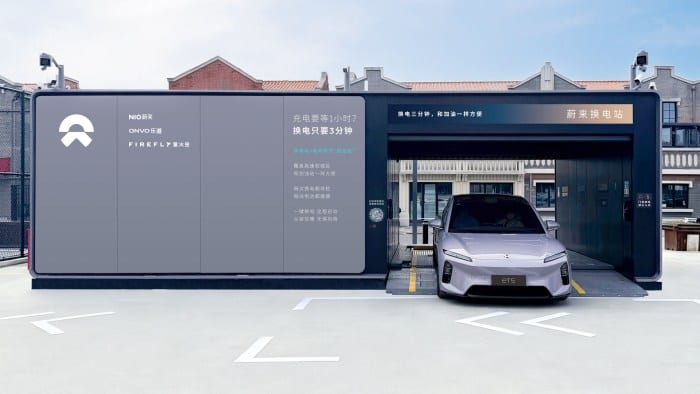
The update added a battery swap station parking assist function — the software prerequisite for Firefly vehicles to use Nio‘s upcoming fifth-generation battery swap stations.
Firefly is the only Nio Inc. brand whose vehicles cannot currently use its 3,846-strong battery swap network in China.
The premium Nio brand has access to the full network, and Onvo connects to most of it.
Firefly‘s shorter wheelbase requires the reconstructed underlying architecture of the fifth-generation station design — five to 10 pioneer units of which Nio plans to deploy between May and June, with large-scale rollout scheduled for July and August.
Several Firefly vehicles have been spotted testing integration with Nio‘s fifth-gen stations.
Brand Positioning
William Li returned to Firefly‘s positioning twice in the week before the May data drop.
Speaking at the Xuanyuan Automotive Blue Book Forum in Guangzhou, Nio‘s founder and CEO compared the brand’s cultural appeal to that of Apple’s iPhone, arguing that Firefly has moved beyond being a transportation product into a lifestyle and fashion-oriented brand with its own emerging culture.
“A young graduate can afford it, but a wealthy executive can also drive it to take their children to school,” Li stated, describing the brand as having been designed around the concept of “glowing with its own light.”
Two days later, on the company’s first-quarter earnings call, Li defended Firefly‘s pricing — which sits well above the bulk of the Chinese A0-segment EV field.
The hatchback “has achieved two-thirds of the market share in the high-end small car market,” he told analysts, with an average selling price “around 50% higher than other small car competitors.”
He also reiterated that Nio has no plans to launch additional Firefly models, leaving the brand as a single-vehicle line for the foreseeable future.
Volume Distribution
Li sketched a clearer long-term picture for the brand on May 25, in a media briefing held two days after the earnings release.
Under his 35-55-10 destination mix, Onvo is expected to eventually account for 55% of Nio Inc.’s vehicle sales, the namesake Nio brand for 35% and Firefly for the remaining 10%.
Monthly volumes of 8,000 to 9,000 units — roughly 100,000 vehicles annually — would represent a strong long-term outcome for the brand, Li said, well below the 30,000-to-40,000-unit monthly territory typical of mainstream low-cost compact cars in China.
Against that destination, Firefly is currently running ahead on share but behind on volume.
The 4,980 vehicles delivered in April equated to 17.0% of Nio Inc.’s 29,356-unit group total for the month, with the year-to-date share through April sitting at 14.7% (16,563 of the group’s 112,821 vehicles).
Monthly volume has yet to return to the 5,000-to-6,000 cadence Firefly hit at the end of last year, when October set a record at 5,912 units.
May’s 5,663 units narrowed that gap, leaving the brand within reach of its prior peak.
Across the first five months of 2026, Firefly delivered 22,226 vehicles, part of the group’s 150,526-unit total.
The brand also held the top position in China’s premium compact segment, with a market share above 72% for 12 consecutive months, according to the company — a dominance that aligns with Li’s argument that Firefly should be judged on segment leadership and pricing power rather than raw volume.
Overseas Push
Firefly remains the most internationally exposed brand in the Nio portfolio.
Brand chief Daniel Jin acknowledged in March that overseas sales in early 2026 had fallen “considerably.”
The 2026 strategy targets 20 to 30 country launches in total, against Li’s broader goal for the group to be present across 40 countries and regions by year-end.
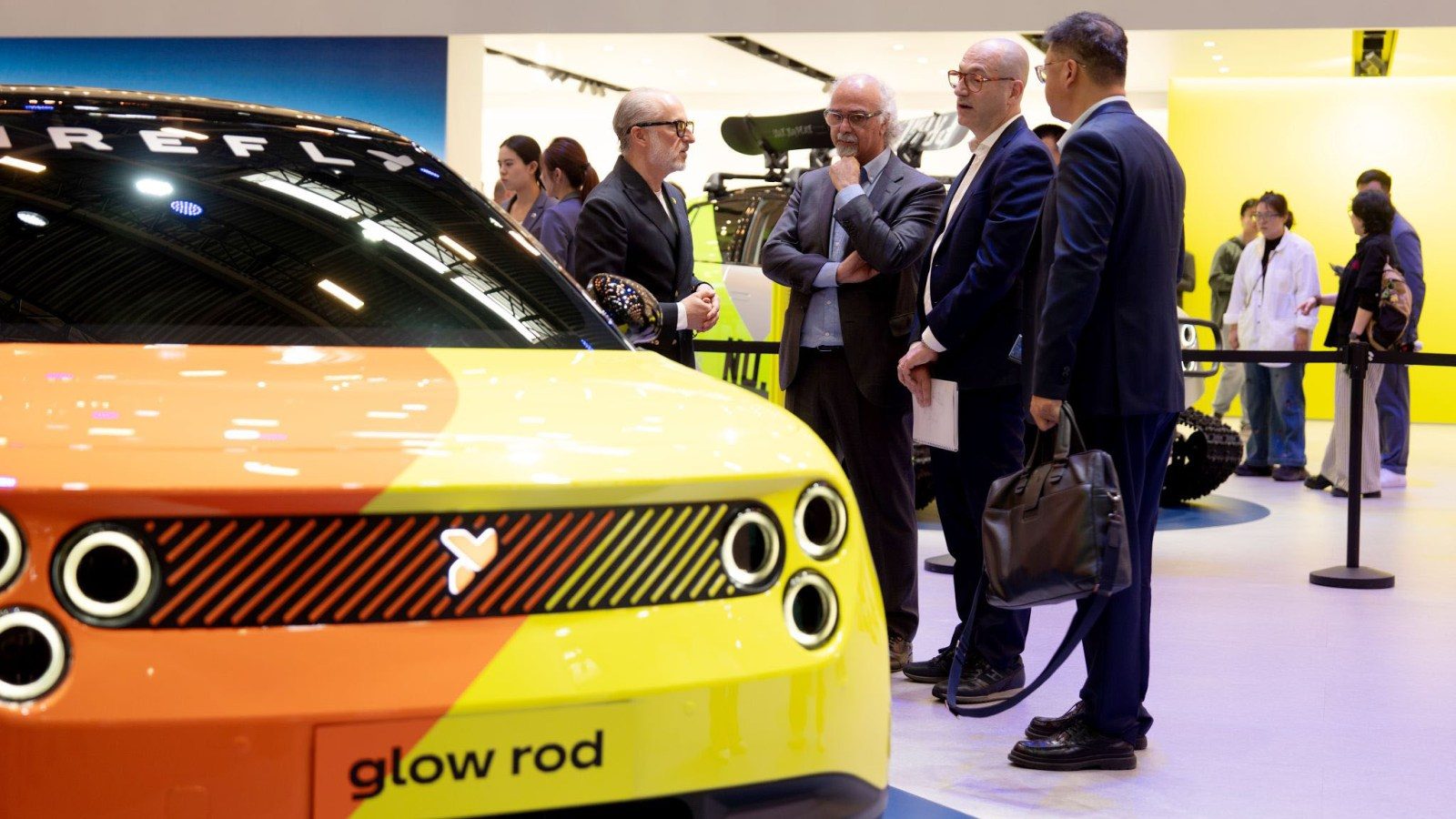
Nio‘s Senior VP of Design Kris Tomasson travelled to Milan in April to unveil a one-off Firefly customisation concept at Milan Design Week — the Chinese EV maker’s debut at one of the world’s most prominent design events, and an early piece of the lifestyle positioning Li would return to from a Guangzhou stage a month later.
Despite the slow ramp, Firefly has contributed to Nio‘s best-selling month in Norway so far — with 24 vehicles sold in a total of 35, in the first 25 days of May.