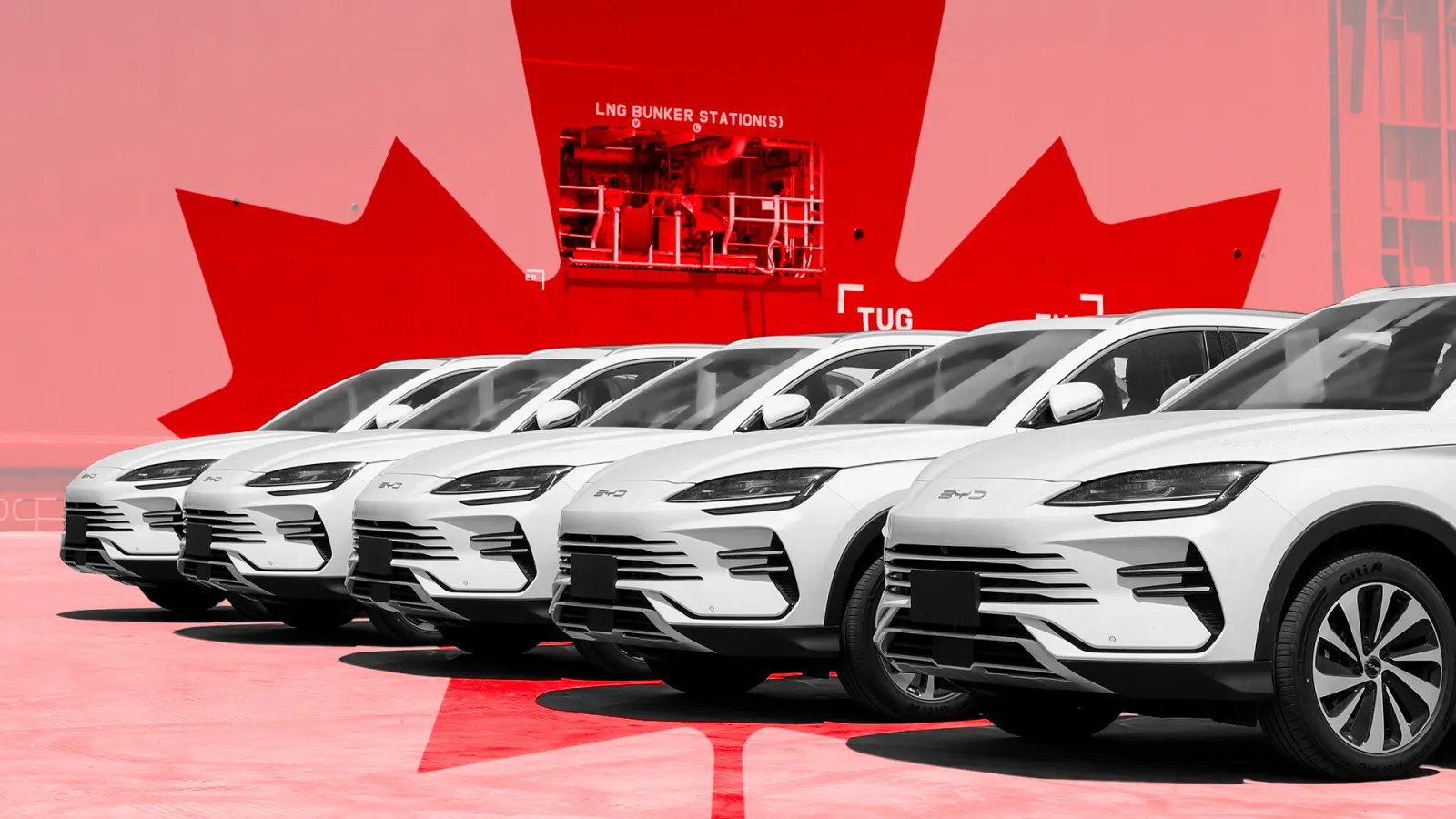
BYD remained China’s largest seller of new energy vehicles (NEVs) in September, with 246,816 retail sales and a 22.8% share of a domestic market that shrank 16.7% from a year earlier, according to China Passenger Car Association (CPCA) data.
Retail sales of NEVs, covering fully electric and plug-in hybrid vehicles, fell to 1.084 million in September and rose 7.8% from August, CPCA said in its monthly report.
The final figure was well below the association’s preliminary estimate of 1.141 million, published on October 10, which had pointed to a 12% decline.
CPCA described September as a peak season without peak demand, the reverse of the traditional “Golden September” boost.
Retail sales across all passenger cars fell 28.0% to 1.618 million, so electrified models still reached a record 67.0% of the domestic market.
Their share of manufacturers’ wholesale volumes, which include exports, also hit a record 65.4%.
Retail penetration was 9.1 percentage points higher than a year earlier, CPCA said, reaching 84.5% for Chinese brands, 44.9% for luxury brands and 15.9% for mainstream joint ventures.
In the first nine months, new energy retail sales totaled 7.758 million, down 12.8%, CPCA said.
How the Ranking Works
CPCA ranks manufacturers and groups rather than brands, so Huawei‘s HIMA alliance appears as one entry, as does Geely.
The figures count domestic retail sales only, exclude exports and differ from the delivery totals companies publish.
CPCA did not break the ranking down by fully electric and plug-in hybrid sales for each maker.
BYD Loses Ground
BYD’s domestic retail sales fell 28.9% from 347,353 in September 2025, according to CPCA data for that month, and rose 5.5% from 233,943 in August.
Its share slipped to 22.8% from 23.3% in August.
BYD exported 175,877 new energy vehicles in September, the most of any Chinese manufacturer, CPCA’s export rankingshows, and its wholesale volume, which includes exports, reached 456,713, according to CPCA’s wholesale ranking.
BYD itself reported 463,561 new energy vehicle sales worldwide in September, up 17.0% from a year earlier, including 456,713 passenger cars, the same figure CPCA uses for its wholesale volume.
Fully electric passenger car sales rose 33.2% to 273,143, plug-in hybrids accounted for 183,570, and overseas sales of passenger cars and pickups jumped 153.9% to 179,877, the company said.
BYD’s sales for the first nine months reached 3,131,576.
Geely ranked second with 119,682 retail sales, down 20.5% from a year earlier and up 8.3% from August, holding its share at 11.0%.
Leapmotor Grows, Tesla Climbs
Leapmotor placed third with 78,202 sales, the only top-five maker to grow from a year earlier, up 30.8%.
Its sales fell 7.9% from August, however, cutting its share to 7.2% from 8.4%.
Leapmotor reported a record 105,656 deliveries for September, as its exports also hit a record, a total that includes the 27,454 vehicles CPCA counts as its exports.
Subtracting those exports from its delivery total gives exactly the 78,202 domestic sales in the CPCA ranking.
Tesla rose to fourth from sixth in August, with 64,837 sales, down 9.4% from a year earlier but up 29.6% from August.
Its share rose to 6.0% from 5.0%. Tesla China’s wholesale figure of 95,366 minus its 30,529 exports also matches its retail count exactly.
The company’s Shanghai exports reached a quarterly record in the third quarter.
BYD’s figures do not line up the same way, leaving a gap of about 34,000 vehicles that CPCA’s data do not explain.
Changan fell to fifth from fourth, selling 61,732, down 26.7% from a year earlier and up 6.7% from August, for a 5.7% share.
Rest of the Top Ten
SAIC-GM-Wuling was sixth with 54,810 sales, down 30.1% from a year earlier, and Chery seventh with 46,860, down 12.3%.
SAIC Passenger Vehicle climbed to eighth from 14th, with sales up 45.6% from August to 40,280.
Xiaomi rose to ninth from 13th, selling 40,015, up 32.7% from August and down 4.6% from a year earlier, as new SUVs offset lower SU7 and YU7 sales.
HIMA dropped to 10th from eighth, with 37,490 sales, down 11.0% from August and 29.2% from a year earlier.
The top ten sold 790,724 vehicles, about 72.9% of the market.
Nio just missed the list in 11th with 37,231 sales, up 7.7% from a year earlier and 4.4% from August. Great Wall Motor followed with 32,048, Li Auto with 31,817, down 15.6% from August and falling to 13th from ninth, and XPeng with 30,599.
Those four sold 131,695 vehicles combined.
Why September Disappointed
CPCA pointed to four factors in its report.
The Mid-Autumn holiday fell in late September, weakening sales that week, and some provinces had ended subsidies in September 2025, leaving a high comparison base.
High fuel prices continued to push buyers from combustion cars toward electric ones, CPCA said.
It also said that AI-driven surges in memory and chip prices, along with tight supply, had slowed launches of new electric models.
Exports Fill the Gap
Manufacturers exported 558,000 new energy cars in September, up 163.5% from a year earlier, CPCA said.
That helped lift new energy wholesale volumes 11.3% to 1.666 million, even as retail sales at home fell.
Passenger car exports of all types reached 917,000, about 36% of manufacturers’ sales, and CPCA said they had “effectively stabilized automakers’ wholesale volumes and profits,” according to a report on its remarks.
Sales of fully electric vehicles fell 8.5% to 765,000 in September, while plug-in hybrid sales dropped 35.7% to 232,000 and extended-range models 17.3% to 88,000.
CPCA expects October store traffic to keep recovering, with trade-in subsidies building through the quarter, but warned that export growth will slow as pressure from European Union trade measures increases.