
China’s Ambassador to Canada said both countries are “earnestly implementing” the EV trade arrangement reached during Prime Minister Mark Carney’s visit to Beijing in January, citing tangible progress on import quota allocations and the certification of Chinese EVs entering the Canadian market.
In an exclusive interview with the Globe and Mail, Wang Di’s comments mark Beijing’s most extensive public comments on the broader China-Canada EV framework since the agreement took effect on March 1.
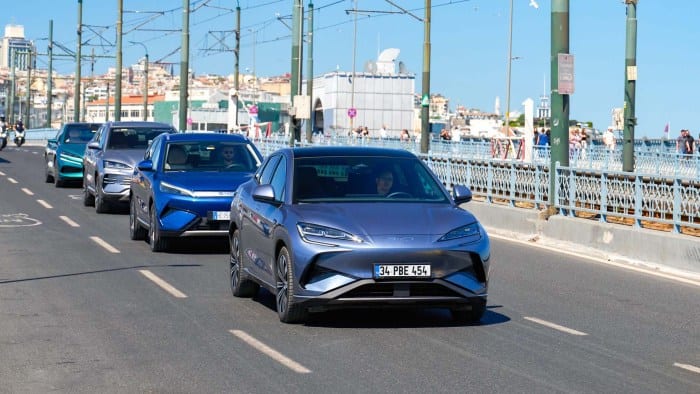
Over the last few months, several Chinese carmakers — including BYD, Geely, Chery, XPeng, GAC, among others — have been meeting with Canadian officials as they look to accelerate the expansion to North America.
Geely has recently started hiring for its main marque, Geely Auto, according to public listings on LinkedIn.
However, Tesla is poised to capture the largest share of the benefits in the first year of the quota deal.
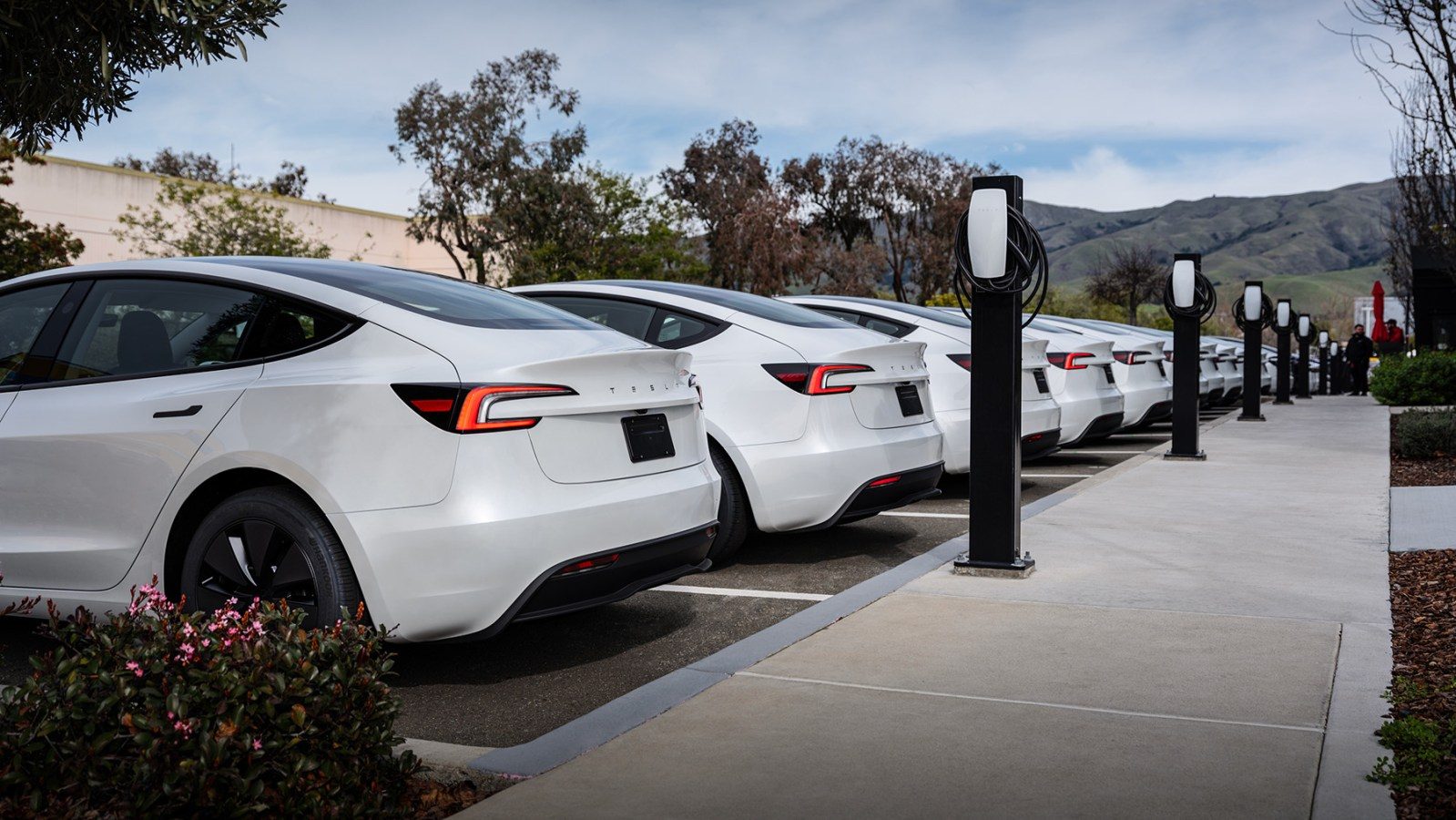
With a fully built-out national sales, service and Supercharger network already in place, the company can immediately scale deliveries of its Shanghai-built Model 3 at an equivalent of under $30,000.
‘Progressing Steadily’
The ambassador framed the EV deal as part of a broader bilateral consensus reached during Carney’s visit to Beijing earlier this year.
“[…] First, both sides agreed to forge a new strategic partnership,” the ambassador told the Globe and Mail.
“Second, both sides agreed to push forward the practical cooperation in trade and economic areas,” Wang added.
“Third, both sides agreed to work together to properly settle the economic and trade concerns of each other,” he said.
Wang then anchored the EV trade deal within that framework.
“The EV sales you mentioned is one of the trade concerns that needs to be resolved. The relevant arrangements were made in the spirit of mutual respect, reciprocity and mutual benefit,” the ambassador said.
“Currently, both sides are earnestly implementing the consensus reached by our leaders. As part of this process, cooperation on EV trade is progressing steadily,” Wang added.
When asked whether China was satisfied with the pace of implementation since January, the ambassador pointed to specific operational progress.
“Both sides are earnestly moving forward the implementation of the consensus, and tangible progress has been made — including the allocation of import quotas and the certification process for Chinese EVs entering the Canadian market,” Wang said.
The ambassador framed the goal in consumer terms.
“As China’s ambassador to Canada, I sincerely hope that Chinese EVs enter this market at an early date, so that Canadian consumers will be able to enjoy high-quality and affordable Chinese EVs as soon as possible,” he added.
Quota Allocation
When asked whether the initial 49,000-unit quota would be dominated by Tesla — the first company to operationalize a China-Canada supply chain shift under the framework — Wang said multiple Chinese brands are in active contact with Canadian authorities.
“To my knowledge, a substantial number of Chinese EV manufacturers are already in contact with Canadian authorities regarding this matter,” the ambassador said.
He noted that the certification process applies primarily to brands new to the Canadian market.
“As for the certification process I mentioned earlier, it primarily applies to Chinese brands that are new to the Canadian market,” Wang said.
When pressed on whether China would prefer the 49,000-unit quota to go primarily to genuinely Chinese brands rather than to Tesla, the ambassador acknowledged that early allocations would favor companies already certified for Canadian sale.
“I believe this depends on how fast the certification of the Chinese EV companies can go,” Wang said.
“For the 49,000 quota, the first batch, of course, will probably go to the cars that have already been certified, which includes Tesla as you mentioned,” the ambassador added.
He framed the longer-term Chinese brand entry as a shared bilateral objective.
“However, as more Chinese automakers obtain certification, a growing number of Chinese EVs will enter the Canadian market,” Wang said.
“It is not only a shared desire of the Chinese side to see the increasing presence of genuine Chinese EVs in Canada, and I am convinced that the Canadian side is equally serious about realizing this goal,” he added.
The ambassador’s comments come as Tesla on Friday became the first Western automaker to operationalize the framework, pricing the Shanghai-built Model 3 in Canada starting at $39,490 CAD.
None of the three Chinese-headquartered automakers confirmed for Canadian market entry by year-end — BYD, Chery, or Geely — has yet shipped vehicles under the quota.
Tesla Makes Bold Step
As reported on Friday, Tesla became the first Western automaker to operationalize the China-Canada framework, pricing the Shanghai-built Model 3 in Canada starting at $39,490 CAD — roughly $29,000 USD.
Tesla announced the new pricing in a post on X on Friday afternoon, calling the Premium Rear-Wheel Drive variant “the most affordable it’s ever been.”
The Premium RWD has an EPA-estimated range of 463 kilometers and accelerates from 0 to 100 km/h in 4.2 seconds.
Tesla also cut the Model 3 Performance trim by approximately 17% to $74,990 CAD from $89,990 CAD, while discontinuing the previously available Long Range trim at $79,990 CAD.
The pricing reflects the 6.1% most-favored-nation tariff rate that Shanghai-built vehicles receive under the quota framework — substantially lower than the 25% Section 232 national security tariff applied to US-made vehicles entering Canada.
Tesla said first customer deliveries of the new Canadian Model 3 lineup are expected as early as May or June.
The move directly validates Wang Di’s framing that the first quota allocations would go to brands already certified for Canadian sale.
It also operationalizes the strategy EV first reported on March 2, 2026, when Tesla had quietly removed the Model 3 from its Canadian configurator and begun shipping US-made inventory back to the United States in preparation for the supply chain shift to Shanghai.
The Shanghai-built Model 3 variants are not eligible for Canada’s federal Electric Vehicle Availability Program rebate, which provides up to $5,000 CAD on qualifying purchases — creating a competitive trade-off for Canadian consumers between Tesla‘s lower sticker price and rebate-eligible domestic and Korean or Japanese-made EVs.
Leapmotor Rejection: Brought to Ottawa
When asked about Industry Minister Mélanie Joly’s rejection of Stellantis‘s proposal to assemble Leapmotor vehicles at the Brampton plant using imported Chinese kits, Wang declined to engage directly with the Canadian government’s policy stance and redirected the question to the Canadian government, as EV reported earlier on Friday.
Tariff Change
Asked about the likelihood that Canada would reinstate the prior 100% tariff, Wang said continued implementation of the existing framework would create the basis for extending it.
“China and Canada have reached a series of arrangements to address each other’s concerns,” the ambassador said.
“If these arrangements are implemented effectively, they will create favourable conditions and lay a more solid foundation for both sides to better address mutual concerns in the future,” Wang added.
He framed continuity as conditional on adherence to the underlying principles.
“I believe both sides reached these agreements by upholding the principles of mutual respect, reciprocity and mutual benefit. As long as we continue to adhere to these principles, we will not only be able to implement and extend the existing arrangements successfully, but also make further progress in resolving the concerns of both sides,” the ambassador said.
The 49,000-unit annual quota replaced the 100% punitive duty Canada had imposed on Chinese EVs in 2024, with the 6.1% most-favored-nation tariff applied through August 31, 2026 for the first 24,500 vehicles.
A second tranche of 24,500 vehicles, plus any unused first-half permits, covers September 1 through February 28, 2027.
The quota is set to expand to 70,000 vehicles annually by 2030.
The Carney government agreed in January to the tariff reduction in exchange for lower Chinese duties on Canadian canola, with Ottawa expecting Chinese joint-venture investment within three years of the deal.
Renminbi Cooperation
Wang said China’s Renminbi has been gaining ground as an international currency and called on Canada to expand its use in bilateral trade.
“The Chinese Renminbi is playing an increasingly important role internationally. More and more countries are now willing to use the currency and have included it in their foreign exchange reserves,” the ambassador said.
He cited specific data on Renminbi adoption.
“According to data from the Bank for International Settlements, the Renminbi’s share in global foreign exchange trading has continued to rise, reaching 8.5 percent as of last September,” Wang said.
“It is currently the fifth most traded currency in the world and has seen the fastest growth rate among major currencies,” the ambassador added.
He pointed to existing China-Canada monetary infrastructure.
“Monetary cooperation between China and Canada is actually quite robust. Earlier this year, the central banks of our two countries renewed a five-year currency swap agreement worth 200 billion Renminbi, or nearly 40 billion Canadian dollars,” Wang said.
He linked Renminbi adoption to Canadian export growth.
“I believe that if Canada uses more Renminbi in its international trade, it will help Canada achieve its goal of increasing exports to China by 50 percent within five years,” the ambassador said.
“Additionally, the National Bank of Canada has issued Panda Bonds in China three times, totalling 8 billion Renminbi,” Wang added.
Chinese Financing of Carney’s Major Projects
When asked whether Chinese government and Chinese companies would finance the major infrastructure projects Carney has announced under his administration, Wang signaled openness on both fronts.
“China is open to conducting practical cooperation with Canada. There are many dialogue and communication mechanisms in place between our two countries to advance practical cooperation,” the ambassador said.
“I believe China possesses extensive experience and advanced technological strengths in many of the major project areas announced by Prime Minister Carney,” Wang added.
He framed Beijing’s position as supportive of corporate participation.
“The Chinese government holds a positive view toward Chinese companies participating in major construction and other projects in Canada. We also support Chinese companies in conducting cooperation with the Canadian side in accordance with market principles,” the ambassador said.
He coupled the offer with a request for non-discriminatory treatment.
“Furthermore, we hope that the Canadian side will provide a fair, just and non-discriminatory business environment for Chinese companies to participate in Canada’s major projects,” Wang said.
The Broader Picture
The Wang Di interview comes as the China-Canada EV framework enters its third month of operation, with the first concrete enforcement test having occurred in early April when Joly rejected the Stellantis–Leapmotor knock-down kit assembly proposal at Brampton.
Tesla‘s Friday Canadian Model 3 launch has set the operational precedent for what the framework looks like in practice, with BYD, Chery, and Geely still working through the certification process Wang referenced.
Lotus, the Geely-owned sports car brand, has previously said it expects to begin delivering Chinese-made Eletre SUVs in Canada in the third quarter of 2026.