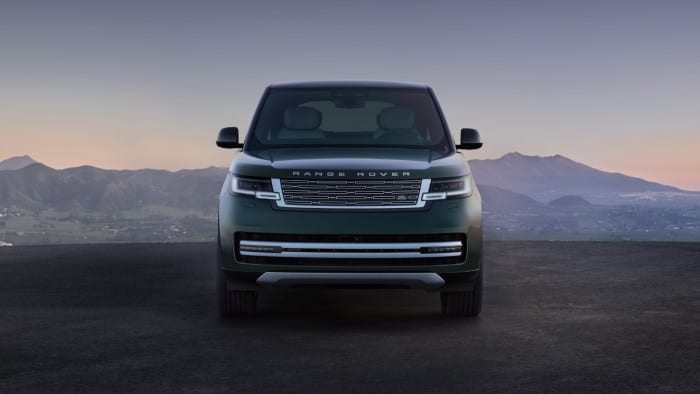
US president Donald Trump said on Friday that he will increase tariffs on cars and trucks imported from the European Union to 25% “next week”, reversing the 15% rate set under the August 2025 reciprocal trade framework and accusing the bloc of failing to comply with the deal.
Trump announced the move in a Truth Social post on Friday, blaming “the fact the European Union is not complying with our fully agreed to Trade Deal.”
“Next week I will be increasing Tariffs charged to the European Union for Cars and Trucks coming into the United States. The Tariff will be increased to 25%,” Trump wrote.
The president said vehicles produced at US plants by European automakers would be exempt from the new rate.
“It is fully understood and agreed that, if they produce Cars and Trucks in U.S.A. Plants, there will be NO TARIFF,” Trump said.
“Many Automobile and Truck Plants are currently under construction, with over 100 Billion Dollars being invested, A RECORD in the History of Car and Truck Manufacturing,” he added.
The announcement does not specify which EU compliance failures triggered the rate increase, nor which day next week the new tariff takes effect.
Reverses August 2025 Framework Deal
The 25% rate would reverse the reduction agreed under the US-EU framework deal announced on July 28, 2025 and formalized in a joint statement on August 21, 2025.
The framework deal lowered the tariff on EU-built passenger vehicles, light trucks, and key auto parts to 15% from the 25% Section 232 national security rate Trump imposed in March 2025.
In exchange, the EU agreed to zero tariffs on many US industrial goods, increased US energy and agricultural exports, and other market access concessions.
The 15% rate was retroactive to August 1, 2025 in some cases.
A return to 25% would put EU-built vehicles at the same rate Trump applied uniformly to all imported autos in March 2025 before the framework deal carved out the 15% reduction.
German Automakers Most Exposed
European automakers exported approximately 757,654 new vehicles to the US in 2024, valued at roughly €38.9 billion, according to the European Automobile Manufacturers’ Association.
The US accounted for 22% of the EU’s automotive export market in 2024, making it the second-largest destination after the United Kingdom.
EU exports to the United States declined by 21.4% in 2025 as the initial Trump tariffs took effect, the association said in its full-year 2025 report.
German automakers are among the most exposed to the tariff increase.
Volkswagen sells the most cars in the US among European brands, followed by BMW and Mercedes-Benz.
Germany alone exported approximately 450,000 vehicles to the US in 2024, according to the German automotive industry association VDA.
Oxford Economics estimated that a 25% US auto tariff could reduce German automotive exports by 7.1% and Italian exports by 6.6%, with smaller declines of 2.4% and 2.3% projected for Spanish and French automotive sectors.
Porsche and Audi face heightened exposure given their lack of US production capacity.
Porsche imports all of its US-bound vehicles from Europe, with US sales reaching approximately 76,000 units in 2024.
Audi imports all of its US sales from Mexico and Europe, with Volkswagen currently weighing whether to localize Audi production in the US through either a new factory or expansion of existing sites.
Ferrari shipped approximately 3,450 cars to the US from Europe in 2024.
Existing US Production Provides Buffer
Some European automakers have meaningful US production footprints that would benefit from the no-tariff exemption Trump highlighted.
BMW operates the largest European-owned vehicle plant in the US at Spartanburg, South Carolina, where it produced approximately 400,000 vehicles in 2024, exporting around 225,000 of those.
Mercedes-Benz operates a plant in Tuscaloosa, Alabama, exporting approximately two-thirds of its production — around 170,000 vehicles in 2024.
Volkswagen operates a plant in Chattanooga, Tennessee, where most output is sold locally rather than exported.
European-headquartered automakers contributed approximately 830,000 units to US vehicle production in 2024 and employ over 45,000 Americans directly, concentrated in Alabama, South Carolina, and Tennessee.
Stellantis, the world’s fourth-largest automaker by volume, has limited direct exposure to the EU auto tariff given its US-EU trade flows are historically small — typically US-made trucks against European-made Alfa Romeo, Maserati, and Fiat models.
Section 232
The tariff increase is expected to be imposed under Section 232 of the Trade Expansion Act of 1962, the national security authority Trump used in March 2025 for the original 25% auto tariff.
Section 232 tariffs survived the Supreme Court ruling on February 20, 2026 that invalidated certain tariffs imposed under the International Emergency Economic Powers Act.
The Section 232 authority gives Trump’s auto tariff plan firmer legal footing than IEEPA-based measures, which are subject to ongoing court challenges.
EU Retaliation Risk
The EU has signaled it would retaliate against renewed US auto tariffs.
Oxford Economics modeled a scenario in which the EU imposes a mirrored 25% tariff on US-made motor vehicles, up from the current 10% rate.
Under that scenario, US automotive exports would decline by approximately 3.1%, the consultancy estimated.
US automotive exports to the EU account for just 2% of total US automotive output, suggesting the broader US industry would be more insulated from retaliation than EU automakers from the initial action.
The EU previously retaliated against Trump’s first-term tariffs on steel and aluminum with duties on US whiskey, motorcycles, and other goods.
Recent Tariff Tensions
The Friday announcement extends a series of tariff actions Trump has directed at the EU since returning to the White House.
In January, Trump threatened 10% tariffs on eight EU member states — Denmark, Norway, Sweden, France, Germany, the United Kingdom, the Netherlands, and Finland — over their opposition to a US purchase of Greenland, with an escalation to 25% threatened for June 1 if no deal materialized.
The Section 232 auto tariffs Trump imposed in March 2025 took effect April 3, 2025 for autos and before May 3, 2025 for parts.
Subsequent country-level deals lowered the rate from 25% to 15% for EU and Japanese vehicles.
A US-UK deal capped UK auto imports at 100,000 units annually with a 10% tariff, while imports beyond that quota face the full 25% rate.
The Trump administration has not specified which EU compliance failures triggered Friday’s announcement.
The European Commission has not yet responded to the Friday announcement.
The framework deal’s compliance metrics include EU legislative ratification of agreed concessions, regulatory alignment on vehicle approvals and emissions standards, and “mutual recognition” provisions affecting US-made trucks and vehicles in European markets.
Tariff Stack on EU Vehicles
The 25% Section 232 rate sits on top of the standard 2.5% most-favored-nation duty on passenger vehicles, bringing the total tariff burden on EU-built cars to 27.5%.
When Trump first imposed the 25% rate in April 2025, the resulting 27.5% combined tariff prompted European automakers to absorb part of the cost, raise US prices, or reduce US export volumes.
Some carmakers paused vehicle shipments to the US in early 2025 before the framework deal restored the 15% rate.
The latest rate change leaves European automakers with limited time to react before next week’s effective date — though the precise day was not specified in Trump’s post.