
General Motors has started building EVs with battery cells whose cathode nickel, cobalt and manganese come entirely from recycled material. The cells come from a pilot with Cirba Solutions that used material recovered from 80 end-of-life GM battery packs.
The first vehicles came off the lines this month at Factory ZERO in Detroit and at Spring Hill, Tennessee, and are headed to customers, the two companies said on Tuesday.
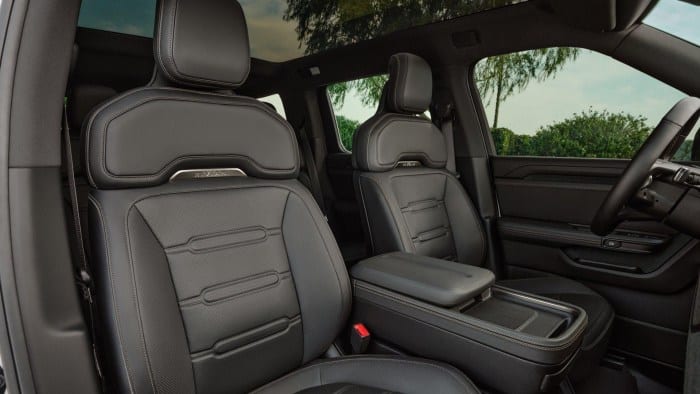
GM named seven models. They are the Cadillac Lyriq, Lyriq-V, Vistiq, Escalade IQ and Escalade IQL, the ChevroletSilverado EV Trail Boss and the GMC Sierra EV AT4.
“This pilot shows that the value of an EV battery can extend well beyond its first life – and that strong partnerships across the battery ecosystem are essential to building a more circular, resilient future for battery technology,” said Melissa Flaherty, Director of Sustainable EV Battery Ecosystem at GM.
How the Loop Worked
Cirba disassembled the packs and shredded the material into black mass at its lithium-ion recycling plant in Lancaster, Ohio. Black mass is the powdered mix of metals left once batteries are broken down.
A partner the companies did not name then refined the black mass into more than 12 metric tons of cathode active material. Cathode active material is the part of a cell that largely sets its cost and performance.
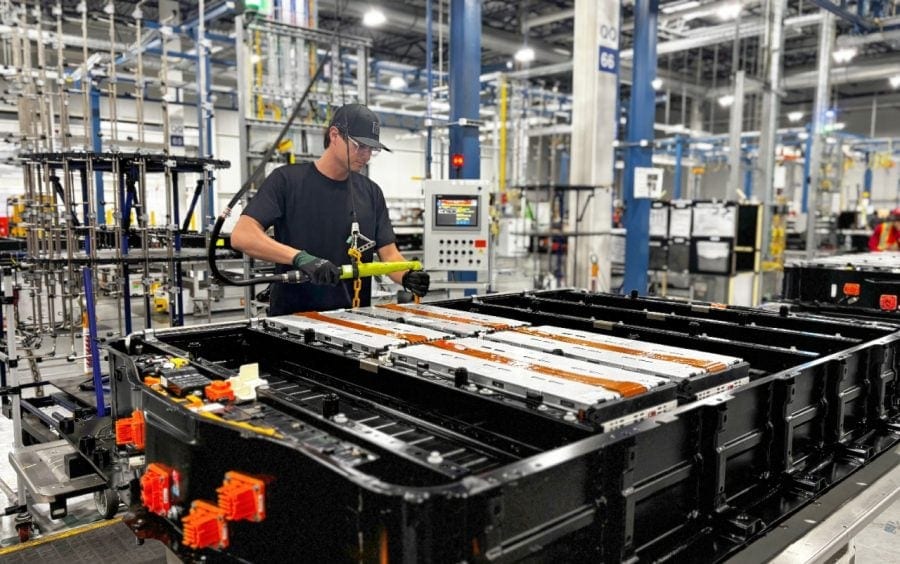
Ultium Cells, GM’s joint venture with LG Energy Solution, made new cells from that material. GM assembled them into modules and packs at its two plants.
GM said the material passed the same quality, safety and performance validation as cathode made from newly mined metals.
“Cells made with recycled materials performed as well as those made from virgin material,” Kurt Kelty, Vice President of Battery and Sustainability at GM, said in a social media post.
What the Claim Covers
The 100% figure applies only to the nickel, cobalt and manganese in the cathode. It does not cover the lithium, the anode or the rest of the cell, and neither company said where the lithium came from.
GM’s own account says the recycled metals include material recovered from end-of-life packs. It does not say whether those 80 packs were the only source.
GM said current recycling technology can recover up to 95% of nickel, cobalt and manganese and up to 80% of lithium, depending on chemistry and process. Those are general rates, not results reported for this pilot.
Those rates sit just above the floor Colorado set in June. It became the first US state to require minimum recovery rates from EV battery recyclers.
Colorado’s law requires recyclers to recover 90% of nickel and cobalt and 50% of lithium from 2031, with the lithium target rising to 80% by 2035. It bans propulsion batteries from landfills from July 1, 2029. Cirba helped shape the bill.
Neither company disclosed a cost comparison with virgin material. Nor did they say whether the pilot will become a regular supply.
GM called the pilot “just the beginning” as more EV batteries reach the end of their lives over the next decade.
Porsche said last week that it had built pilot cells with the German recycler cylib whose cathode is made entirely from recycled material recovered from its own packs.
Porsche’s recycled cathode also includes lithium. But its cells are still in testing, and it plans to use the recovered material in cell production from 2028. GM’s cells are already in vehicles headed to customers.
Cirba’s Ohio Plant
Cirba has recycled battery and cell scrap from GM’s manufacturing and research sites since 2021. It extended that agreement in 2022 through 2024.
The company has put more than $400 million into expanding the Lancaster site, including more than $82 million in US Department of Energy funding.
The expansion is designed to produce battery-grade metal sulfates and lithium carbonate, the raw materials for new cathode. In 2024, Cirba said sulfate production would begin in 2026.
Tuesday’s release does not say whether any of that refining capacity was used in the pilot. It credits the refining step to a separate “strategic partnership”.
“This program effectively demonstrates the value that recycling end-of-life batteries brings to creating a closed-loop supply of critical minerals,” said David Klanecky, President and Chief Executive Officer of Cirba Solutions.
Redwood’s Larger Role
Cirba is not GM’s only recycler. In June, Redwood Materials said GM had become the first automaker to work with it across every stage of the battery lifecycle. Those stages are manufacturing scrap, end-of-life recycling and second-life storage.
Redwood said it had received more than 28,000 metric tons of material from GM and Ultium Cells for recycling. About 10,000 GM packs are lined up for reuse in energy storage, the figure GM repeated on Tuesday.
Those packs include a system of about 100 repurposed GM packs planned for a GM plant in Michigan. Rated at 1.5 megawatts and 7.2 megawatt-hours, it is expected to save more than $3 million in electricity over its life.
Second-life GM packs also feed Redwood’s 63-megawatt-hour installation in Sparks, Nevada, which supplies power to the data center company Crusoe. That use dates to a non-binding memorandum signed in July 2025.
A Smaller EV Business
Twelve tons of cathode is small against GM’s output, which itself has contracted.
GM sold 27,395 electric vehicles in the United States in the second quarter, down 40.7% from a year earlier. That was 3.8% of its deliveries.
The seven models in the pilot are all built at GM’s two US EV plants. The Chevrolet Equinox EV, GM’s best-selling electric model, is not among them.
The pilot comes ten days after Kelty said GM is aiming for a domestic battery supply chain within two to three years. GM still imports finished packs from China for the Chevrolet Bolt.
Its cell plans have shifted twice in two years. Lithium iron phosphate cells for vehicles are due at Spring Hill in late 2027, and lithium manganese-rich cells with LG Energy Solution in 2028.
GM said it will present more of the work at Climate Week NYC this week.