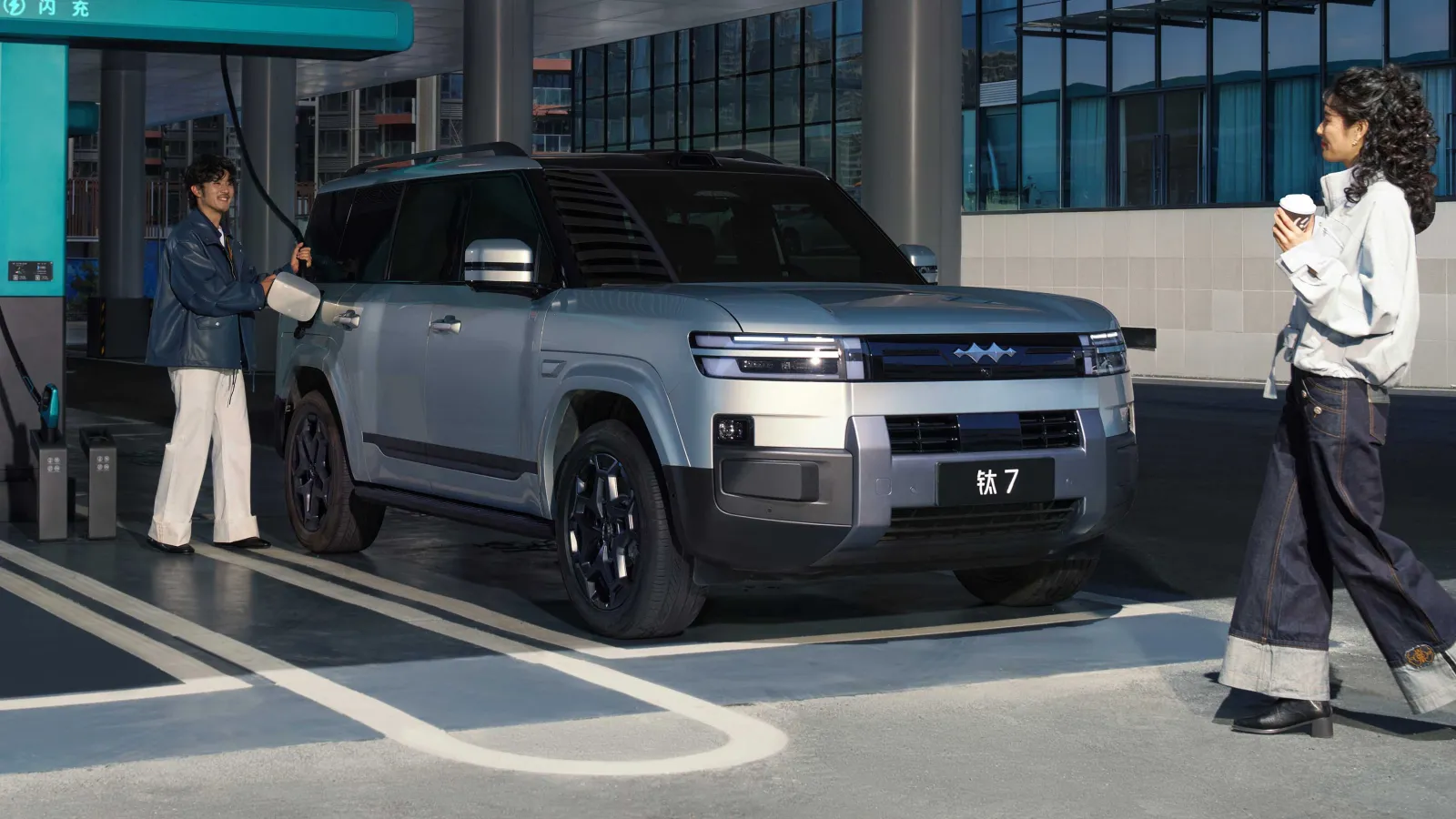
Germany’s armed forces have barred cars from Chinese brands including BYD, Geely and Nio from entering sites classified as security areas over fears that the vehicles’ sensors and cameras could pass data to Beijing, Der Spiegel reported.
The Defense Ministry said on Wednesday that it has no general ban on vehicles from particular countries or manufacturers.
Lists of models from Chinese carmakers that may no longer enter Bundeswehr sites classified as security areas are circulating among troops, the German news magazine reported on Tuesday, citing its own information.
Soldiers who own such cars now have to park outside the barracks and walk in, according to the report.
The concern is that the many sensors and cameras built into Chinese cars could record sensitive data and forward it to Chinese security authorities, Der Spiegel said.
The report did not say when the restrictions took effect, how many models are on the lists or whether every base applies them.
The ministry did not confirm the car measure. A spokesperson said on Wednesday that it has “no general ban on vehicles from specific countries or manufacturers,” according to Reuters.
The spokesperson added that “sensors installed in modern vehicles are seen as potential security risks,” and that access “to sensitive military sites can be restricted where necessary.”
Drones Grounded First
The car restrictions accompany a broader move against Chinese equipment. The Bundeswehr has ordered that commercially available small drones from large Chinese makers such as DJI no longer be used, Der Spiegel reported.
The Defense Ministry, led by Boris Pistorius, confirmed that step. In future, “no Chinese models will be used, and existing systems will be replaced by national or European products,” a spokesperson said, according to the magazine.
“To strengthen the Bundeswehr’s self-sufficiency and technological sovereignty, Chinese-made models will no longer be used,” the spokesperson told Reuters, adding that the decision was based on individual risk assessments. DJI has repeatedly said its drones pose no security risk.
Local commanders had been allowed since 2024 to buy off-the-shelf drones for training with little paperwork, under a “white list” that included several DJI models. Insiders estimate several thousand were bought nationwide, Der Spiegelreported. The ministry declined to give a number, citing military security.
The models bought included DJI’s Matrice M30T, which Chinese security forces also use, the report said. There was no central record of which unit bought which drones, which left the armed forces with little choice but a blanket ban.
The ministry had argued in recent months that the drones were flown only under strict rules and only “where no security-relevant information is affected,” according to the magazine. Units used them for introductory courses for future drone pilots and as targets for air-defense training.
An insider told the magazine that Germany’s Military Counterintelligence Service (MAD) had found forensic traces of data being siphoned from drones used by the armed forces. The ministry did not respond specifically to questions about those suspicions, the report said.
In 2023, Lieutenant General Martin Schelleis, then head of the Joint Support Service, had banned Chinese drones in a written order because a flow of sensitive data to Beijing could not be ruled out, according to the report. The white list followed a year later.
Norway’s Rental Cars
Der Spiegel cited a recent case in Norway. Norwegian business daily Dagens Næringsliv reported in October that cars the Norwegian armed forces rented from Hertz recorded video during the Home Guard’s “Hovedstad” exercise, which involved about 5,000 soldiers from September 14 to 18.
The footage showed who got in and out, where the cars went and how long they stayed, and stored the codes soldiers typed to open gates and doors, the armed forces’ magazine Forsvarets forum reported, citing a participant, Lieutenant Fredrik Blanck.
At least two of the cars were from Deepal, a brand of China’s Changan.
“We used these cars, and some alert soldiers eventually discovered that video was stored on the cars,” Blanck said, according to the magazine. The recordings were deleted after the exercise, and it is not known whether the data was stored elsewhere.
The company that runs Hertz in Norway is ultimately owned by Zhejiang Geely Holding Group, Forsvarets forum reported.
Norway’s Defense Minister Tore Onshuus Sandvik told parliament on October 16 that the armed forces do not consider it appropriate to introduce a general ban on China-made vehicles entering their areas. Several units had decided to have private vehicles parked outside camp, he said.
Other Militaries
Poland’s armed forces barred Chinese-made vehicles from all secure military facilities in February, the General Staff said at the time. Other cars with devices that can record position, image or sound may enter only with those functions switched off.
The U.S. Air Force banned BYD vehicles from Kadena Air Base in Japan from October 26. “These vehicles present an unacceptable and unmitigable risk to our personnel and our mission,” a base spokesperson said.
Last week, 14 members of the European Parliament asked the European Commission in written questions to assess whether BYD cars pose a security threat.
The push was led by French MEP François Kalfon, who wrote that letting connected vehicles from third countries access sensitive European infrastructure “poses an unacceptable security risk,” The Guardian reported.
BYD said in a statement that no data processed or stored in the cloud or in a vehicle could be accessed remotely from China, and that customers remained in control of their data. “BYD Europe does not make such data available to BYD entities or third parties in China,” it said.
BYD and Nio are also on the Pentagon’s list of “Chinese military companies,” which the U.S. Department of Defense expanded on June 8 under Section 1260H of the 2021 National Defense Authorization Act.
The listing bars the department from contracting with them directly from June 30, 2026 and from buying their goods or services through suppliers from June 30, 2027. It does not impose sanctions.
Nio rejected the label the next day, saying it is “not a Chinese military company or a military-civil fusion contributor,” and said it might challenge it in court.
Sales in Germany
The restrictions come as Chinese brands take a rising share of Germany’s new-car market.
BYD registered 5,173 new vehicles in Germany in October, up 54.3% from a year earlier, according to the Federal Motor Transport Authority (KBA). That gave it 2.0% of the market and made it the fastest-growing import brand with at least a 1.5% share, the KBA said.
SAIC’s MG registered 4,140, up 48.5%, and Leapmotor, which is part-owned by Stellantis, registered 3,661, up 288.6%. XPeng registered a record 1,380, up 284.4%.
Geely, which the KBA has listed as a separate brand only since this year, registered 981 cars. Its Lynk & Co and Zeekr brands added 174 and 80. Nio registered none.
Those seven brands together registered 15,589 cars in October, about 6.1% of the 254,492 new cars registered in Germany that month.
The total excludes Polestar, a Swedish brand controlled by Geely that builds cars in China, and Smart, a joint venture of Mercedes-Benz and Geely. It also leaves out smaller Chinese brands not covered in EV‘s analysis of the KBA data.
BYD’s October total was down 14% from 6,040 in September, but the brand has registered more than 5,000 cars in Germany in each of the last two months.
From January to October, BYD registered 47,961 cars in Germany, MG 31,503, Leapmotor 19,705 and XPeng 8,403.
Fully electric cars took 37.0% of German registrations in October, a record, with 94,086 units, up 79.5%, the KBA said.
The report did not say how many soldiers own Chinese cars or which models are listed.
BYD sells both fully electric and plug-in hybrid models in Germany. Geely’s own brand entered the market this year, and Nio’s German business has registered 20 cars in the first 10 months of 2026.