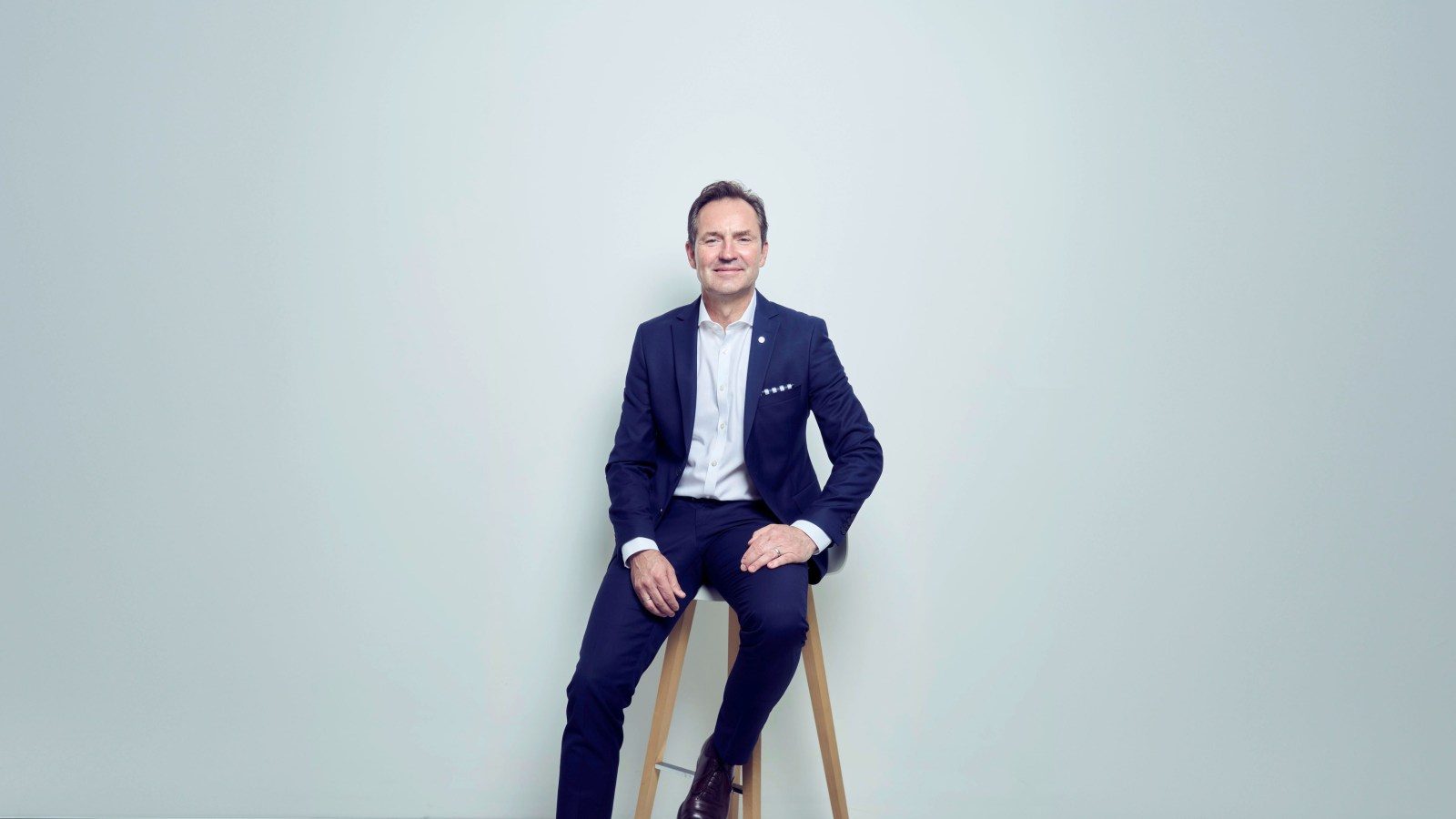

Volkswagen brand Chief Executive Officer Thomas Schäfer confirmed on Wednesday that defense-sector partnerships are among the active solutions the German automaker is pursuing as it works through a multi-billion-euro restructuring of its European manufacturing footprint.
Speaking at the Financial Times Future of the Car summit in London, where EV was in attendance, Schäfer framed defense conversion as part of a broader corporate doctrine that treats outright plant closures as the option of last resort.
“We’re trying to find solutions with suppliers, with other areas like defense and so on,” Schäfer said.
“So if there’s other options that the new world brings, we are looking first to do that, and then we’ll see how it goes,” the brand chief added.
VW Group has now positioned defense partnerships as a pragmatic and increasingly important element of its European overcapacity strategy, with CEO Oliver Blume repeatedly citing military transport as a core-competence fit for plants like Osnabrück.
The ‘Second Best Option’ Doctrine
Schäfer outlined the strategic logic that has positioned defense partnerships alongside other capacity-repurposing options inside VW Group.
“In that game, it’s great if you find other opportunities for such factories,” he said.
“Closing them down, shutting them down, and letting go is always the second best option. If there’s a better option for a re-utilization of a different OEM or a different kind of business, that’s good.”
“We first try that. We order the people to find a solution. They’ve been doing a great job, so let’s find a solution.”
The doctrine aligns with VW Group Chief Executive Officer Oliver Blume’s “intelligent solutions” framing outlined in his Manager Magazin interview last month, where he described defense conversion as a preferred alternative to outright plant closure.
The Osnabrück plant is the most prominent example of the defense doctrine in action.
Rafael Advanced Defense Systems signed a Letter of Intent in late April to acquire the Lower Saxony facility — currently producing the T-Roc Cabriolet with around 2,300 employees — for the manufacture of Iron Dome air defense system components.
Subsequent reporting from Haaretz and Reuters indicated the deal has since progressed to a memorandum of understanding stage, with Rafael agreeing to acquire the plant outright rather than simply repurpose it as a VW-operated defense facility.
Under the proposed arrangement, the Osnabrück plant would produce heavy-duty transport trucks, launch units, power generators, and engines for interceptor missiles — though warhead explosive components would be manufactured at a separate Rafael facility in Germany for security reasons.
The 2,300 Osnabrück workers would be retrained to produce defense systems, with production potentially beginning 12 to 18 months after deal close, pending works council approval.
The German government has been “actively supporting” the deal, according to the Financial Times, as Berlin commits €500 billion in defense spending by 2030 under its rearmament plans and the EU’s ReArm Europe framework.
Defense Conversion
Germany’s defense spending surge under the rearmament plans creates a long-duration demand signal for industrial capacity that the German automotive sector has otherwise struggled to find buyers for.
The Federal Association of the German Security and Defence Industry proposed last year that idle auto capacity be repurposed for defense output as Berlin unlocked hundreds of billions of euros in new military spending.
Rafael Chairman Yuval Steinitz told Bild earlier this year that Israel had offered to help Germany manufacture the Iron Dome system on German soil — a framing that positioned the Osnabrück deal as part of broader Israeli-German defense industrial cooperation rather than a standalone commercial transaction.
VW Group also has existing defense exposure through Rheinmetall MAN Military Vehicles, a joint venture in which Rheinmetall holds a controlling stake alongside VW subsidiary MAN Truck & Bus.
The Osnabrück deal would mark a meaningful escalation of that footprint — from military truck manufacturing through a subsidiary JV to direct involvement in Iron Dome production at a former VW-branded passenger car plant.
Pushback on the Chinese-Buyer
Schäfer was more skeptical than Blume about the prospects of Chinese automakers acquiring spare VW Group capacity in Europe.
Asked specifically about Blume’s suggestion that Chinese partners could use VW’s spare European capacity, Schäfer dismissed the idea bluntly.
“Well, I don’t have anybody knocking on the door, so…” he said.
“If anybody would be there when it was this false news was in the press about Dresden and stuff, this is nonsense. There is nothing there.”
The framing represents a notable softening of the Chinese-buyer thesis that Blume had floated in his April Manager Magazin interview.
While Blume had explicitly declined to rule out selling a European VW Group plant to a Chinese automaker seeking EU tariff-free production, Schäfer’s London comments suggest no such conversations are operationally active.
The distinction matters: Blume’s framing positioned a Chinese acquisition as a possible “intelligent solution”; Schäfer’s framing relegates it to a hypothetical possibility without active commercial momentum.
The contrast suggests that defense conversion — not Chinese OEM partnerships — is now the primary live option in VW Group’s capacity-repurposing playbook.
The Plant-by-Plant Status
Schäfer ran through the operational status of the German plants affected by the December 2024 collective bargaining agreement, which committed VW to phase down German production by more than 700,000 units per year.
“That is happening or has happened already,” Schäfer said. “The last part is now a factory in Osnabrück that we are finding a solution for.”
“So far, Dresden, we have found a solution. We have wrapped up Zwickau, Emden,”he added. “So the factories are going to be moving the Golf from Osnabrück to Mexico in the old ICE world. We’ve been doing the stuff that in the past was never possible, but it has to happen now.”
The Dresden Manufactory ceased Volkswagen vehicle production at the end of last year.
The Zwickau EV plant has been reduced from five planned battery-electric models to one, while Emden — another EV-dedicated facility — is operating well below capacity.
The Osnabrück plant remains the highest-profile open question — though Schäfer’s reference to defense as an active solution category makes clear that other German plants could follow the same pathway if defense partners emerge.
The Group-Wide Capacity Reduction
Schäfer clarified that the additional 500,000-vehicle capacity cut Blume announced in April applies to the broader Volkswagen Group rather than just the Volkswagen brand.
“The media articles that came out on another 500,000, that is not only Volkswagen, that is Volkswagen Group, so it’s also Audi and Porsche,” he said.
“So it’s a general adjustment of volumes that is still happening.”
VW Group’s total global capacity stood at approximately 12 million vehicles at peak, against 2024 sales of around 9 million and 2025 sales of approximately 8.68 million.
The combined capacity reduction now under way — roughly 1 million units in China already completed plus the additional 1 million units across Europe — would bring total Group capacity down to approximately 9 million units annually by 2028.
Of the 50,000 German jobs reportedly to be cut by 2030 under VW Group’s broader restructuring, the workforce reductions are spread across the Volkswagen passenger car brand, Audi, and Porsche.
The Defense of European Manufacturing
Pressed on whether European manufacturing is viable given cost pressures, Schäfer said that it is the case mainly in Germany.
“For us, it’s the most important one is, you know, this overcapacity was mainly in Germany. The rest of the factories that we have in Europe are already cost-competitive or in competition,” he said.
“There’s nothing wrong with them. So we have to now get a healthy balance again between manufacturing in Germany, manufacturing in Europe, China, India, America, and so on, Mexico.”
“This is all right, but it was a disbalance that we had to fix.”
Schäfer pointed specifically to VW’s plants in Bratislava (Slovakia), Poland, and Mexico as examples of European or near-shore manufacturing operating at competitive cost structures.
“I wouldn’t say that there’s a general problem with manufacturing in Europe. It can be done,” he said.
“Our factories in Bratislava, in Montreal, in Poland, you know, they run at a really top-end manufacturing cost.”
“There’s no reason to say you can’t make cars in Europe. You can’t make them all in Germany, necessarily, but that’s not the point. We’re a global company, so you’ve got to balance it properly.”