
The labor leaders of Volkswagen‘s software unit CARIAD warned management on Monday against buying a ready-made driver-assistance system from an outside supplier, casting the decision as a threat to the jobs and know-how the company spent years and billions of euros trying to build in-house.
General works council chairman Gerhard Retzer and his deputy, Claudia Richter, issued the statement in response to reports that the Volkswagen Group is weighing the purchase of an external advanced driver-assistance system and a separate plan to cut as many as 100,000 jobs across the group.
The intervention pits CARIAD’s roughly 5,000 employees and the powerful IG Metall union against a cost-cutting drive by chief executive Oliver Blume, and it places autonomous-driving software at the center of the deepest restructuring in Volkswagen‘s history.
Retzer and Richter framed driver assistance as the ground on which CARIAD’s future rests.
“ADAS is a key technology for the future of the automobile,” the two wrote, adding that whoever sells it “hands over know-how, added value and future viability.”
The works council insisted the technology stay inside the group, listing the destinations it rejected by name, “Not to China. Not to the USA. Not to external providers,” and demanded the board deliver an in-house system “from a single source, scalable for the entire Group.”
The statement closed with: “Know-how is created by doing. Not by buying” — alongside a reminder that CARIAD’s employment guarantee runs to the end of 2029 and that any attack on it would meet resistance.
The Trigger
The pushback followed reporting by German newspaper Bild, that Volkswagen plans to end the Automated Driving Alliance it formed with supplier Bosch in 2022.
More than 1,000 specialists had worked within that alliance on a driver-assistance platform the partners once planned to sell to other carmakers, with series production targeted for the middle of this decade.
The project had absorbed about 1.5 billion euros ($1.71 billion) and, by internal assessments cited in the report, had not met expectations because the technology was not yet competitive.
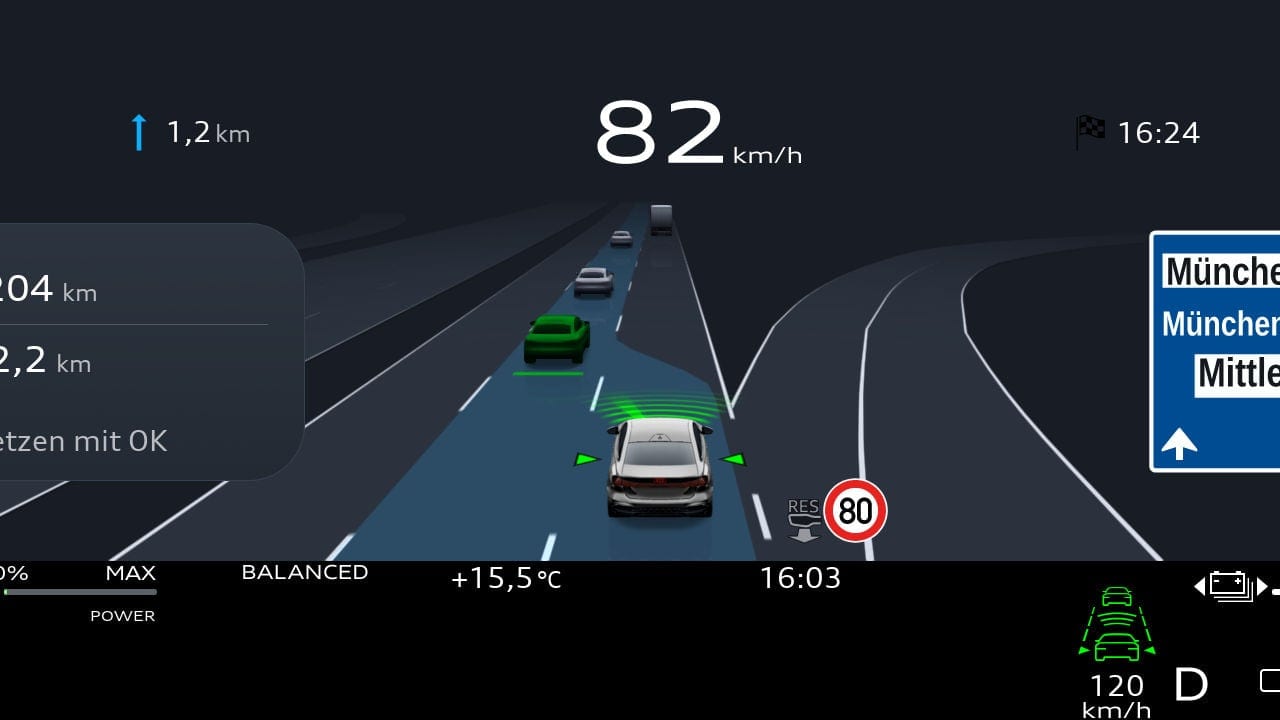
According to Bild, Volkswagen now plans to source and further develop the hardware and software for systems from Level 2++ upward — the hands-free tier where a car steers, accelerates and brakes on the highway — from a new partner, with a replacement being chosen and a contract planned by September.
The candidate the report named is Mobileye, the Israeli autonomous-driving specialist spun out of Intel.
Bosch and CARIAD issued a joint statement saying they do not comment on market rumors, noting they had worked together closely for years with the goal of bringing automated driving to a mass market, and that they regularly review the partnership against their strategic and technological goals and current market developments.
Why Mobileye
Volkswagen already leans on Mobileye across several programs, which makes an expanded role less of a leap than a deepening.
The two have worked together since last year on Level 2+ motorway assistance for combustion vehicles, and Volkswagen uses Mobileye technology for the Level 4 self-driving ID. Buzz that its Moia unit is preparing to deploy in the United States with Uber.
The supplier has made clear that Volkswagen sits near the center of its growth plans.
In its most recent results, Mobileye cited an expanded robotaxi roadmap with the German group and pointed to its EyeQ6-based SuperVision Level 2++ and Chauffeur Level 3 programs with the carmaker as proof its advanced portfolio was converting into future revenue.
The Money Behind the Fight
CARIAD’s defenders are protecting an operation that has cost the group dearly.
Launched around 2020 to centralize software for infotainment, over-the-air updates, cloud connectivity and automated driving, the unit instead became a byword for delay and loss.
The division posted operating losses of about 2.4 billion euros in 2023 and roughly 2.6 billion euros in 2024, contributing to cumulative losses well above $7.5 billion across 2022 to 2024 on a fraction of that in revenue — a figure separate from, and far larger than, the roughly 1.5 billion euros sunk into the Bosch alliance now being unwound.
Software setbacks at the unit delayed flagship launches including the Porsche Macan EV and the Audi Q6 e-tron and dogged early ID. models with bugs.
The headcount has fallen as the strategy shifted, with the unit drawing closer to 4,300 after Volkswagen routed future Western-market architecture to a multibillion-dollar joint venture with Rivian and pushed China-specific software toward partners including XPeng and Horizon Robotics.
That repositioning had already narrowed CARIAD’s mandate from sole in-house developer toward integrator of partner technology, and an external ADAS deal would narrow it further.
The Rivian partnership has not run smoothly either, with Manager Magazin reporting in January that Volkswagen had assembled a task force as the alliance fell short and the group kept CARIAD running at a cost of billions of euros — a parallel-software burden that frames why management is now hunting for a faster outside answer on driver assistance.
A Group in Crisis
The dispute is unfolding against a restructuring far larger than any single software contract.
Blume aims to cut up to 100,000 of the group’s roughly 657,000 jobs over the coming years and to halt production at four German plants — Hanover, Zwickau and Emden, plus an Audi factory at Neckarsulm.
The proposal, which would double a previously agreed reduction of 50,000 jobs by 2030 and override a 2024 union deal barring German plant closures this decade, also envisions spinning off the core Volkswagen brand and the components business as standalone units.
A Volkswagen spokesperson declined to comment on what the company called confidential documents, saying the relevant bodies would discuss and approve any decision and that management would not pre-empt the process.
The plan is expected to reach the supervisory board on July 9.
The pressures driving it are by now familiar across Europe’s incumbents, with first-quarter net profit down 28% to 1.56 billion euros, US tariffs that finance chief Arno Antlitz has put at about 4 billion euros a year, and Chinese sales that fell about 20% as domestic brands led by BYD eroded Volkswagen’s once-commanding position there.
What Is at Stake
Retzer and Richter compared ADAS to a factory, “the place where value is created and jobs are secured,” and warned that handing it to a supplier would hollow out the group’s long-term capability even if it bought short-term speed.
Management’s counter, expressed through its actions rather than the statement, is that partnerships deliver where internal programs have stalled, reduce cost and complexity, and free the unit to focus on integration.
The same tension has played out at rivals weighing whether to build or buy autonomy, and the answers have varied.
Rivian moved away from Mobileye for its second-generation vehicles to develop perception in-house — a bet it says is closing on Tesla’s Full Self-Driving — while Nio built a German robotaxi pilot on Mobileye technology, illustrating that even close peers split on whether the capability is core or sourceable.
For Volkswagen, the choice now carries a labor dimension that few of those peers face, with a unionized software workforce, a 2029 job guarantee and a supervisory board vote days away.