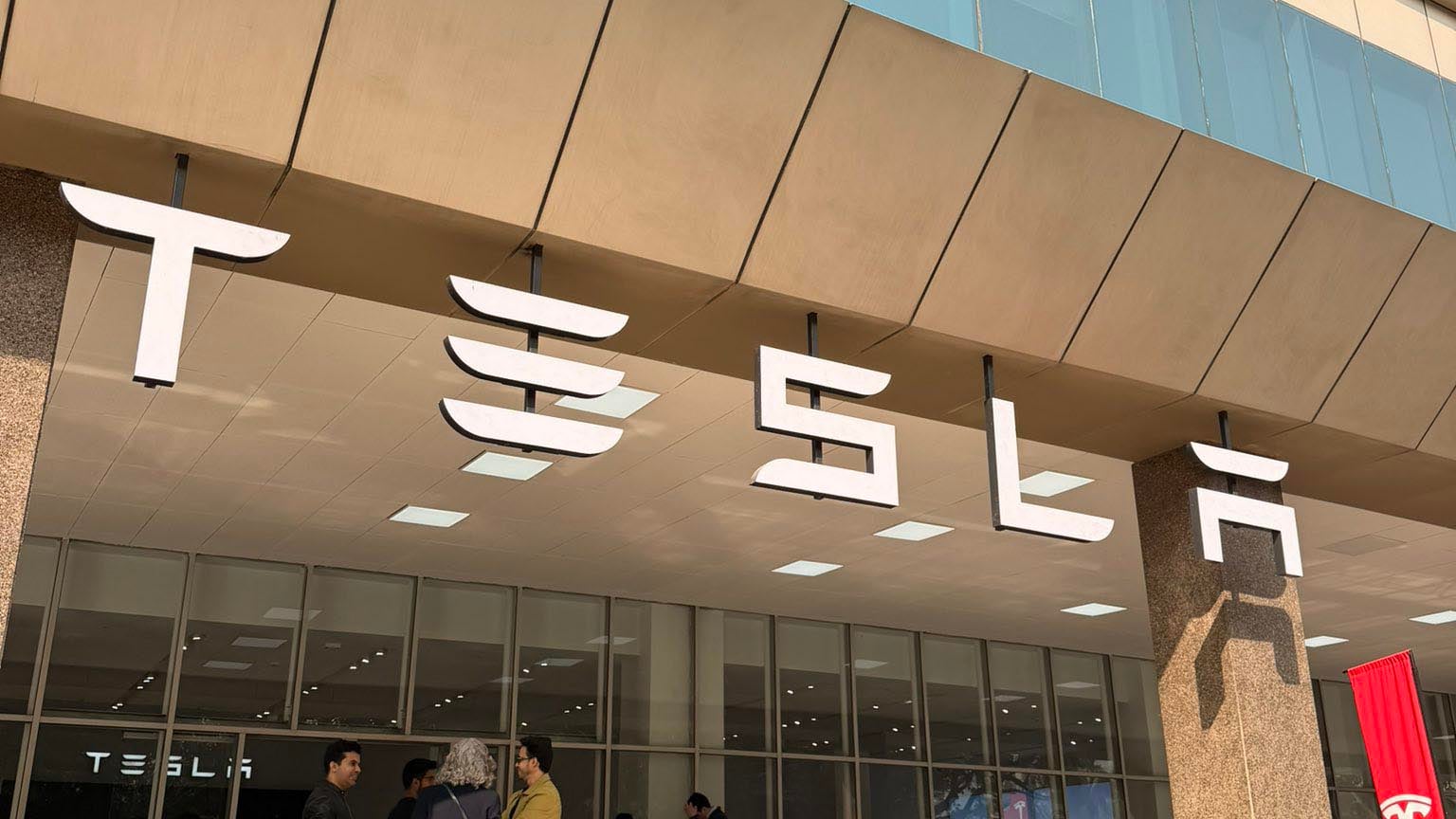

Tesla has reportedly abandoned plans to build an EV manufacturing facility in India, according to reports circulating in Indian media.
The Elon Musk-led company opened its fourth location in the country last week as it prepares to start deliveries of the three-row SUV Model Y L in June.
The reports, which have spread across Indian aggregator media outlets and social media platforms on Tuesday, claim that Kumaraswamy, India’s Minister of Heavy Industries, has “confirmed” that Tesla has officially abandoned its plan to build a factory in India.
Kumaraswamy said nearly a year ago (June 2, 2025) that Tesla had attended early stakeholder discussions on India’s EV manufacturing incentive scheme but had not participated in later rounds, and that the company appeared focused on opening showrooms rather than committing to local production.
“Tesla, we are not actually expecting from them. They have only to start two showrooms. They are not interested in manufacturing in India,” Kumaraswamy said at the June 2025 briefing.
Last November, also Haryana Chief Minister Nayab Singh Saini invited Tesla to set up a production plant in the country
“The state has become an ideal destination for investment and innovation, offering world-class facilities and a conducive environment for industries,” Saini stated.
The Substantive Reality
Tesla has explicitly declined to commit to local manufacturing under India’s Strategic Promotion of Manufacturing of Electric Vehicles Policy for Clean India (SPMEPCI) scheme.
The program would have offered import duty reductions to 15% from the standard 70-100% for EVs priced over $35,000, but required companies to invest at least ₹4,150 crore ($500 million) in Indian local manufacturing.
The company instead continues to pay the full 110% import duty on its Model Y units imported from its Shanghai Gigafactory — constraining the model’s price competitiveness against locally-produced premium EVs from Hyundai, BYD, Kia, and the legacy German luxury brands.
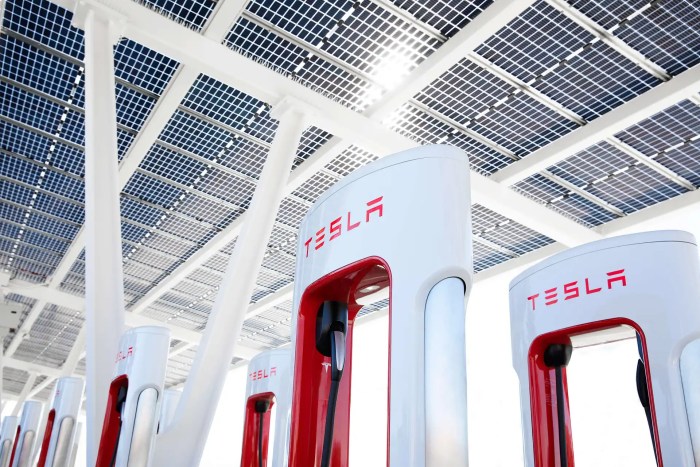
The “retail-first” strategy has anchored Tesla’s Indian commercial expansion through four showrooms — opened across Mumbai, Delhi, Gurugram, and most recently Bengaluru — alongside five Supercharger stations and 14 Wall Connector destination chargers.
The Sales Trajectory
As reported by EV last week, Tesla sold 43 units in India in April 2026, down 12% from the 49 units registered in March, according to Federation of Automobile Dealers Associations data.
The April figure represents Tesla’s fourth consecutive monthly figure below 50 units since the soft-start phase of deliveries that began in September 2025.
Cumulative deliveries through April 2026 stand at approximately 383 units across the first eight months of operations — well below the 2,500-unit annual quota that Tesla had originally targeted when it entered the Indian market.
The Indian sales trajectory has been characterized by consistent underperformance.
September 2025 — Tesla’s first month of Indian deliveries — recorded 60 units, before falling to 40 units in October, a 33% month-on-month drop that established the early pattern of underperformance.
November rose modestly to 48 units, and December reached 73 units as the company cleared its initial booking backlog and pushed through inventory units accumulated from canceled bookings.
The 2026 trajectory has been more difficult: January registered 37 units, a 49% decline from December; February fell further to 29 units, the lowest single-month figure since Indian deliveries began; March rebounded to 49 units, a 69% recovery month-on-month, likely reflecting some demand pull-forward ahead of the Model Y L launch; April settled back to 43 units, down 12% from March.
The Inventory Problem
Tesla’s initial India shipment pattern was meaningfully smaller than the full annual quota.
The company had originally planned to use its complete 2,500-unit import quota, but reduced shipment plans after demand fell short of expectations.
To fulfill its existing bookings, Tesla planned to ship between 350 and 500 vehicles to India by the end of 2025, based on fully paid orders secured at the time.
Bloomberg later reported that approximately 300 Model Y units were shipped in the initial batch.
Between September and December 2025, only 217 vehicles were registered in the country — leaving meaningful inventory on the ground that the company struggled to clear, particularly after some early bookings were canceled.
Tesla began offering discounts on approximately one-third of its imported India inventory late in 2025, with deals of up to ₹200,000 ($2,215) on certain Model Y variants according to people familiar with the matter.
The Model Y L Repositioning
Last month, Tesla launched the Model Y L — a three-row, six-seat long-wheelbase version of the standard Model Y — at the Ballard Pier Downtown Experience Centre in Mumbai.
Priced at ₹61.99 lakh (approximately $74,500), the Model Y L offers a 681-kilometer WLTP range, 0-100 km/h acceleration in 5.0 seconds, and 2,539 litres of cargo space with the rear rows folded.
The six-seat configuration targets the Indian premium-vehicle segment, which has historically favored large family vehicles with three rows of seating — a segment dominated by Mercedes-Benz and BMW, as well as legacy ICE flagships like the Toyota Vellfire and Lexus LM.
The Model Y L’s positioning offers features the Indian premium-EV market has historically lacked: power-reclining captain seats in the second row, climate control across all three rows, an 18-speaker audio system, and Netflix integration.
The model is built on the same 83 kWh battery and 250 kW peak charging architecture as the Model Y Long Range, with Tesla claiming the L variant recovers 288 km of range in 15 minutes at a Supercharger.
Deliveries of the Model Y L are scheduled to begin in June.
The April Model Y L launch represents Tesla’s clearest commercial response to the underwhelming standard Model Y reception — pivoting toward a family-vehicle configuration that better matches Indian premium-buyer preferences.
The India Pricing Structure
Tesla’s full Indian lineup now spans three pricing tiers, all available for online ordering.
The standard Model Y Rear-Wheel Drive starts at ₹59.89 lakh ex-showroom, with a 60 kWh battery providing approximately 500 km of WLTP range and 295 horsepower from a single rear motor.
The Model Y Long Range Rear-Wheel Drive sits at ₹67.89 lakh ex-showroom, with an updated 83 kWh battery pack and 340 hp motor delivering approximately 622 km of WLTP range.
The Model Y L Premium All-Wheel Drive starts at ₹61.99 lakh, with monthly financing options beginning at ₹49,000.
The Full Self-Driving package adds an additional ₹6 lakh ($7,200) to any variant.
All three variants are imported as completely built units from Tesla’s Shanghai Gigafactory.
The 110% import duty on completely built-unit (CBU) vehicles priced above $40,000 pushes the Model Y’s starting price in India to approximately $70,000 — and in addition, vehicles are subject to city-specific taxes.
In Mumbai, the standard Model Y carries an on-road price of approximately ₹61,07,190 ($71,200), while in Gurugram the on-road price rises to ₹66,76,831 ($77,800).
The Charging Infrastructure
Tesla currently operates five Supercharger stations across India, with a total of 20 Superchargers and 14 Wall Connectors.
The first Supercharger station opened at One BKC in Mumbai in August, featuring four V4 Superchargers and four destination chargers. Four months later, the company opened its first charging site in Gurugram, also including four Superchargers and three destination chargers.
Tesla plans to add seven more Supercharger stations along major highways connecting Delhi, Chandigarh, Jaipur, Ahmedabad, Mumbai, Pune, Bengaluru, Hyderabad, and Chennai.
The Sales Network Expansion
Tesla opened last week its first showroom in Bengaluru’s Whitefield district, which becomes its fourth Indian retail location and first in the southern region.
The Bengaluru facility, located at VR Bengaluru on Whitefield Main Road in the city’s Mahadevapura area, showcases both the standard Model Y and the recently launched three-row, six-seat Model Y L variant.
The opening expands Tesla’s Indian retail footprint to four cities — Mumbai’s Bandra Kurla Complex, Delhi’s IGI Airport area, Gurugram, and now Bengaluru — alongside an after-sales service operation that became active in Whitefield from the same day.