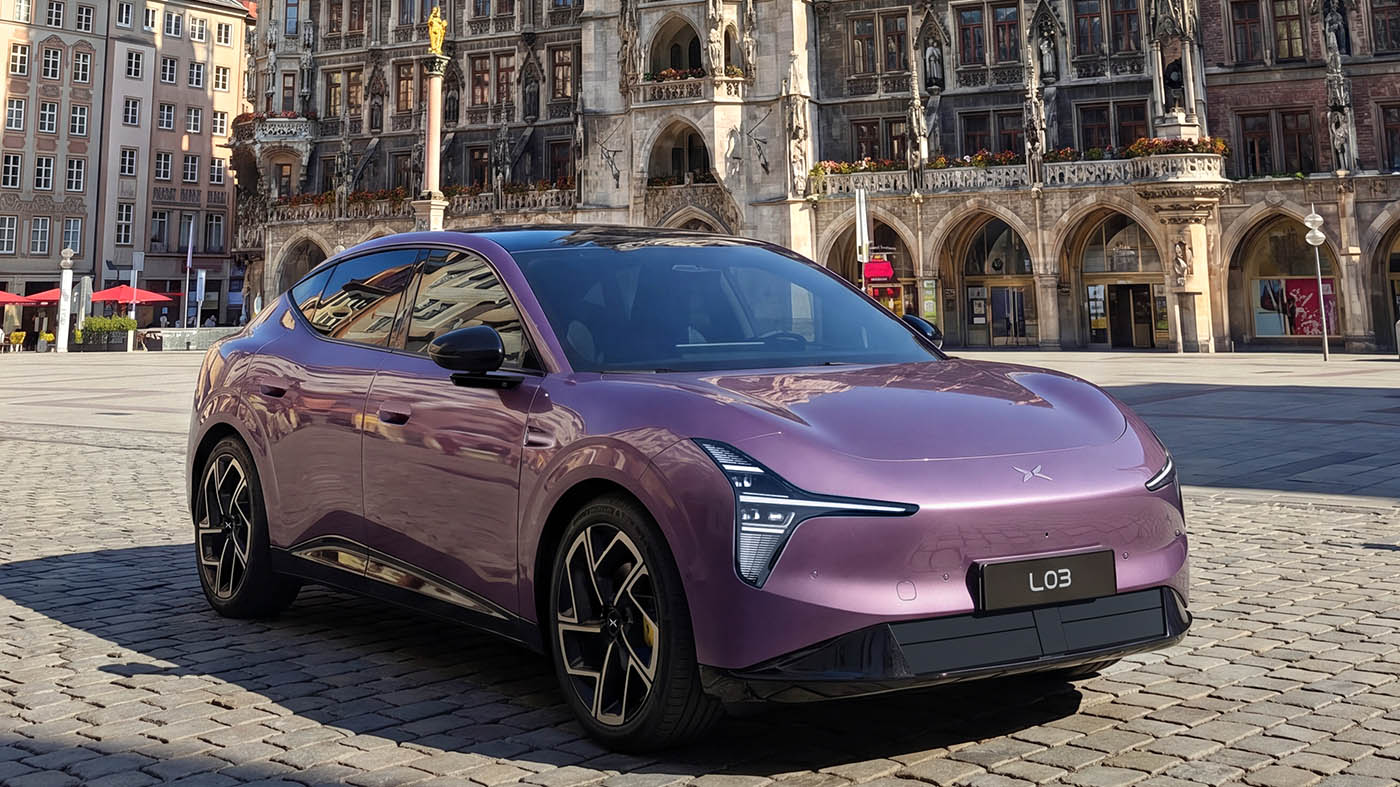
Tesla‘s purpose-built autonomous model Cybercab would no longer need a turn signal that cancels when a steering wheel turns, or a manual control to switch it off, under a proposed rewrite of the federal lighting standard filed on Friday.
The change addresses one of the requirements the National Highway Traffic Safety Administration (NHTSA) has questioned in its review of how Tesla certified the robotaxi.
NHTSA proposed amending Federal Motor Vehicle Safety Standard (FMVSS) No. 108, which governs lamps, reflective devices and associated equipment. The notice is scheduled for publication in the Federal Register on October 26, opening a 30-day comment period.
The proposal would also allow automated vehicles to carry optional cyan “ADS marker lamps.” The lamps tell other road users that no one inside is expected to watch the road. Under the proposed activation rules, Tesla’s Full Self-Driving (Supervised) cars could not light them.
The notice does not name Tesla or any other company. NHTSA says vehicles without manual driving controls “currently are not available for consumer purchase,” but that “some manufacturers and rideshare operators have deployed such vehicles in a number of cities.”
Turn signals
FMVSS 108 currently requires the turn signal unit on passenger cars, multipurpose passenger vehicles, trucks and buses narrower than 2,032 millimeters (80 inches) to cancel itself when the steering wheel turns. It must also be possible to cancel it with a manually operated control.
NHTSA proposes exempting vehicles without manually operated driving controls from both requirements, set out in paragraph S9.1.1. Such vehicles would still need a turn signal operating unit, but it could be non-manual.
The agency said turn signal activation and cancellation will be programmed into the automated driving system to comply with traffic laws. “Unlike a human driver, the system cannot forget that the turn signals are active,” NHTSA wrote.
The same logic applies to the high-beam switch. The current rule requires it to be operable “by a simple movement of the driver’s hand or foot.” Vehicles without manual controls would still need a way to switch beams, because an automated system may rely on high beams, but not a hand or foot control.
NHTSA would also remove the reference to a driver in the definition of the hazard warning signal operating unit. The requirement that several hazard switches be actuated by a single driver action would apply only to vehicles with manual controls.
Fewer dashboard lights
The turn signal and high-beam telltales, the dashboard lights that confirm a lamp is on, would only be required in vehicles with manual controls. NHTSA said the automated system, not a person, would control and monitor those lamps.
Vehicles without turn signal telltales would instead need a lamp-failure telltale “in clear view of all designated seating positions.” The hazard warning telltale would stay mandatory for now, though NHTSA is asking for comment on whether it should.
NHTSA stressed that any vehicle with manual controls, whether or not it has an automated driving system, “must continue to meet all existing safety requirements.” That covers every Tesla sold to consumers today.
The Cybercab certification review
Tesla began paid Cybercab rides in Austin on September 3 without seeking an exemption from the safety standards, having certified the vehicle as compliant. NHTSA opened Audit Query AQ26002 and on September 10 issued a Special Order with 21 requests.
Request 13 asks whether the Cybercab has a turn signal that self-cancels by steering wheel rotation and a manually operated turn signal control. Those are the two FMVSS 108 requirements the new proposal would lift for vehicles like it.
The order covers far more than lighting, covering also controls and telltales, the shift position display, mirrors and rear visibility, stability control telltales, and service brakes.
NHTSA proposed in June to drop the hand or foot brake control requirement in FMVSS 135 for vehicles driven only by an automated system. The FMVSS 108 notice says the agency proposed changes to FMVSS 102, 103, 104 and 110 earlier this year for the same purpose.
None of those proposals is final. Until NHTSA adopts them, the existing text of each standard applies, including to vehicles already on the road.
Tesla’s answer to the order is due October 30. NHTSA moved the deadline from September 30 after Tesla asked for until November 20, Not a Tesla App reported.
Tesla’s Robotaxi account said on October 10 that the fleet had “scaled to 300+ Cybercabs serving Austin.” The company aims to deliver its first Cybercabs to customers by the end of 2026, though executives said most would stay Tesla-owned.
Amazon‘s Zoox took the exemption route instead. NHTSA granted it a Part 555 exemption on July 30 covering parts of eight standards, capped at 2,500 vehicles a year, the legal maximum.
Cyan lights for driverless operation
The proposed rule defines an ADS marker lamp as “a lamp that is used to indicate when a vehicle is operating without the expectation that an occupant is monitoring the roadway.”
The lamps may switch on automatically only in that state. They must switch off automatically “when a vehicle is operating with the expectation that an occupant is monitoring the roadway.” NHTSA said the rule would also bar the lamps on vehicles without automated driving capability.
That leaves them out of reach for Tesla’s Full Self-Driving (Supervised), which requires an attentive driver. They would be open to the Cybercab and to Robotaxi vehicles running without a supervisor.
Fitting the lamps would be optional. NHTSA said it lacks the information to conclude there is a safety need to require them on every automated vehicle.
Any lamps fitted would have to be cyan, the blue-green defined in SAE J578, and steady burning. Vehicles would carry one or two on each of the front, sides and rear, for four to eight in total, mounted at least 15 inches above the ground. They could not be optically combined with any other lamp.
The specifications largely follow SAE International’s J3134 standard, revised in December 2025. NHTSA cited a survey of more than 4,400 drivers in the United Kingdom, Japan, the United States and Germany. Upward of 80% of US and UK respondents said automated vehicles should carry a marker lamp.
Mercedes-Benz ran a two-year on-road validation of the lamps in California from 2023 to 2025 using five vehicles, the notice said.
California law already allows the lamps in line with SAE J3134. NHTSA tentatively concluded its rule would override that law only where the federal specifications depart from the SAE standard.
Headlamps and timing
Two changes apply to all vehicles. Integral beam headlamps would be tested at a voltage set by the manufacturer instead of the fixed 12.8 volts in place since 1967. The rule requiring the low beam to sit above the high beam in vertical headlamp layouts would be dropped.
NHTSA said it expects no added costs. It wants the rule to take effect immediately once final, because every change adds flexibility rather than obligations.
Without the changes, the agency said, such vehicles “would seek exemptions from this standard.” The notice is signed by NHTSA Administrator Jonathan Morrison.