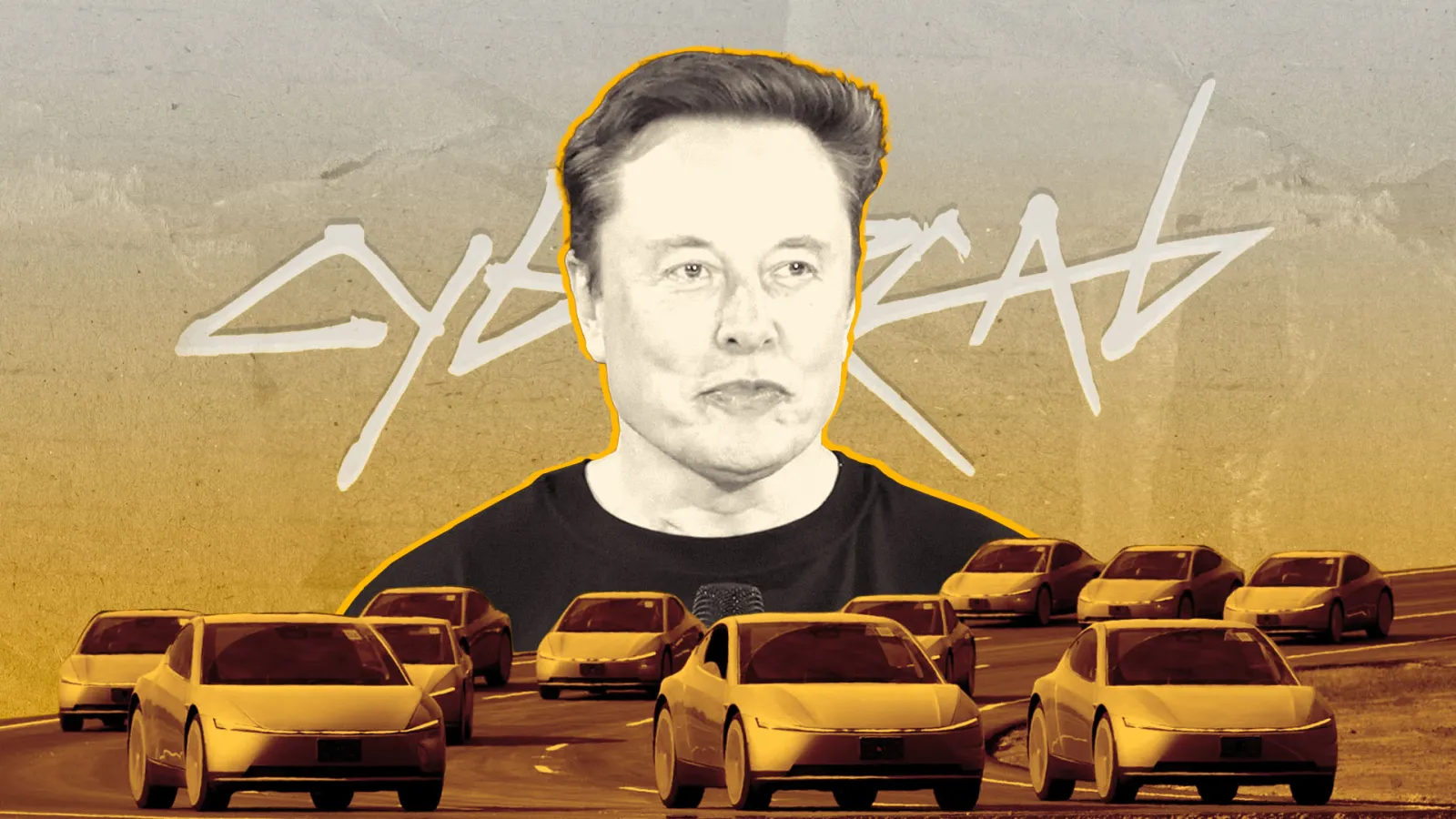
Tesla shares erased almost all of an after-hours slide on Thursday as Wall Street analysts raised price targets following the company’s third-quarter results, with several saying the stock now trades more on a possible merger with SpaceX than on its quarterly numbers.
The shares traded at $387.67 in morning trading in New York, up 0.31% from Wednesday’s close of $386.47. They had ended after-hours trading on Wednesday at $373.65, down 3.3%, after an initial rise following the release.
Five of the seven firms whose notes were published on Price Target, EV‘s sister publication, which archives Wall Street analysts’ notes and price targets on EV, AI and semiconductor companies, raised their targets. The other two kept them unchanged.
JPMorgan and Morgan Stanley also raised their targets, taking the count to seven increases among nine firms. None cut. CLSA upgraded the stock to ‘Hold’ from ‘Underperform’.
The reaction contrasts with July, when 10 of 14 firms tracked by Price Target cut their Tesla targets after the second-quarter report, according to Price Target’s records.
Seven Raises, No Cuts
UBS raised its target to $425 from $391 and kept a ‘Neutral’ rating. Piper Sandler lifted its target to $475 from $450, keeping ‘Overweight’.
Canaccord Genuity raised its target to $442 from $410 and Mizuho to $460 from $450, both keeping their ‘Buy’-equivalent ratings.
CLSA raised its target to $400 from $310, a 29% increase, alongside its upgrade. Goldman Sachs kept its ‘Neutral’ rating and $360 target, the lowest among the nine. TD Cowen reiterated ‘Buy’ and $460.
JPMorgan analyst Rajat Gupta raised his target to $430 from $415 and kept a ‘Neutral’ rating, according to dpa-AFX. Gupta called the results positive overall, citing a better-than-expected automotive gross margin and growing momentum in autonomous driving, while noting that rising operating costs and heavy investment still weigh on near-term financials.
Gupta attributed the higher target partly to a revised valuation approach and partly to a higher probability of a merger with SpaceX, dpa-AFX reported.
Morgan Stanley raised its target to $410 from $400, according to wire reports. Its note had not been published in full at the time of writing.
‘Sentiment Around a Merger’
The common thread was SpaceX. Chief Executive Officer Elon Musk said on SpaceX’s earnings call on Tuesday that both companies had formed special committees to study a merger, but did not address it on Tesla’s call on Wednesday.
“We raise our target price from US$310 to US$400, implying 4% upside, and upgrade Tesla from Underperform to Hold, seeing that sentiment around a merger trumps long-term risk worries,” CLSA analyst Christopher Richter wrote.
“With Musk saying that the idea has ‘merit’ and setting up committees to study it, we believe a merger will occur,” Richter added. He said Musk “will likely move quickly, with polls showing the Republicans will lose control of Congress, and that could disrupt his plans.”
UBS analyst Joseph Spak called the quarterly update “positive” but said the “large investor focus is on a potential combination with SpaceX.”
“We are raising our PT to $425 on higher numbers, but we do believe the stock will mostly trade with evolving views and sentiment on a potential combination with SpaceX,” Spak wrote.
Piper Sandler analyst Alexander Potter tied the after-hours drop to the SpaceX call rather than to Tesla’s numbers.
“TSLA was indicated lower by 3% after-hours, but we doubt this stems from anything fundamental,” Potter wrote. He said the “weakish post-Q performance probably stems from elevated expectations following yesterday’s SPCX call, which featured breakneck AI/SI upside and unusually candid commentary re: a Tesla+SpaceX merger.”
“By comparison, today’s Tesla call was less dramatic,” he added. “But under the surface, there were lots of exciting details, particularly re: robotaxi scaling and FSD adoption.”
FSD, Energy and Robotaxi
Analysts singled out the take-up of Full Self-Driving software.
Spak said 75% of North American deliveries took FSD, up 20 percentage points from the second quarter, and that energy demand was “strong from rising data center demand with ’27 Megapack capacity nearly sold out.”
UBS raised its earnings-per-share estimates for 2027 and 2028 to $2.02 and $3.17, from $1.80 and $2.92. Spak said he did not expect the robotaxi business to be “financially material until late ’27 or 2028.”
TD Cowen analyst Itay Michaeli said the firm walked away “more encouraged by automotive gross margin expansion, FSD/RoboTaxi updates, and positive EV demand comments.”
Michaeli listed Tesla’s largest order backlog in four years, record North American FSD attach rates, an expected unsupervised FSD launch in the second quarter of 2027 and plans for Cybercab customer deliveries by year-end among the positives.
The Doubts
Goldman Sachs analyst Mark Delaney said the report “showed good progress in several areas,” citing autonomy, a strong backlog in autos and energy, and gross margins above his estimates in all three segments.
But he pointed to “mixed to softer datapoints, with opex higher than we had estimated, Energy segment revenue lower than our estimate, and the company is still iterating on Optimus.”
“Over the near to medium term, we expect profitability and FCF to remain somewhat pressured from higher opex and capex,” Delaney wrote. “Finally, we see valuation as full.”
TD Cowen flagged that Optimus still had items to resolve “which could take until the end of 2027.”
The firm also noted that Tesla’s 2026 capital spending guidance was cut back to $20 billion from $25 billion, in line with its original guidance, and that the energy segment benefited from tariff refunds and warranty items.
Delaney compared Tesla’s revenue of $28.0 billion, gross margin of 19.6%, operating income of $718 million and non-GAAP earnings of $0.48 a share with company-compiled consensus of $28.3 billion, 17.9%, $721 million and $0.45.