
Tesla‘s CEO Elon Musk reaffirmed on Sunday that the company already has unsupervised Full Self-Driving vehicles operating “with no people inside and no safety monitors” in three Texas cities and predicted the service will be “widespread in the US by the end of this year.”
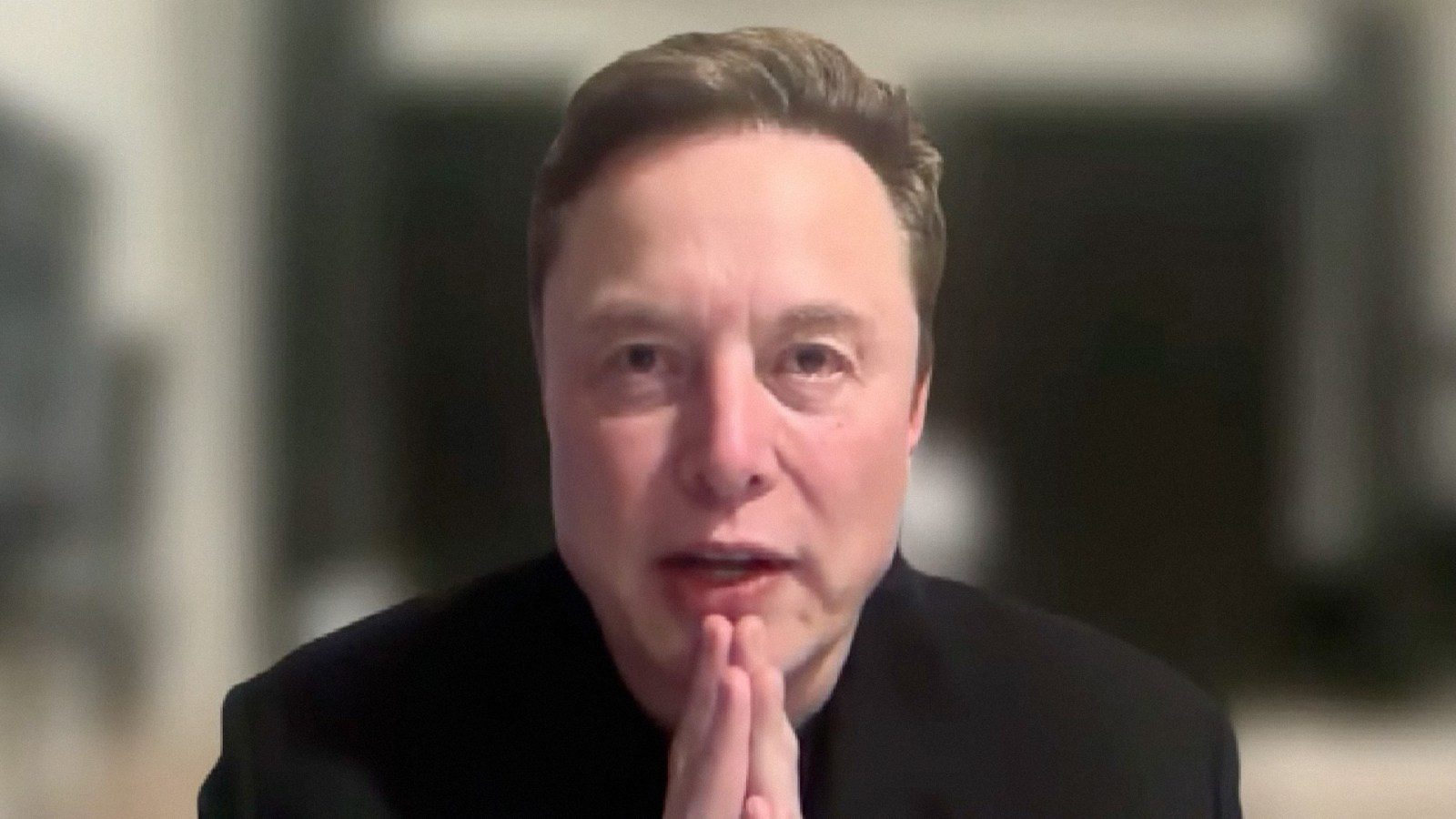
Musk made the comments during a virtual interview at the Smart Mobility Summit 2026, held at Expo Tel Aviv.
“I think we already have some vehicles operating with no people inside and no safety monitors in three cities in Texas,” he said, likely referring to its Robotaxi service fleet in Austin, Houston and Dallas.
The three cities currently make up Tesla‘s entire unsupervised Robotaxi footprint.
The company launched in Austin in June 2025 with safety monitors inside the vehicles, then expanded to Dallas and Houston in April with fully driverless rides.
According to the Robotaxi Tracker platform, the combined fleet across all three cities stands at 38 unsupervised vehicles — with Dallas and Houston currently having just five and six vehicles in their fleets.
The pace has drawn scrutiny from analysts, given Musk’s earlier forecasts of hundreds or thousands of vehicles by now.
Tesla first implemented unsupervised FSD in its Robotaxi fleet, with the CEO noting during the company’s January earnings call that they were being careful with customer rollout.
“Well, it is 100% unsupervised. FSD is 100% unsupervised,” he said then, just as the company had introduced its first driverless vehicles in its Austin Robotaxi fleet. “For customers, we’re just being very cautious with the rollout.”
The Tesla CEO remains confident in the expansion of unsupervised FSD across the country.
‘Sentient’ FSD
In the interview, Musk described the driving experience of FSD in unusually vivid terms.
“It is quite magical, because the car feels like it is sentient,” the CEO noted.
The term “sentient” has been used by several Tesla executives in the past months to describe the latest version of the software, FSD 14.
Both Musk and Tesla‘s VP of AI Software Ashok Elluswamy have said that FSD 14.3 will have reason.
It actually feels like it’s alive,” the CEO noted. “And you can actually, as we improve the software, you can feel the sentience growing in the car.”
He reiterated Tesla‘s camera-only approach to self-driving, contrasting it with competitors that rely on additional sensors like LiDAR — which includes Waymo, the Alphabet subsidiary that runs the largest robotaxi fleet in the US.
“The Tesla full self-driving software, which is really just AI and cameras — we don’t use radars or LiDAR or anything like that,” Musk said.
To him, “it’s really trying to drive the car in the same way that a human drives the car, which is a human drives the car primarily with vision and with a biological neural net.”
Musk said he expects the system to eventually be “at least an order of magnitude safer than humans driving.”
90% of Driving by AI in 10 Years
Questioned about the long-term outlook for smart mobility, Musk said the path to fully autonomous driving is no longer in question.
“At this point, the path to cars driving in automatic mode safer than humans is very clear. I think it’s not really a question mark,” he highlighted.
He predicted that self-driving would fundamentally reshape personal transportation within a decade.
“If you say like 10 years from now, probably 90% of all distance driven will be driven by the AI in a self-driving car,” the Tesla CEO stated. “It’ll be quite a niche thing in 10 years to actually be driving your own car. Because the car will drive you.”
FSD Deployment
Musk’s comments come as Tesla continues to push FSD into international markets — though progress has varied significantly by region.
In Europe, the Netherlands became the first country to approve FSD (Supervised) on April 10, with the Dutch vehicle authority RDW issuing formal type approval under the UN R-171 framework.
Tesla began rolling out the software to Dutch customers within 24 hours.
The approval does not automatically extend to other EU member states.
Several countries — including Italy, France, and Sweden — have signaled they will wait for the EU-wide vote through the Technical Committee on Motor Vehicles (TCMV) before acting.
Belgium’s Flanders region has separately pushed for a fast-track national recognition of the Dutch approval.
Tesla‘s public statements continue to target EU-wide availability by summer 2026.
In China, full FSD approval remains pending.
During the first-quarter earnings call, Musk said he expects approval by the third quarter of 2026.
The company established a local AI training center in February to develop FSD using Chinese road data, after data export restrictions had previously limited its ability to train the system locally.
Tesla currently offers only a limited trial version of the software in China, rebranded as “Intelligent Assisted Driving” after the Ministry of Industry and Information Technology banned the use of terms like “autonomous driving” and “full self-driving.”
In Israel, Musk hinted at a near-term rollout but was not specific.
“I’m not sure if we have approval for this in Israel. I think we may have, or we’ll get it soon hopefully, and you’ll be able to experience it for yourself,” the Tesla CEO stated.
In late March, Israel’s Transport Minister Miri Regev said the software was “coming soon” to the country.
FSD (Supervised) is currently available in the United States, Canada, Mexico, Puerto Rico, Australia, New Zealand, South Korea, and the Netherlands.
The system has surpassed 10 billion cumulative miles of real-world driving data — a threshold Musk had previously cited as the volume needed for safe unsupervised operation.