Stellantis‘s buyer for its idled Brampton, Ontario, assembly plant says it holds a letter of intent from a major European automaker that it hopes to bring into the factory.
Roman Shimonov, founder and CEO of Canadian armored vehicle maker Roshel, told CBC News on Monday that he would not name the automaker. He said the plant will not only make defense vehicles.
“Our goal is to employ thousands of people and we’ll definitely give the first priority to Brampton people,” Shimonov said. He added that Roshel is not taking on obligations made by Stellantis.
He spoke on the day Stellantis said it had signed an asset purchase agreement to sell the plant and its equipment to Roshel, three years after it halted production there to retool for a new Jeep. The companies’ joint release did not mention another automaker.
The sale sets up a confrontation with Ottawa, the province and the union that represents the company’s Canadian workers. Canada’s Industry Minister, Mélanie Joly, said in a statement posted on X that the decision “does not erase the commitments they made to workers in Brampton,” and the union Unifor called the sale a betrayal.
“Roshel upfitting trucks for the military is not the same as building vehicles from the ground up,” Unifor President Lana Payne said.
The deal lands seven weeks before the date President Donald Trump has set for U.S. tariffs on Canadian-built vehicles to double to 50%, with the company’s remaining Canadian assembly plant idle and its workers holding a strike mandate.
The Deal
Roshel, which is based in Brampton and says it has deployed more than 2,500 vehicles to Ukraine, will acquire the plant for an undisclosed price. The sale is expected to close by the year end, subject to conditions that include government and regulatory requirements, Stellantis said.
The two companies will also explore working together on vehicle technologies and defense services. Roshel would lease about a quarter of the site back to Stellantis for automotive work, and between 700 and 1,000 laid-off employees could return under the new owner, according to The Canadian Press.
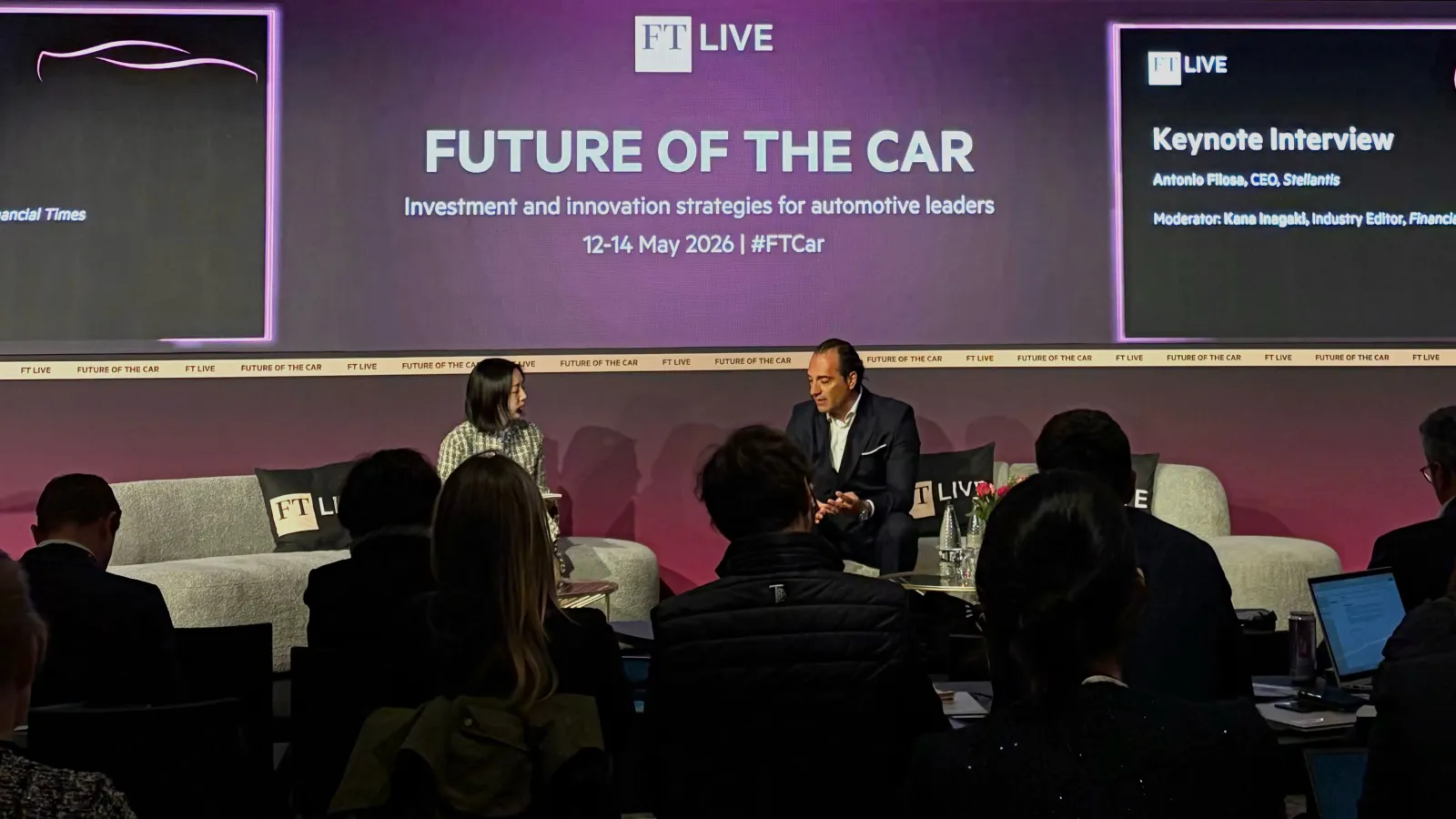
“After three years of paid layoff, we remain committed to working with Unifor on a fair resolution,” CEO Antonio Filosa said. Stellantis said the sale supports its €60 billion ($67.4 billion), five-year FaSTLAne 2030 plan, unveiled on May 21, which targets about 80% capacity utilization across North America in 2030, and that it is prepared to negotiate a settlement with the union.
The company said it “acknowledges its obligations to employees under the collective agreement and applicable laws.”
Shimonov said in the release that the company plans “a new Centre of Excellence for advanced manufacturing” that “will allow Canadian companies to better serve customers at home and export into allied markets.”
The plant, which dates to 1986, stopped building the Chrysler 300 and the Dodge Charger and Challenger in December 2023. More than 2,200 workers have been on layoff since, and the plant employed about 3,000 before it closed.
Ottawa’s Response
“All parties must come back to the bargaining table,” Joly said in the statement. She said she had reached out to representatives of Unifor, Stellantis, the Government of Ontario and the Brampton plant to convene a meeting later this week.
“I expect them to come to the table with a single focus: protecting good paying jobs in Brampton,” she said.
Joly said the government remains “focused on finding solutions for the more than 2,000 affected workers and their families.”
“They deserve answers, respect and, above all, a secure future,” she said. “For Brampton’s auto workers, walking away is not an option.”
“We are unequivocal in our efforts to defend and grow Canada’s auto sector in Brampton and across the country,” she added.
The statement did not mention the federal funding contracts with Stellantis or the notice of default the government said in December it was serving on the company.
International Trade Minister Maninder Sidhu, who represents Brampton East in Parliament, said Stellantis “made commitments to these workers, and it must honour them.”
What Stellantis Had Promised
Brampton was closed to be rebuilt. Stellantis said on May 2, 2022, that it would invest C$3.6 billion ($2.5 billion) in its Windsor and Brampton plants and a research center, with Brampton to be retooled from 2024 and to resume production in 2025 with at least one all-new electric model.
Under a funding deal that month, the federal government agreed to provide up to C$529 million ($374.5 million) toward retooling the Brampton and Windsor plants. Ontario committed up to C$513 million ($363.2 million). Ottawa and Ontario each committed C$132 million ($93.4 million) to the Brampton work, according to The Pointer.
In July 2023, Canada and Ontario agreed to provide up to C$15 billion ($10.6 billion) in performance incentives for NextStar Energy, the Windsor battery plant Stellantis was building with LG Energy Solution. The governments said Stellantis would “uphold its existing commitments in Canada and Ontario, including a production mandate” at Brampton.
In November 2023, after contract talks with Unifor, Stellantis confirmed that “Brampton will re-join the Jeep family with the production of the next generation Jeep Compass.” It put the investment at C$1.32 billion ($934.4 million) and said the plan was expected to return the plant to three shifts.
Stellantis paused the retooling on February 20, 2025, saying it was reassessing its product strategy in North America, as Trump threatened tariffs on Canada. On October 14, 2025 it moved the Compass to Belvidere, Illinois, as part of a $13 billion U.S. investment plan.
The company kept saying a replacement would come. “Canada is very important to us. We have plans for Brampton and will share them upon further discussions with the Canadian government,” spokeswoman Jodi Tinson said that week.
Two weeks later Stellantis executive Jeff Hines told Canadian lawmakers he had “seen a couple of different potential options for the plant in Brampton” and spoke of keeping its workers employed “with a long-term, sustainable operation.”
Teresa Piruzza, Director of External Affairs and Public Policy at Stellantis’s Canadian arm, told lawmakers last December that the plant was “on an operational pause.”
“We do not agree that we are in breach of contract,” she said.
On February 12 this year, Trevor Longley, who heads Stellantis Canada, told the union that “if we were going to close Brampton we would have closed it already.” That is the account of Vito Beato, President of Unifor Local 1285, which represents the Brampton workers, as reported by The Pointer.
In April, after Bloomberg News reported that Stellantis was weighing assembling vehicles from its Chinese partner Leapmotor at Brampton from imported kits, Joly ruled the idea out. “We can’t bring cars in a kit to Canada,” she said.
“I’ve been clear with the company and we will get our money back unless they bring back production,” Joly said.
In May, after Stellantis presented its FaSTLAne 2030 plan, a spokesperson said its new models create “meaningful potential opportunities for facilities like Brampton.”
By August the company told Unifor it was seriously considering closure and sale, while saying publicly that “our focus remains on finding a sustainable manufacturing solution for Brampton Assembly.” It signed a memorandum of understanding with Roshel on September 11, and Longley called the buyer “a strong path to restoring sustainable operations.”
What Governments Had Said
Prime Minister Mark Carney said in October 2025 that he had spoken to Filosa before the Compass decision. “I expressed disappointment on their decision,” he said, adding that the company was “looking at different models being produced in Brampton” and that he had reminded Filosa of its undertakings.
Joly wrote to Filosa that Stellantis had agreed to maintain its “full Canadian footprint, including Brampton, in exchange for substantial financial support,” and that “anything short of fulfilling that commitment will be considered as default under our agreements.”
“Should Stellantis choose not to respect its obligations, we will act in the interest of all Canadians and hold the company to full account, and exercise all options, including legal,” she wrote.
On October 23, 2025, Ottawa cut by half the number of U.S.-built vehicles Stellantis may import free of Canadian counter-tariffs, citing its “decision to cancel its production plans for the Brampton assembly plant.” It then opened a dispute resolution process and, in December, said it was serving a notice of default.
Joly told lawmakers the contracts for the NextStar battery plant, backed by upwards of C$14.6 billion ($10.3 billion) in public support, included a job guarantee for Brampton. “We can’t open that floodgate of basically our automakers leaving the country,” she said.
Stellantis agreed in February to sell its 49% stake in NextStar to LG Energy Solution, subject to approvals, while remaining a customer of the plant.
Ontario Premier Doug Ford blamed Trump at the time. “I’m sick and tired of rolling over. We need to fight back,” he said.
“I’m not going to give them a penny, because it was tied in to making sure Windsor and Brampton keep going,” Ford said. “We haven’t given them a penny for Brampton yet.”
On Monday, before the sale was confirmed, Ford said the outcome was “unacceptable. We need them to find a vehicle, a model, that works.” He added that “we can’t bring in kits from China.”
“We will see what happens on this so-called sale to Roshel. We just need jobs,” Ford said.
South of the border the reaction to the original move was the opposite. Illinois Governor JB Pritzker called the Belvidere reopening, a $600 million investment with 3,300 jobs and production from 2027, “a major win.”
The Tariffs Behind It
The U.S. has charged a 25% tariff on Canadian-built vehicles since April 3, 2025, applied to the non-U.S. content of vehicles that qualify under the North American trade agreement. Canada answered with a 25% counter-tariff on U.S. vehicles and a remission scheme that lets automakers import a quota of them duty-free if they keep building in Canada.
The quota cut became part of the wider dispute. A U.S. proclamation signed on July 20 imposed an additional 50% duty on certain Canadian products from August 19. It said Canada had “reduced the TRQs for U.S. companies that moved manufacturing from Canada to the United States,” a reference to the tariff-rate quotas.
Carney said last year that the Compass decision was a direct consequence of tariffs. Trump said on August 24, after trade talks between the two countries collapsed, that tariffs on Canadian cars, trucks and auto parts would rise to 50% on January 1, 2027.
Stellantis estimates net tariff costs of about €1.0 billion ($1.1 billion) for 2026.
Unifor said the sale comes “in the immediate aftermath of a paradigm shift in U.S. Congress” that could open a path to resolving the tariff dispute, after Democrats won both chambers in last week’s midterm elections. Payne said the closure could become “a trophy for Donald Trump to wave around.”
The first is for the workers. Shimonov’s goal is thousands of jobs. The number of laid-off workers who could return under Roshel is 700 to 1,000, according to The Canadian Press, against a car plant that employed about 3,000.
Beato called the replacement jobs “hypothetical” and said they “depend on military procurement contracts that haven’t even been awarded yet.”
Payne told a news conference that the closure cuts Canada’s vehicle production capacity by 10%, and that “once that capacity is gone, it’s often gone for good.”
Payne said Canada “will also lose thousands more in its auto parts supplier base.”
The second is for Windsor. The minivan and Dodge Charger plant there employs 6,400 people and has been idle since October 19, with Stellantis citing tariffs and production levels, according to the union.
The plant added a third shift of 1,700 workers in February under a 2023 commitment to Unifor. “We have three shifts of workers in Windsor not working right now,” said James Stewart, who leads Unifor’s bargaining with the company.