Stellantis will move many of the EVs it sells in Europe from nickel manganese cobalt (NMC) batteries to cheaper lithium iron phosphate (LFP) cells in 2027, CEO Antonio Filosa said, as the carmaker tries to stem losses in the region.
“We will also switch for many nameplates from NMC battery chemistry to LFP battery chemistry. This is a substantial saving in the battery cost,” Filosa told analysts on the company’s third-quarter earnings call on Wednesday.
The Fiat 500e city car is among the models set to make the switch, Automotive News reported on Thursday. Stellantis has not named the other nameplates.
Filosa was answering a question from Kepler Cheuvreux analyst Thomas Besson about customer behavior in Stellantis’ two largest regions.
“In Europe, we see obviously an acceleration of electrification, driven by oil price, but also driven by regulation,” Filosa said.
He paired the battery change with the launch of the company’s STLA One platform, which he called “our most competitive platform for the segments B, C, and entry D. This is the heart of the market in Europe.”
“The combination of the introduction of the global STLA One platform, starting in Europe, and then getting to North America and the other region, and the switch of battery chemistry from NMC to the much more competitive LFP, will put also us in Europe in a very good position to enjoy the acceleration of BEV,” he said.
LFP cells typically cost less than NMC cells and use no nickel or cobalt, though they store less energy for their weight, which can mean shorter range for a battery of the same size.
A Plan Set Out in May
The switch puts into effect a strategy Stellantis laid out at its Investor Day on May 21.
“First, we scale LFP to improve affordability and reduce exposure to critical raw materials,” Davide Mele, Head of Product Planning, said at the event.
“Second, with cell-to-body integration, the battery becomes part of the vehicle, so cutting cost, weight, and complexity,” he said.
Mele said STLA One would launch by 2027 to cover the B, C and D segments over time, and would deliver “around 20% cost reduction driven by modularity by design and the new battery solutions.” He called the platform “the foundation of our updated battery strategy.”
Emanuele Cappellano, Chief Operating Officer for Enlarged Europe, said Peugeot would be the first brand to launch on the platform in 2027, followed by Opel, Jeep and Alfa Romeo,
Stellantis also plans a fully electric car “below 15,000 euro” ($16,700), which Cappellano said would reach “cost parity between the BEV and ICE.” Citroën will open “a new segment of the European market focused on affordability” in 2028, he said.
Where the Cells Come From
Stellantis’ main source of LFP cells in Europe is set to be a joint venture with CATL at its plant in Zaragoza, Spain.
The two companies agreed in December 2024 to invest up to €4.1 billion ($4.58 billion) in the 50-50 venture, which would have capacity of up to 50 gigawatt-hours a year and supply “affordable” battery-electric passenger cars, crossovers and SUVs in the B and C segments, according to Stellantis’ announcement.
Production was targeted to start by the end of 2026.
Construction began in November 2025 and is expected to finish by March 2028, Reuters reported, which left the original production timeline unclear.
Stellantis already uses LFP in some models. SVOLT supplies LFP cells for the Citroën ë-C3.
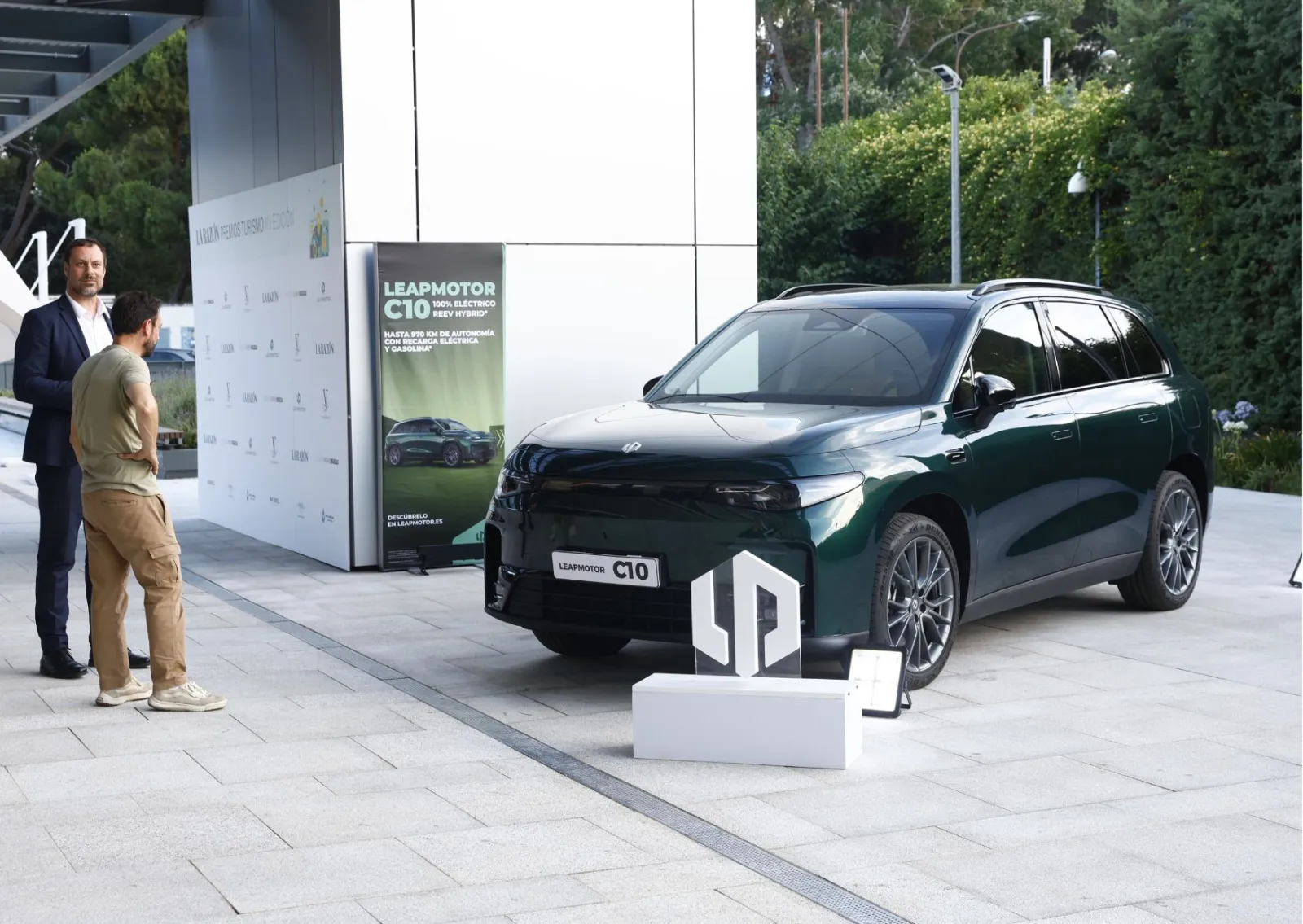
The Zaragoza site has also begun building the Leapmotor B10, the first of the Chinese partner’s cars made in Europe, with the B05 due to follow in the first half of 2027, Filosa said on the call.
The Fiat 500e
Fiat added a hybrid version of the 500 alongside the electric model last year. The 500 Hybrid added about 6,000 units to Stellantis’ European sales in the third quarter compared with a year earlier, according to the company.
Automotive News did not say when the 500e would receive LFP cells or what range it would offer.
At the Investor Day, Fiat Chief Executive Officer Olivier François listed “a new Cinquecento” among the brand’s upcoming models, without giving details.
Losses in Europe
The battery change comes as Stellantis’ European business loses money despite rising electric sales.
Enlarged Europe posted an adjusted operating loss of €311 million ($347 million) in the third quarter, compared with a profit of €157 million a year earlier.
Its battery-electric passenger car sales in the EU30 region rose 65% in the quarter, or 93% including Leapmotor, while its overall market share fell 60 basis points. The battery-electric figures include microcars such as the Citroën Ami and Fiat Topolino in some countries.
“Despite the strong growth in BEV demand, timely action on CO2 flexibility and Made in Europe framework are essential to creating a level playing field,” Filosa said on the call.
Rivals Move the Same Way
Other carmakers are also turning to LFP for cheaper electric cars in Europe. Volkswagen and its battery unit PowerCo said in September they would form three joint ventures with Gotion High-Tech in Spain, Slovakia and Morocco to produce LFP cells and cathode material.
Polestar has said it is considering LFP batteries as part of its plan for a climate-neutral car.
Stellantis shares fell 1.4% to €4.22 ($4.71) in Milan on Thursday.