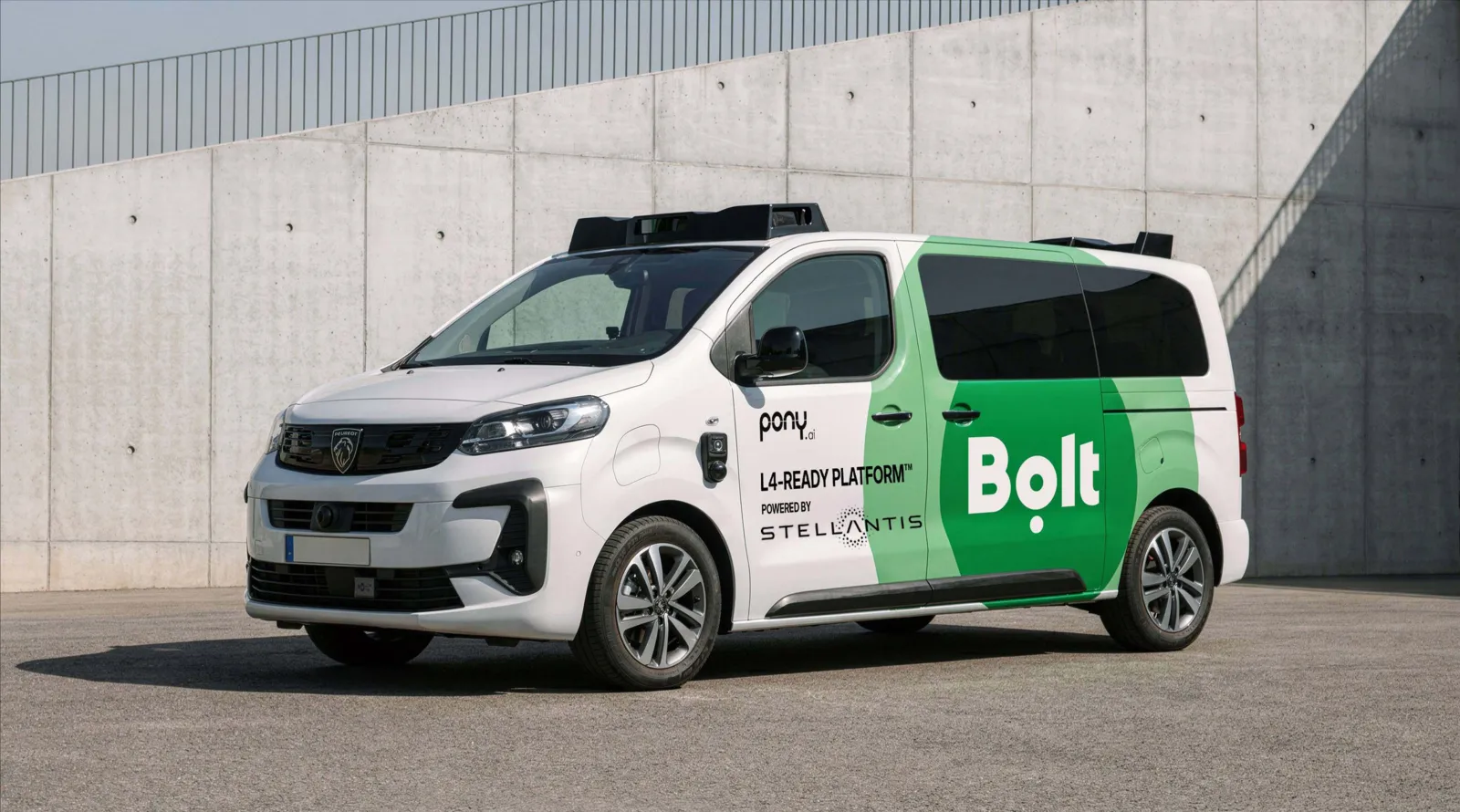
Stellantis beat third-quarter profit forecasts and reaffirmed its 2026 guidance on Wednesday, as cost savings and a recovery in North America from a year-earlier loss outweighed deepening losses in Europe.
Adjusted operating income rose to €256 million ($285 million) in the July-September period from €90 million a year earlier, the company said. That was above the €191 million ($213 million) expected by analysts in a Reuters poll.
The adjusted operating margin rose 50 basis points to 0.7%. Net revenues increased 1% to €37.6 billion ($41.8 billion).
The net loss narrowed 90% to €453 million ($504 million) from €4.5 billion ($5.0 billion) a year earlier, when Stellantis booked large charges for contractual warranties and program cancellations.
Shares in Milan were up 5.8% at €3.93 by mid-morning, after closing at €3.71 on Tuesday.
Still burning cash
Industrial free cash flow was negative €4.0 billion ($4.5 billion), an improvement of €0.3 billion ($0.3 billion) from a year earlier. Capital spending fell by €0.5 billion ($0.6 billion), reflecting the timing of this year’s investments, the company said.
Industrial available liquidity stood at €42.7 billion ($47.5 billion), or 26% of trailing 12-month revenues, within Stellantis’ 25% to 30% target range.
Stellantis expects industrial free cash flow to improve this year and to turn positive in 2027. This year’s figure includes about €1.6 billion ($1.8 billion) in cash payments related to charges booked in the second half of 2025, of which €1.1 billion ($1.2 billion) had been paid by the end of September.
“During the quarter, we continued to make progress in the early execution of our FaSTLAne 2030 plan, launching new products, accelerating partnerships as planned, and delivering meaningful improvements in manufacturing and quality,” Chief Executive Officer Antonio Filosa said.
Savings ramp up
Lower industrial costs added €828 million ($921 million) to adjusted operating income compared with a year earlier, helped by cost-saving actions, lower CO2 compliance costs and lower warranty costs, partly offset by commodity inflation, according to the company’s results presentation.
Volume and mix reduced it by €477 million ($531 million), mainly due to lower North American shipments.
Filosa said the Value Creation Program was ramping up rapidly and that Stellantis remained on track to implement at least 40% of €6 billion ($6.7 billion) in run-rate efficiencies by the end of the year.
The company expects savings from the program to reach the mid-hundreds of millions of euros in the fourth quarter, about double the third-quarter amount. That means €500 million to €600 million ($556 million to $668 million) this quarter, up from €300 million ($334 million) in the third.
NA recovers, Europe not
North America posted adjusted operating income of €64 million ($71 million), compared with a loss of €475 million ($529 million) a year earlier, as positive pricing and cost savings offset lower volumes. Its margin was 0.4%, up 340 basis points but down from €284 million ($316 million) in the second quarter.
Revenues in the region fell 3% to €15.6 billion ($17.3 billion), as shipments dropped 12% to 357,000 vehicles because of planned production downtime that mainly affected Jeep models.
Enlarged Europe posted an adjusted operating loss of €311 million ($346 million), compared with a profit of €157 million ($175 million) a year earlier and a loss of €94 million ($105 million) in the second quarter. Its margin was minus 2.2%.
The “pricing environment continues to be challenging, outpacing region’s strong cost savings,” Stellantis said in its presentation. European shipments rose 10% and revenues 3% to €14.1 billion ($15.6 billion).
South America was the most profitable region, with adjusted operating income of €431 million ($480 million) and a 10.5% margin. The Middle East and Africa earned €244 million ($271 million), down 10%, with a 14.6% margin. Asia Pacific swung to a profit of €18 million ($20 million).
One-off items
Stellantis excluded €587 million ($653 million) of unusual items from adjusted results. The largest was €223 million ($248 million) for the Takata airbag recall campaign, mostly in Europe, followed by a €118 million ($131 million) write-down of its investment in leasing company Leasys.
A year earlier, those adjustments totaled €5.8 billion ($6.4 billion), including €3.3 billion ($3.6 billion) for a change in estimate for contractual warranties and €1.7 billion ($1.9 billion) of program cancellation costs.
Guidance
Stellantis expects full-year net revenues to rise by a mid-single-digit percentage and an adjusted operating margin in the low single digits.
It estimates net tariff costs of about €1.0 billion ($1.1 billion) for the year, of which €0.6 billion ($0.7 billion) was incurred through September.
For the fourth quarter, Stellantis expects higher shipments than in the third, broadly stable pricing and a positive working capital contribution. It flagged incremental cost headwinds from memory chips and recalls.
Full-year capital spending and research and development are expected at about 6.5% of net revenues.
The company will hold its FaSTLAne 2030 and Maserati day in Modena, Italy, on December 10.