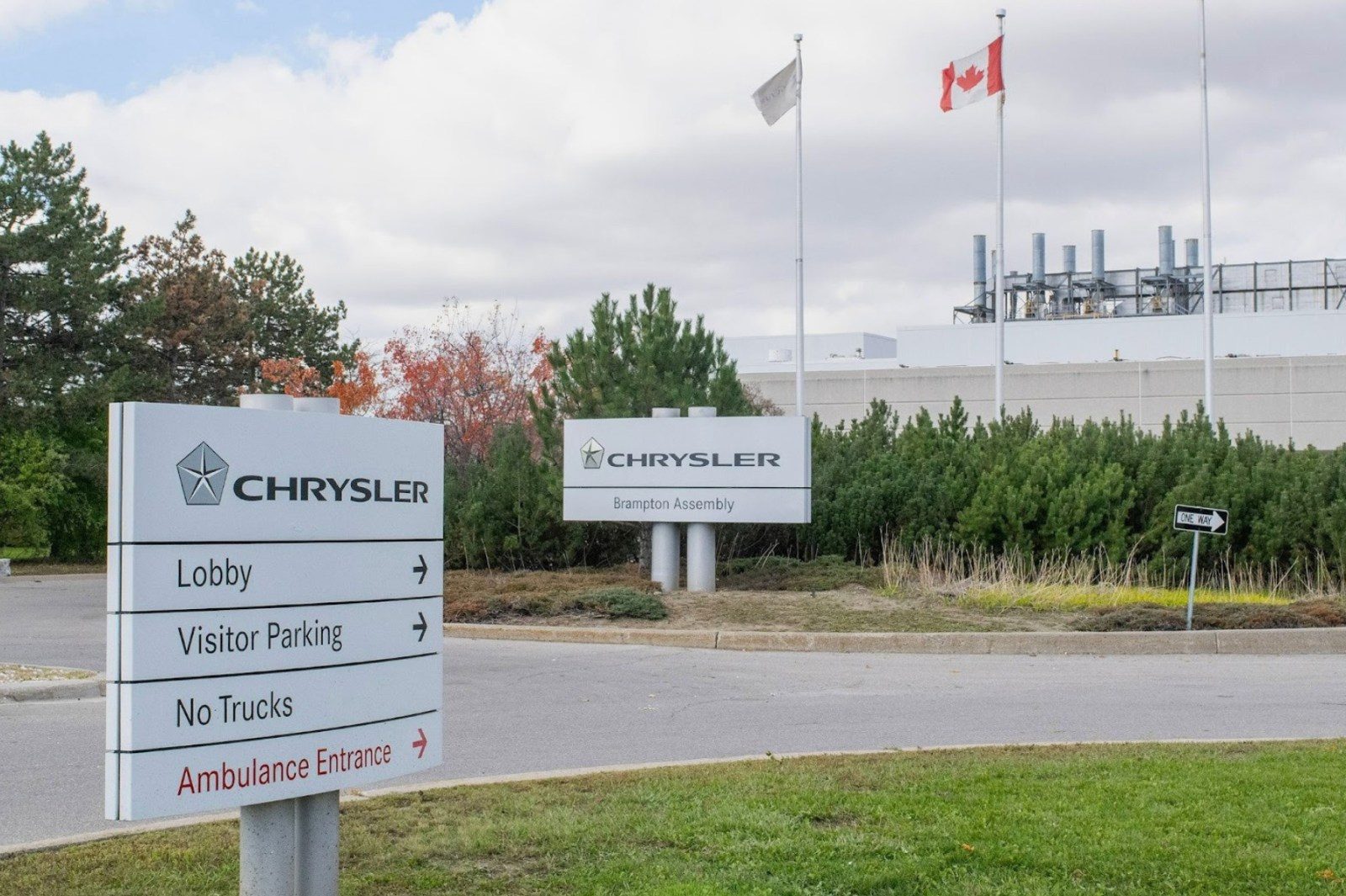

Stellantis‘s plan to add 11 new Chrysler, Dodge, Jeep and Ram models in North America by 2030 has revived hopes for its idled Brampton Assembly Plant, the company said, though the union representing the plant’s workers warned that the timeline remains the central concern.
The models stem from the €60 billion FaSTLAne 2030 plan that Stellantis unveiled on Thursday at its North American headquarters in Auburn Hills, Michigan.
The Toronto-area plant has not built a vehicle since 2023 and has spent more than a year without a production mandate.
Company spokesperson LouAnn Gosselin said the expanded lineup gives Stellantis a strong product pipeline as it continues evaluating its Canadian assembly footprint, according to Automotive News.
“This creates meaningful potential opportunities for facilities like Brampton as we align future production with our growth strategy,” Gosselin said in an email to the outlet.
A Plant in Limbo
Brampton’s future has been uncertain since the automaker abruptly halted a retooling project that was preparing the site to build the Jeep Compass.
It later shifted the Compass program to Belvidere, Illinois, leaving the Canadian plant without a vehicle to build.
The new product slate is the first concrete signal in months that work could return.
The upcoming models stem from the €60 billion FaSTLAne 2030 plan that Stellantis unveiled on Thursday at the Investor Day.
Stellantis said the plan would lift its North American revenue by 25% by 2030 and push its assembly plants toward 80% capacity utilization.
The company disclosed few production details for the 11 models but said it would increase output in the United States over the next four years.
The Union’s Caution
Vito Beato, president of Unifor Local 1285, which represents about 3,000 hourly workers at Brampton, called the slate a positive sign while pressing for specifics.
“A lot of those products are Dodge and Chrysler — so a lot of the stuff that we can build and want to build and have built,” Beato said.
He said the priority placed on US production does not preclude Canadian investment.
“They want to build more cars, so at the end of the day, we can build them here in Canada and we can build them in Brampton,” he said.
But with Local 1285 members already off the job for about two and a half years, Beato said his concern is how long the wait could stretch, noting that some of the new models are not slated for production until 2029 or 2030.
“I do believe we’ll build cars in Brampton, but my concern is the timeline,” he said.
A Year of Friction
The renewed optimism follows a tense year between Stellantis, the union and the Canadian government.
Unifor has pressed the automaker to honor a commitment made during 2023 contract talks to bring the Compass to Brampton.
The union recently rejected a company proposal to build Leapmotor electric vehicles from complete knockdown kits at the site.
China-based Leapmotor operates a joint venture with Stellantis called Leapmotor International.
The standoff has played out against a broader squeeze on Canadian assembly, as US tariffs have weighed heavily on the country’s auto sector and pushed local vehicle output to lows not seen in decades.
The Brampton question arrives as Unifor prepares for contract negotiations with the Detroit Three, whose agreements expire September 20.
The union plans to open talks with Ford in June before turning to Stellantis and General Motors.