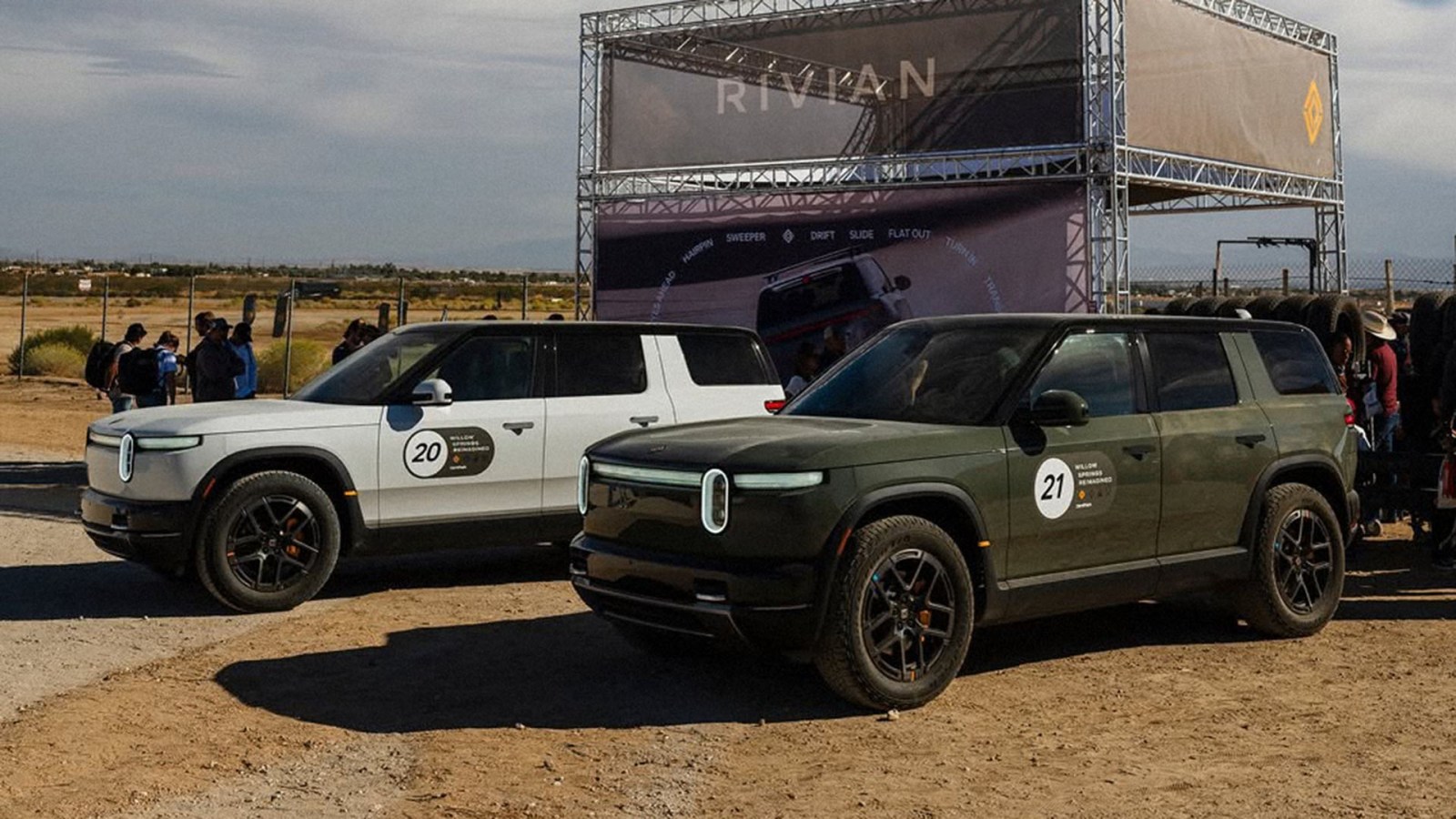
Rivian has remedied 86.4% of the 27,882 R1S and R1T vehicles in its original front turn signal recall, up from 79.8% three months earlier, according to a quarterly report it submitted to the National Highway Traffic Safety Administration (NHTSA).
The report, covering the third quarter, shows 24,086 vehicles remedied by the end of September, compared with 22,244 at the end of June. NHTSA’s count includes vehicles inspected without needing new lamps and vehicles returned to inventory.
Rivian has recalled 31,711 vehicles in the U.S. across two campaigns because one or both front turn signal lamps may not light up and flash.
On the second campaign, whose owner letters began going out on September 28, 823 of 3,829 vehicles, or 21.5%, had been remedied by the end of September, according to its first quarterly report, also submitted on October 28.
1,842 in Q3
The third-quarter gain of 1,842 vehicles was the smallest for any full quarter since the remedy became available, Rivian’s five quarterly reports to NHTSA show.
Rivian reported 799 vehicles remedied by the end of September 2025, shortly after the remedy became available on September 21. The total jumped to 13,951, or 50.0%, by the end of December, an increase of 13,152 in the quarter.
It then reached 19,745, or 70.8%, by the end of March 2026, an increase of 5,794. By the end of June it stood at 22,244, an increase of 2,499.
That leaves 3,719 vehicles in the original campaign still to be remedied, excluding 77 that every report lists as removed from the population, which NHTSA defines as scrapped, stolen or exported.
Rivian’s owner notice for the first campaign circulated on X on Wednesday, shared by Chris Hilbert. No new turn signal recall has been filed.
The Original Recall
Rivian’s Part 573 Safety Recall Report for the first campaign, NHTSA recall 25V387, is dated June 11, 2025.
That filing covered 27,882 model year 2025 vehicles: 22,807 R1S SUVs built from April 29, 2024 to May 13, 2025, and 5,075 R1T pickups built from July 10, 2024 to May 13, 2025.
Rivian estimated that 0.6% of the vehicles have the defect.
“Issues during turn signal lamps manufacturing by the supplier may result in an internal failure of some turn signal lamps during use,” the company wrote in the report.
The report names Myotek, based in Farmington Hills, Michigan, as the supplier.
How Rivian Found It
According to the chronology in the filing, Rivian analyzed turn signal lamps from warranty-returned parts in February 2025 and opened an investigation after finding that some failures may have come from a supplier manufacturing issue.
It investigated from March through May 2025. On June 4, 2025, it determined that a potential noncompliance with FMVSS 108 could not be ruled out.
Drivers are alerted when a lamp fails, Rivian said.
If one or more front turn signal lamps fail, a message reading “Turn signal lights not working. Service it soon.” appears on the driver display, along with double-speed blinking and turn signal sounds from the remaining lamps, according to the filings.
“Diminished front turn signal lamp performance may cause reduced awareness of the vehicle’s intent to turn for road users in front of the vehicle,” Rivian wrote.
“Reduced awareness of intent to turn may increase the risk of a crash. Rivian is not aware of any crashes, injuries, or fatalities related to this condition,” it said.
The remedy is a service visit, not an over-the-air software update. Under the filings, Rivian will inspect and replace the front turn signal lamps as needed, free of charge, using lamps “that meet current production specifications.”
Rivian’s support page says the remedy for the first campaign has been available since September 21, 2025. Owners are asked to call Rivian Service at 1-855-748-4265, the number printed on the company’s notices.
The Expansion
In a report dated August 5, Rivian filed a second campaign, covering 3,829 additional model year 2025 and 2026 vehicles.
The second population includes 3,204 R1S units built from June 12, 2024 to May 26, 2026, and 625 R1T units built from October 1, 2024 to March 19, 2026.
According to the filing, the extra vehicles “may have been built with parts that were not properly quarantined by the supplier.”
From June 2025 to July 2026, Rivian identified 17 turn signal failures that appeared identical to the original condition, the chronology says.
Rivian decided on July 31, 2026, to add the vehicles. NHTSA then asked it to file a separate recall instead of extending 25V387.
The expansion carries the same 0.6% defect estimate. Owner notification began on September 28, 2026, and 823 of the 3,829 vehicles, or about 21%, had been remedied by the end of the third quarter, according to Rivian’s quarterly report.
Rivian’s recall page lists the remedy for the second campaign as available from August 11, 2026.
Transport Canada first published the campaign in June 2025 and last updated on August 6, 2026, the day the U.S. expansion was logged. Its entry now covers 2025 and 2026 R1S and R1T vehicles.
The Canadian entry notes the “Turn signal lights not working. Service it soon.” message on the display.
Rivian’s Other Recalls
The turn signal campaigns are among several R1 recalls in the past two years.
In February 2025, Rivian recalled 17,260 model year 2025 R1S and R1T vehicles because the low-beam headlights might not turn on at startup in cold weather, NHTSA records show.
In September 2025, it recalled 24,214 model year 2025 R1 vehicles over its Hands-Free Highway Assist software.
Last January, it recalled 19,641 vehicles whose rear toe links may have been reassembled incorrectly during service.
In September, Rivian filed a recall covering 98,828 R1S, R1T and R2 vehicles over a notification that could block the rearview camera image. An over-the-air software update fixes that problem.
Rivian builds the R1S and R1T at its plant in Normal, Illinois, which also builds the R2.
Rivian produced 19,751 vehicles there in the third quarter of 2026 and delivered a record 19,248, the company said. By comparison, it produced 10,720 vehicles and delivered 13,201 in the third quarter of 2025.