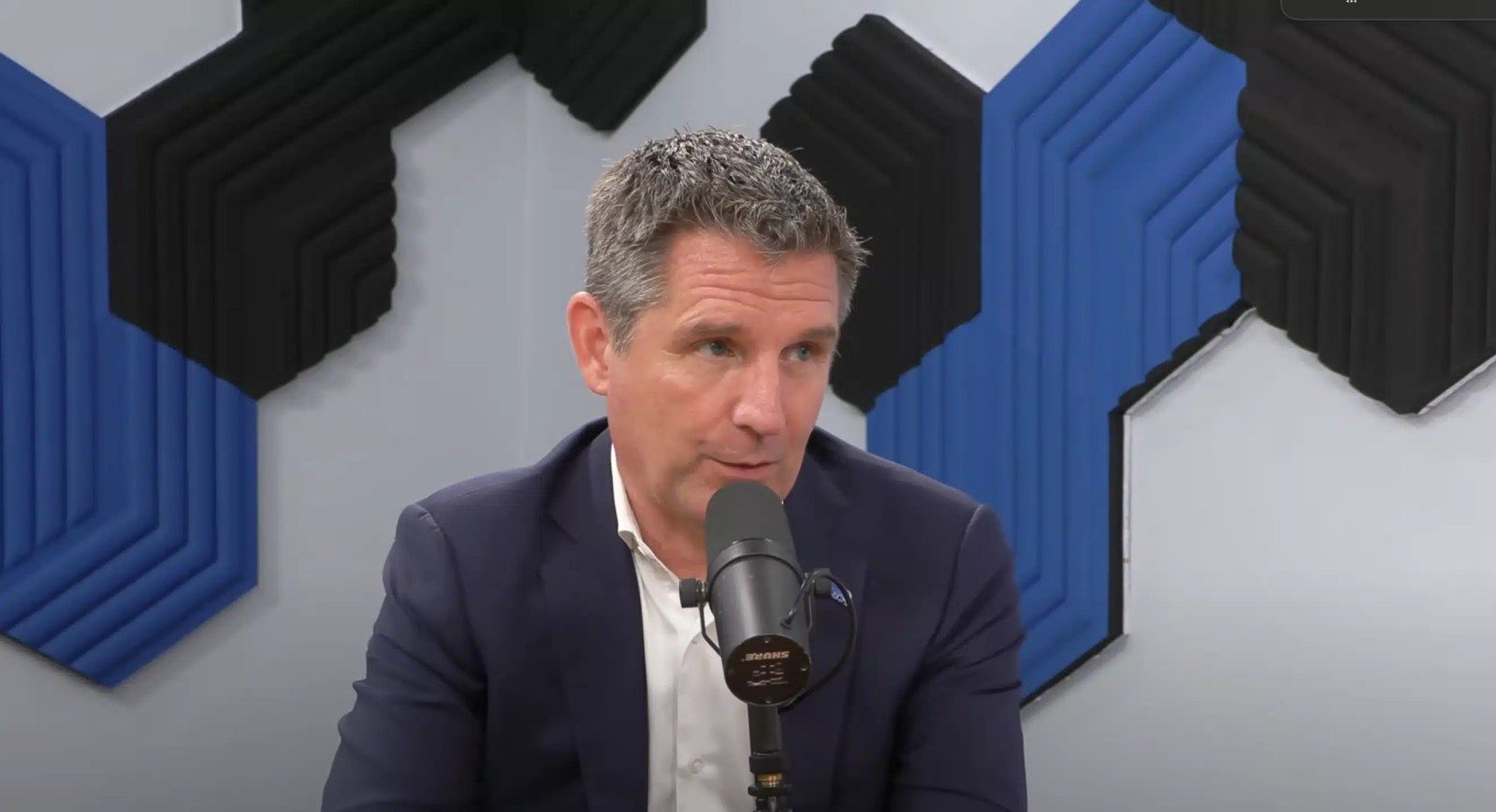

Lucid Motors’ interim Chief Executive Marc Winterhoff said the company aims to deliver far more Gravity vehicles than the 20,000 units currently committed under its agreement with Uber.
Announced in July — a few minutes unveiling plans for a reverse stock split — describing the six-year partnership as only a starting point.
On September 4, Lucid announced the completion of a $300 million investment from Uber.
The companies plan to deploy more than 20,000 Gravity SUVs equipped with Nuro’s Level 4 system over six years, beginning in late 2026 with a “major US city.”
Speaking on the ‘Brew Markets’ podcast, which aired late Tuesday, Winterhoff said the deal integrates Lucid’s Gravity architecture, Uber’s fleet network, and Nuro’s Level 4 self-driving system.
“Twenty thousand [units] is a good number. But at the same time, when you look at the details of the agreement, it’s about over six years. It’s not that big of a number,” the executive admitted.
“So our aspiration is that this will be much bigger than that,” Winterhoff teased without detailing.
He added that Uber’s choice of Lucid reflected the automaker’s efficiency advantage
“In that kind of business, everything that counts is uptime and you don’t want to be charging somewhere because then you cannot make money,” Winterhoff said. “Uber selected us because of our EV technology, because of our range. And with Nuro together, we’re working on a product that is really tailor-made for Uber.”
Winterhoff also outlined Lucid’s broader ambitions in autonomy beyond the Uber fleet. “We have to distinguish two different applications for that. One is the robotaxis, you know, B2B business. And the other one is for, you know, you and me owning a car, using a car and you don’t necessarily always want to drive,” he said.
“Maybe sometimes on a commute, I do this all the time. I use our hands-free driving because it’s just convenient.”
Looking ahead, he said Lucid is pushing toward full Level 4 capability.
“What we want to get to is that at some point we get to a level, and we’re actually working very extensively on that, that you can not only take the hands off the steering wheel, you can actually take the eyes off the road as well, which is then Level 4, because then it’s really useful,” he stated.
“You can read your emails and those kind of things while you’re driving. So for commuting, this is perfect. That’s what we’re also working on,” Winterhoff added.
Winterhoff positioned the push into autonomy as a natural next step for the EV maker.
“For us, this is really, we established ourselves as, I would say, the EV technology leader in the market. And now our next frontier is really to do the same in the autonomy space,” he said.
Lucid delivered 3,309 vehicles in the second quarter, up 38% from a year earlier, but cut in early August its 2025 production target from 20,000 units to a range of 18,000–20,000.
To hit even the lower end of its updated 2025 production target, it must build 11,325 vehicles in the second half, almost double its first-half output of 6,675.