
Li Auto founder and Chief Executive Officer Li Xiang said the growth in flagship SUV dimensions is a passing phase that battery-electric architecture will bring to an end, in a Weibo post published on Monday, days before his company unveils a car 5,225mm long, or 205.7 inches.
“The industry has been debating why flagship SUVs keep getting bigger,” he wrote. “I think this is only a transitional phase. The inherent advantages of a battery-electric architecture mean the size arms race is bound to end.”
His argument is packaging.
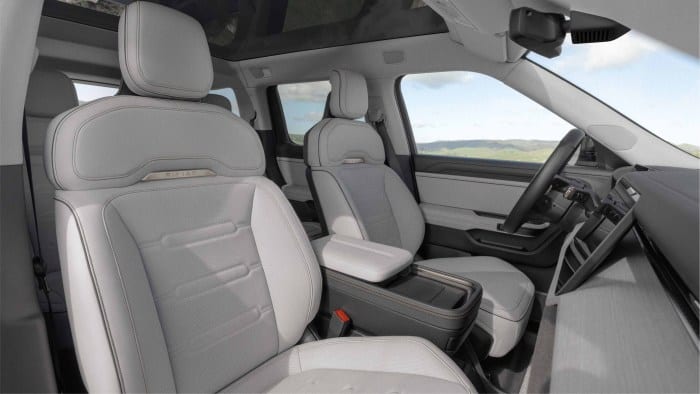
A combustion vehicle needed length to create space, he wrote, while an electric one does not, because the motor is small, the front overhang can be short, and the flat floor over the battery removes the need for height to buy headroom.
“For the same interior space, an electric car’s shell can be a size smaller than a combustion car’s. Once you understand that, making an issue of dimensions stops meaning very much.”
He was blunter about what the competition costs buyers.
“You make it two metres wide, I make it 2.05 metres wide, and nobody can feel the difference, but the customer gets a good deal more anxiety parking every day, can’t open the door, can’t get out, and gets doored by other cars.”
The Car He Is About to Launch
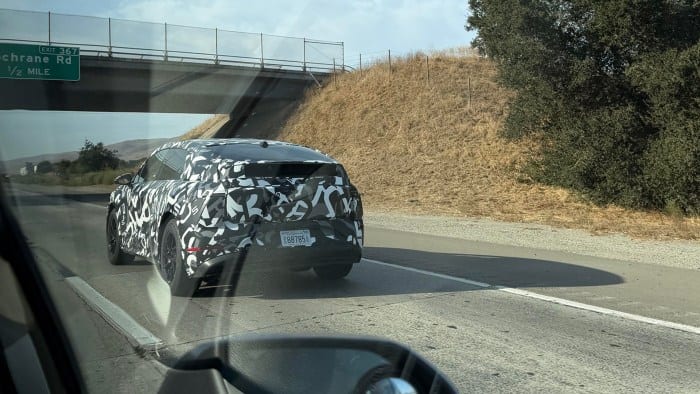
The i9 measures 5,225 × 1,970 × 1,752mm, or 205.7 × 77.6 × 69.0 inches, on a 3,168mm wheelbase, 124.7 inches, with six seats and a top speed of 200 km/h, according to its filing with the Ministry of Industry and Information Technology on July 10.
President Ma Donghui said on the second-quarter earnings call on August 27 that it would be revealed in mid-September.
He addressed the gap directly.
Li Auto set three priorities when it began work on the i-series in 2021, he wrote, namely space efficiency, low drag and low consumption, and handling that beats a conventional SUV, and “not one of them is achieved by making the car bigger.”
The alternative, on his account, is chassis hardware.
The i9 has steer-by-wire and rear-wheel steering, which he said are rare on battery-electric SUVs in the 400,000-yuan class because they cost a great deal. “Steer-by-wire plus rear-wheel steering give a 5.2-metre car something close to the agility of a compact SUV when turning around or going into an underground car park.” That is about 17 feet.
He pointed to the current MEGA, a 5.3-metre multi-purpose vehicle at about 17 feet 4 inches, as the precedent, and made an argument about showrooms.
“Steer-by-wire and rear-wheel steering won’t make a car look more imposing in a showroom, but drive one round the block and you come back feeling something completely different,” the executive stated.
The Class
More than a dozen SUVs of five metres, or 16 feet 5 inches, or more have gone on sale in China this year or are about to, and the i9 will be one of the shorter ones.
The Nio ES9, which launched on May 27 from 498,000 yuan ($74,200), is 5,365mm, or 211.2 inches, on a 3,250mm wheelbase, which Nio calls the largest mass-produced battery-electric SUV built in China.
Great Wall’s six-seat H10 is 5,299mm, or 208.6 inches. The second-generation AITO M9 is 5,285mm, 208.1 inches, and its long-wheelbase Ultimate version is longer again. Xiaomi’s SkyNomad N90, launched on September 7, is also 5,285mm.
XPeng’s GX is 5,265mm, or 207.3 inches, and Leapmotor’s D19 is 5,252mm, 206.8 inches. Both outsold the L9 Livis in August. XPeng’s G9L, at 5,120mm or 201.6 inches, and Li Auto’s own i9 sit at the bottom of that group.
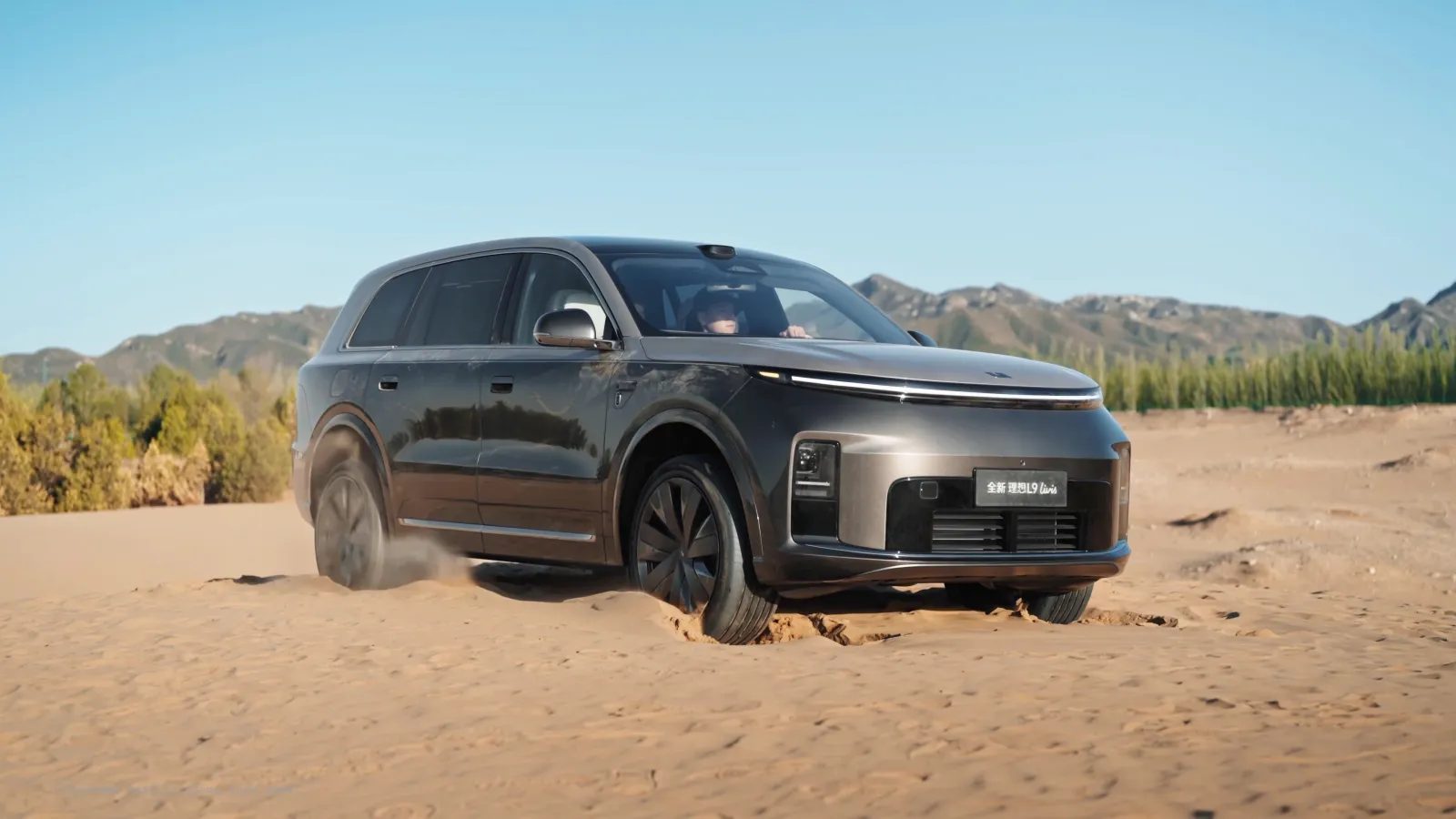
Li Auto’s replacement for the L9, marketed as the Livis and launched in May, is 5,255mm, or 206.9 inches, which is longer than the i9 that follows it.
For scale, a Chevrolet Suburban is about 225 inches long and a BMW X7 about 203.
Every one of them is battery-electric, extended-range or plug-in hybrid. None is a combustion car carrying the packaging penalty Li describes.
Rear-wheel steering, the feature he presents as the alternative to length, is common across the class rather than rare.
XPeng advertises it on the GX and the G9L, and so do the ID.ERA 9X and IM’s LS8. Steer-by-wire is scarcer, but not unique to Li Auto either.
Nio says the ES9 is the first mass-produced Chinese car to combine both, and IM fits four-wheel steer-by-wire to the LS8.
Who Is Actually Selling
The class is also crowded at the top of the sales table, and Li Auto is not on it.
The ten best-selling full-size SUVs in China in August, on figures from the China Automobile Dealers Association, were the Nio ES8 at 10,991 units, the AITO M9 at 10,098, BYD’s Da Tang EV at 7,796.
The Huajing S followed with 7,306 units, the XPeng GX at 7,002, the Nio ES9 at 6,474, the Leapmotor D19 at 6,034, the Denza N8L at 4,567, Onvo’s L80 at 3,139 and the Zeekr 9X at 2,887.
No Li Auto model appears. The L9 Livis, at 5,255mm, is long enough to qualify, which means it sold fewer than 2,887 units in the month or was classified elsewhere in the compilation.
The table also shows a market that has split rather than converged. At the top, the M9 runs to 659,800 yuan ($98,300) and the ES9 to 628,000 yuan ($93,600). In the middle, the Da Tang EV sells from 239,900 yuan ($35,800) and the D19 from 219,800 yuan ($32,800), both of them 5.25-metre six-seaters, which is where the segment’s floor now sits.
Below that again, the Huajing S starts at 159,800 yuan ($23,800) and is a different commercial proposition from the cars Li is describing.
Length, on the evidence of that table, still sells when the third row is usable and the price is right.
What It Is For
Li closed on sales rather than engineering. “Quite a few frontline specialists at other brands say they get nervous the moment they hear a customer is going to test drive a Li Auto,” he wrote. “I’m grateful to our friends at rival companies for recognising our product strength, and I think it shows exactly this: a product with real substance naturally wins more users. I believe the i9 will speed that shift up.”
He named no rival and cited no figure for the claim.
Li Auto built the segment he is now describing as excessive.
The L9, launched in 2022 at 5,218mm, or 205.4 inches, established the six-seat flagship as a category in China and was the model most often benchmarked by the cars listed above.
The company replaced it this year with a version marketed as the L9 Livis.
The i9 is 7mm longer than the 2022 L9 that started it and 30mm shorter than the L9 Li Auto is selling now.