Polestar Chief Executive Officer Michael Lohscheller said on Thursday that Scandinavian minimalist design and the brand’s sustainability framing remain the two differentiators that allow Polestar to coexist with Volvo Cars and Zeekr under the broader Geely Holding umbrella.
The three premium brands share platform architectures and increasingly compete in overlapping European price bands.
Responding to a question from EV at the Financial Times Future of the Car summit in London about how Polestar maintains brand differentiation against rapidly expanding Geely sibling brands, Lohscheller defended the brand’s design-focused approach.
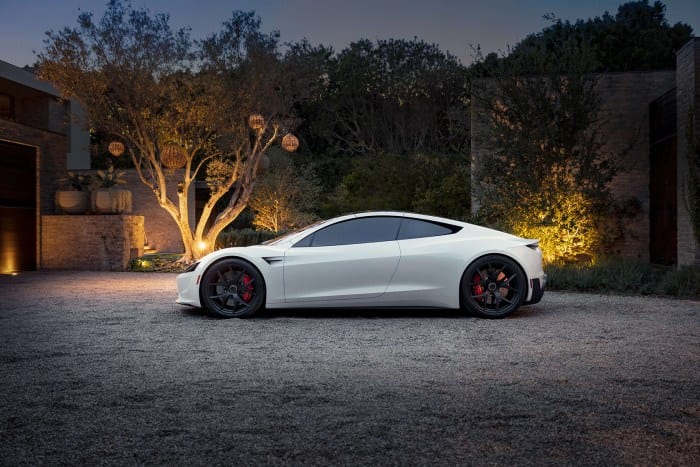
“Design plays a key role, and I would argue that the Polestar design is very unique and very, very focused on Scandinavia,” Lohscheller said.
“It’s a bit minimalistic, right? We don’t show off. If you look at our interiors, very, very different to the brands you mentione,” he added.
The CEO emphasised sustainability as the second core differentiator.
“We also want to highlight the sustainability element. So what are the CO2 emissions for our cars, for the interior? That’s how we try to stand out. And it’s really, really important to Europe.”
Lohscheller acknowledged the strategic risk inherent in the Geely platform-sharing model.
“The business model with shared architectures and joining synergies can only work once you very well differentiate,” he said.
“I would argue that we do this exceptionally well on design, exterior and interior, and also the whole sustainability.”
The Differentiation Challenge
The question of how Polestar distinguishes itself from sibling brands is genuinely operationally meaningful for the Geely Group’s premium-to-luxury portfolio.
Geely Holding controls one of the broadest premium-to-luxury portfolios in the global auto industry: Zeekr, Lynk & Co, Polestar, Lotus, Volvo Cars, Smart, and the Geely Galaxy sub-brand — most of which share the SEA (Sustainable Experience Architecture) platform family for their EVs.
With the core “three-electric” technology — battery, motor, and electronics — homogenising across brands, the premium differentiation falls heavily on styling, tuning, software, and dealer experience.
The Zeekr design centre is also based in Sweden — at the Zeekr Gothenburg design studio led by former Volvo design head Stefan Sielaff — meaning that the “Scandinavian design” identity Lohscheller invoked is not exclusive to Polestar within the Geely portfolio.
The pricing overlap in Europe sharpens the tension.
Polestar 2 starts at approximately €48,000-50,000, Polestar 4 at roughly €61,000-62,000, and Polestar 3 at around €79,000.
Volvo’s EX40 and EX90 sit in overlapping bands.
The Zeekr 7X launched in Europe from approximately €52,000-53,000 — placing it directly in the price corridor between Polestar 2 and Polestar 4.
The Financial Backdrop
Polestar reported 60,119 retail units in 2025 — a 34% year-on-year increase — but recorded a full-year net loss of $2.36 billion, equating to approximately $39,200 lost per car.
Q1 2026 retail deliveries reached 13,126 units, up 7% year-on-year but annualising well below the company’s revised 66,000-69,000 unit full-year target.
By contrast, sibling brand Zeekr sold 224,133 units in 2025 with a 2026 target of approximately 300,000 units, and Volvo Cars sold exactly 710,042 global units last year — though the larger sister brand faces its own 7% decline pressure year-on-year.
The brand’s thinner margins and higher per-car losses reflect competing against more aggressively priced Zeekr siblings on similar SEA-derived underpinnings.
The Group Restructuring Context
Geely‘s broader response to platform commoditisation has been structural consolidation rather than brand divestiture.
Zeekr took a 51% stake in Lynk & Co in February 2025, forming Zeekr Technology Group — explicitly designed to eliminate duplication, sharpen brand roles, and deliver annual R&D cost savings estimated at up to 4 billion yuan ($550 million) through shared purchasing, platforms, and reduced overlap.
The brand subsequently moved through privatisation and delisting from the New York Stock Exchange.
Polestar has remained structurally separate from those integration moves, retaining its Nasdaq listing and operating with greater brand-level autonomy than the consolidated Zeekr-Lynk & Co structure.