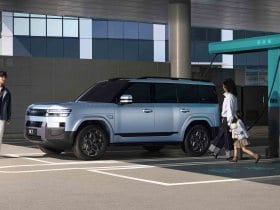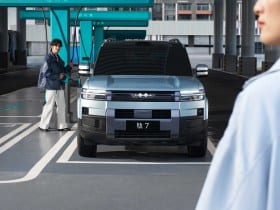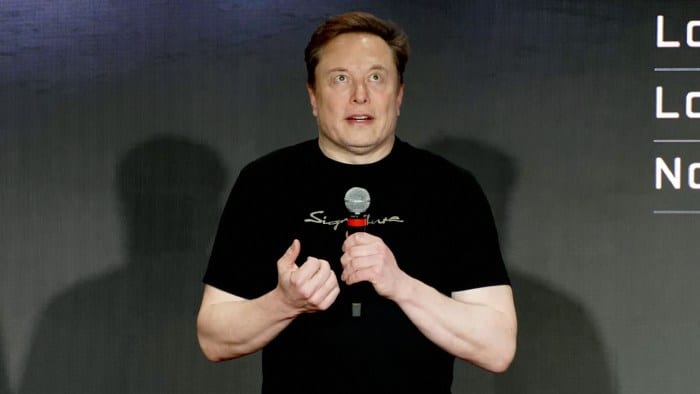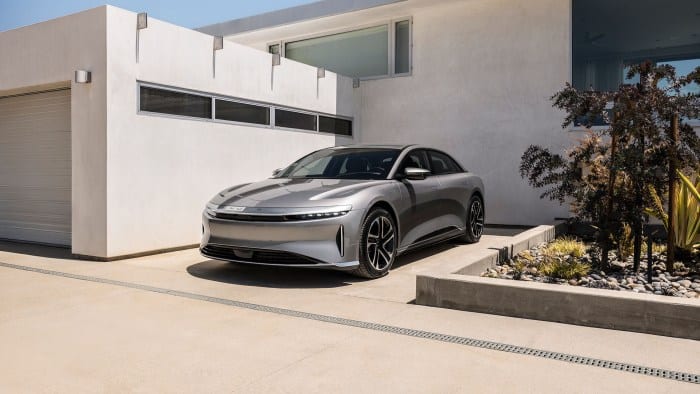

A few weeks after the first vehicles from the Chery Group were spotted in Canada, a company executive has now announced that the Chinese giant’s North American ambitions also include the US market.
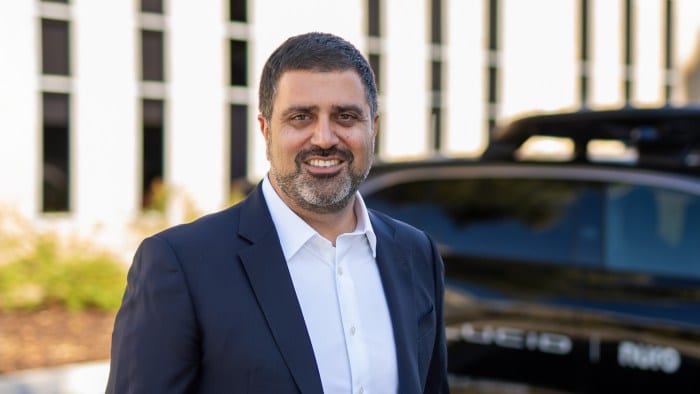
“The U.S. auto market is enormous, and every company would like to enter it. We naturally have the same ambition,” Chery Automobile’s Executive VP and President of Chery International Zhang Guibing told reporters on Wednesday.
Speaking at Chery‘s headquarters in Wuhu, Zhang admitted that “when we find a good and suitable time in the future, we definitely hope to enter it,” according to Reuters.
Chery has not offered a concrete timeline for a potential US arrival.
Any move into the United States would depend on the company’s own level of preparation, as well as future industrial policy changes between China and the United States, the executive added.
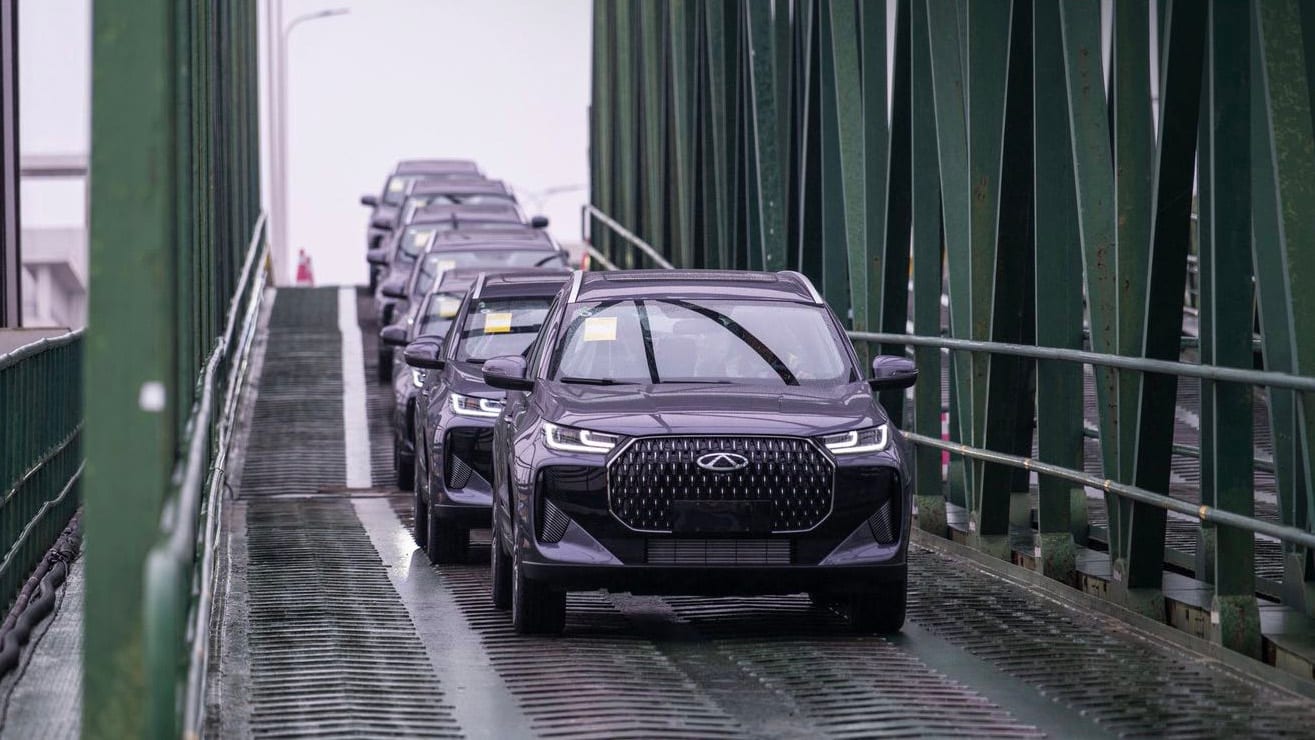
The group, which has nine active brands — including Chery, Exeed, iCar, Jetour, Lepas, Luxeed, Omoda & Jaecoo — was China’s largest car exporter in 2025 with approximately 1.3 million units shipped overseas.
Chery‘s cumulative overseas shipments have reached nearly 5.9 million units across more than 130 countries.
The company has set a group-wide sales target of 3.2 million vehicles, representing a 14.0% increase year over year.
At the same time, the automaker outlined an aggressive product expansion for 2026 and 2027.
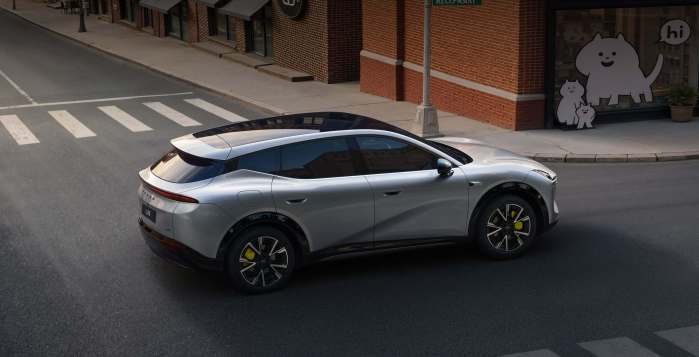
“In the next two years, Chery will launch 13 major new models,” which will include “a full-product-matrix layout covering gasoline, mild hybrid, hybrid and pure electric powertrains, as well as SUV, sedan and pickup categories.”
North America Ambitions
The comments mark an escalation in Chery‘s North American ambitions.
During the past few months, the automaker has been methodically building a presence in Canada, where it is preparing to become one of the first Chinese-headquartered automakers to sell vehicles directly to consumers.
The first Chery vehicles — from its export-focused Omoda & Jaecoo sub-brand — were spotted in Toronto in late April, parked near the Don Valley Parkway with license plates bearing their model names.
Days later, a vehicle from Chery‘s premium Exeed brand was also photographed in the city, confirming that its Canadian rollout would extend beyond its mass-market brands.
The Canadian push was made possible by a trade deal struck in January between Ottawa and Beijing, which replaced the 100% surtax on Chinese-built EVs with a 6.1% most-favored-nation tariff under a quota of 49,000 vehicles per year.
The quota is set to rise to 70,000 by 2030.
The company had been the most active Chinese automaker in laying groundwork for a Canadian launch.
Headhunters approached Canadian auto professionals on LinkedIn as early as January, and Chery issued its first official statement in March, confirming it was “closely studying” the market.
Chery has filed trademark applications in Canada for several sub-brands, including Exeed, iCaur, Lepas, Luxeed, and Omoda & Jaecoo.
The company flew nearly two dozen Canadian dealership representatives to the Beijing Auto Show and its headquarters in Wuhu — a trip EV also attended.
However, the pace of Chinese automakers’ entry has slowed in recent weeks.
BYD, Chery, and Geely — the three giants leading the push — are all scaling back their rollout plans and pushing back delivery timelines, as the 49,000-unit annual quota constrains the volumes available to each brand.
Instead of broad cross-country rollouts, the three companies are now planning just one or two dealerships in Toronto, Vancouver, and Montreal in the short term.
US Blocks Remains Intact
The US market presents a far more formidable barrier than Canada.
American tariffs on Chinese-manufactured EVs currently exceed 125%, combining the 100% rate originally imposed under President Biden with Trump’s own 25% Section 232 duty on all imported vehicles.
No Chinese-manufactured passenger vehicles are sold in the United States at any meaningful volume.
Beyond the tariffs, a connected vehicle rule finalized under Biden bars vehicles containing Chinese-linked software in their connectivity and autonomous driving systems from being imported or sold in the US.
The regulation also prohibits Chinese-owned manufacturers from selling connected vehicles in the country even if they are produced domestically — undercutting Trump’s own January suggestion that Chinese automakers could build factories in the US.
US Trade Representative Jamieson Greer confirmed in April that the administration has no plans to alter the connected vehicle ban.
“Those rules are effective,” Greer said. “It seems like it would probably be difficult for certain countries to establish new production here, given those sets of rules.”
Trump visited Beijing on May 14 and 15 for a two-day summit with Xi Jinping — the first visit by a sitting US president to China in nearly a decade.
No changes to auto tariffs or the connected vehicle restrictions were announced.
The legislative pressure on President Trump has also intensified.
A bipartisan bill introduced in Congress — the Connected Vehicle Security Act of 2026 — would ban the import, manufacture, sale, and operation of vehicles produced in China or any other country designated a national security concern.
The bill has backing from labor unions, such as the United Auto Workers, and automakers like General Motors, Ford, and Honda.
Trump himself recently called the 100% tariff on Chinese cars “about the only thing” Biden “did good,” adding that Chinese vehicles “would have destroyed General Motors, Ford” if they had been allowed in.
BYD Signals It Can Wait
Chery is not the only Chinese giant eyeing the US from a distance, but its largest domestic rival has struck a notably different tone.
BYD Executive VP Stella Li addressed the question directly at the Beijing Auto Show in late April.
“We survive and are successful without the US market today,” Li told the BBC. “Actually, we are now suffering [insufficient] capacity. Our demand is much higher than what we can supply.”
Li framed BYD as more than a carmaker.
“We are not just a car company. We produce one-third of global smartphone components, we are a leading player in battery storage, solar panels, buses, and trucks. So BYD is an ecosystem,” she added.
The comments positioned BYD as a company focused on meeting existing demand rather than chasing a market that remains closed.
Li had previously told Bloomberg that the US market is too “complicated” for BYD to enter, citing the combination of steep tariffs and the ban on Chinese connected car technology.
On the other hand, BYD‘s European sales were up 156% year over year in the first quarter of 2026.
The company is targeting 1.5 million units in overseas sales this year.
BYD is currently looking into expanding its manufacturing footprint across the globe, including Europe — where it not only has two factories under construction but is also considering a deal to use legacy automaker’s idle plants.
In Canada, the Chinese giant has rejected the joint venture model pushed by the Government for local production, with the Executive VP telling Bloomberg BYD aims to operate its own facilities.
Chinese EVs Are Already on US Roads
Despite the tariff wall, Chinese-built vehicles have already begun appearing on American roads through an unintended loophole.
BYD vehicles with Mexican license plates have been spotted in Texas and California under a US customs provision that allows non-US residents to drive their own foreign-registered vehicles across the border.
The phenomenon highlights one of the regulatory gaps that the Connected Vehicle Security Act would close.
BYD sells several models in Mexico, where the brand has an established retail presence.
The Mexico loophole and the Canadian quota are both playing out ahead of the USMCA renegotiation, which faces a July 1 deadline for its joint review.
Automotive products represent roughly 22% of total trilateral trade under the agreement — the single largest category.
US Ambassador to Canada Pete Hoekstra has ruled out the possibility of Chinese vehicles entering Canada and crossing into the US.
“Those cars can come into Canada. They’re not going to cross the border into the US,” Hoekstra said.