A second automaker based in China has met all of Transport Canada’s requirements and started importing vehicles into Canada this month, with an expected import price below C$35,000 ($24,500), the Canadian government said, without naming the company.
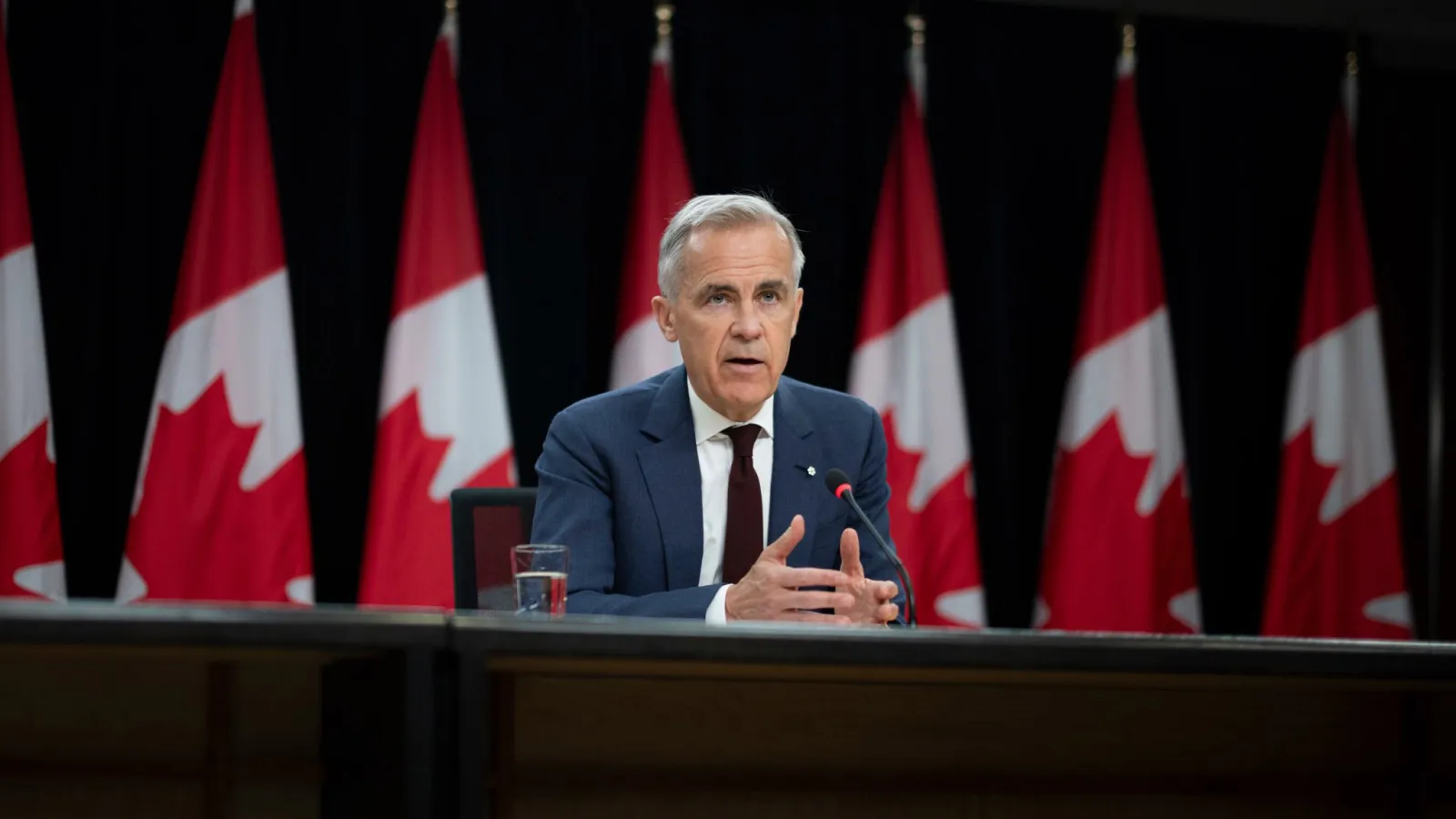
The disclosure came in a Global Affairs Canada backgrounder on trade with China, dated Monday, that accompanied Prime Minister Mark Carney’s meeting with Chinese President Xi Jinping in Shenzhen on Tuesday.
“In November 2026, a second original equipment manufacturer that is based in China fulfilled all Transport Canada requirements and has just started importing vehicles into Canada, with an expected import price of less than $35,000 CAD,” the department said.
It did not identify the first China-based manufacturer either.
A Single Cheap SUV
Imports under the quota remain thin. The government’s weekly utilization report, updated on Friday, November 13, recorded five vehicles in November, after none in October.
All five were fully electric SUVs or vans. Four were valued above C$35,000. One was valued at or below C$35,000, the first time the report has recorded a fully electric SUV or van in that price bracket since imports began.
The report does not name brands, so it does not show whether that vehicle belongs to the new entrant.
The C$35,000 line in the report and in the government’s statement refers to the import price, a customs value, rather than the retail price buyers pay.
16,211 Vehicles, Not All EVs
Canada has imported 16,211 China-built vehicles under the quota since March, out of 49,000 permits for the year to February 28, 2027, leaving 32,789.
The government’s backgrounder describes all 16,211 as EVs, “with roughly half having an import price of under $35,000 CAD.” The report shows 7,813 at or below that line, or 48.2%.
Not all of them are battery-electric. The total includes 702 conventional hybrid SUVs priced above C$35,000, recorded under a customs line for non-plug-in hybrids with a gasoline engine. The quota covers battery-electric, plug-in hybrid and hybrid vehicles.
That leaves 15,509 fully electric vehicles. The hybrids arrived in two batches, 259 in July and 443 in September.
September’s hybrid count has been revised up twice. It was zero on the September 25 report, 168 by October 9 and 443 by October 30, when the total reached 16,206. Only five vehicles have been added since.
The second six-month window, which opened on September 1 with 33,397 permits including 8,897 carried over from the first, has used 608, or 1.8%.
The Candidates
Ottawa’s description narrows the field to a China-based carmaker with a model it values below C$35,000 at the border.
Transport Canada’s Appendix G registry, the list of foreign manufacturers precleared to bring in new Canadian-specification vehicles, has listed passenger-car plants of two China-based groups: BYD, in Shenzhen and Xi’an, and Zhejiang Haoqing Automobile Manufacturing, a Geely unit, in Guiyang and Taizhou, which joined the list this month.
A search of the registry on November 18 also showed Polestar Performance AB plants in Chengdu and Taizhou and Wuhan Lotus Cars Co., Ltd. in Wuhan, the latter for multipurpose vehicles.
Automakers “must complete the applicable certification testing” before a plant can be registered, Transport Canada told Automotive News Canada. Appendix G covers importers bringing in fewer than 2,500 vehicles a year, and other preclearance routes exist, so the registry is not a complete list of cleared manufacturers.
Geely said on October 9 that its main brand would start selling in Canada in 2027 without naming a model or price. Its Guiyang and Taizhou plants build the EX5 electric SUV and the Starray EM-i plug-in hybrid, Automotive News Canada reported.
BYD has been on the registry since at least March but has not announced a Canadian launch date. China’s ambassador to Canada, Wang Di, said in June that BYD and Chery were still completing steps with Canadian agencies and that he hoped they would enter in the autumn, Reuters reported.
BYD Executive Vice President Stella Li told Reuters at a London event in June that the company was still deciding which models to launch in Canada and would likely start sales next year.
Chery said this month it would open its Canadian lineup with the Jaecoo ET, a premium electric SUV, next year pending certification, followed five months later by a second model. The federal approval process for the ET was in its final stages, AutoTrader reported, citing company executives.
Chery has not given a price. AutoTrader.ca said the ET was “likely to cost at least $60,000,” or C$60,000 ($41,900), while The Car Guide reported that the second model would be the Jaecoo 5, estimating its price at about C$35,000. Charlie Zhang, a Vice President at Chery, told Reuters in October that the Canadian launch would come early next year.
Canada’s Minister of International Trade, Maninder Sidhu, visited Chery’s plant in Wuhu this month and said the company plans “to introduce affordable EVs to Canadians.”
Dongfeng‘s Canadian importer, North World Industry, has said its first two models, the BOX 01 hatchback and the Vigo SUV, will be priced under C$35,000, and that it expected them to be ready by early 2027, Electric Autonomy reported in July. That appears to describe the price buyers would pay, not the import value the government uses.
Several China-built brands already use the quota.
Lotus, whose listed parent Lotus Technology gives a business address in Shanghai in its U.S. filings, brought in its first Wuhan-built Eletre SUVs, nearly 20 of them, in July. Wang said in June that Lotus would be the first Chinese-owned and Chinese-built brand to arrive under the deal.
China’s embassy in Ottawa said on July 13 that nearly 20 Wuhan-built Lotus EVs had arrived on July 8, calling them “the first batch of Chinese-Controlled brand EVs” to enter the Canadian market under the new arrangement.
The Eletre starts at C$119,900 ($83,800) in Canada, according to Lotus’s Canadian website, far above the C$35,000 line.
Polestar, based in Sweden, reintroduced the China-built Polestar 2 in June. Lincoln resumed sales of the Nautilus hybrid, built in Hangzhou, in August.
How Permits Are Handed Out
Only automakers can import under the quota, either directly as Canadian residents or through a Canadian-resident agent, according to the import notice for the current period, dated August 29. Every shipment needs a permit, including “temporary imports (e.g. for testing or demonstration purposes).”
Permits are “issued on demand to eligible importers” on a first-come, first-served basis, the notice says.
It sets no per-company limit, but says Global Affairs Canada will monitor access, which “could include setting aside a portion of the available quota for the use of OEMs, including new entrants.”
Tesla Hits Its Limit
Tesla, whose Shanghai-built Model 3s arrived with the first quota imports in May, stopped taking Canadian orders for the Model 3 Premium in October, saying demand had “exhausted Tesla’s import quota.” It said ordering would resume if the government issues more quota, “expected March 2027.”
Iain Myrans, Tesla’s National Senior Manager for Public Policy and Business Development in Canada, wrote that Global Affairs Canada tells automakers in advance the maximum number of vehicles they can bring in for a period.
“So, while the program outwardly looks like it is a first-come-first-served model, there is a lot more behind it,” he wrote.
Global Affairs Canada has not published any automaker’s allocation.
No Change to the Quota
The expanded trade arrangement Carney and Xi announced on Tuesday cut more Chinese tariffs on Canadian pork and seafood and extended Canadian remission measures on some Chinese steel and aluminum. It left the EV quota unchanged.
Under the January deal, the share of the quota reserved for vehicles with an import price of C$35,000 or less will be 10% from 2027, rising to 50% by 2030, according to the backgrounder.
The government said it expects the arrangement to “catalyse considerable new Chinese joint-venture investment in Canada with trusted partners” in auto manufacturing.
Carney told reporters in Phnom Penh on Monday that Canada could turn to Chinese automakers if talks with the U.S. fail to preserve an integrated North American auto industry, the Associated Press reported. “There has to be a manufacturing aspect involved,” he said.