Volkswagen started pre-sales in Germany on Monday for a 37 kWh version of its ID. Cross electric compact SUV, rated at up to 324 km on the WLTP cycle and priced from 27,995 euros ($31,400).
The 324 km figure is the first WLTP range Volkswagen has given for the 37 kWh version in Germany.
Volkswagen had given the 27,995-euro starting price when it unveiled the ID. Cross on July 15, but published a WLTP range only for the 52 kWh version, of up to 427 km.
The German launch follows the Netherlands, where Volkswagen’s Dutch arm has taken orders for the 37 kWh version since July 22, from 27,990 euros ($31,400).
It quotes a WLTP range of 305 to 316 km for that battery in the Netherlands, below the German figure, and Volkswagen has not explained the difference.
At the time of the July unveiling, Volkswagen brand Chief Executive Officer Thomas Schäfer said the model offered “genuine all-rounder qualities – all for excellent value for money.”
The smaller battery is “primarily aimed at customers who mainly drive in urban traffic and on typical commuting routes and at the same time value an attractive entry-level price,” the brand said.
The 37 kWh pack is offered with 85 kW (116 PS) and 99 kW (135 PS) motors and in the Trend, Life and Style trim lines, all with a top speed of 160 km/h.
Volkswagen said that despite its city focus, the smaller-battery car “is also designed for driving on the motorway.”
Lower Price, Shorter Range
Until Monday, German customers could only order the ID. Cross with the 52 kWh battery and a 155 kW motor, in the Life and Style trims, from 36,525 euros ($41,000), according to Volkswagen.
The new entry version is 8,530 euros ($9,600) cheaper than that, though it pairs a smaller battery with the least powerful motor and the base Trend trim.
Its WLTP range is 103 km shorter than the 52 kWh version’s maximum.
DC charging from 10% to 80% takes about 23 minutes at up to 90 kW, Volkswagen said.
The 52 kWh battery charges at up to 105 kW, and both versions charge at up to 11 kW on AC.
Volkswagen rated the 85 kW Trend’s combined consumption at 14.7 to 13.8 kWh per 100 km.
The 99 kW version is rated at 16.9 to 14.6 kWh per 100 km.
Same Box, Same Kit
The 37 kWh version keeps the body and cabin of the 52 kWh car, and Volkswagen said the ID. Cross’s “basic concept” was unchanged regardless of battery size.
The ID. Cross is 4,153 mm long, with a 2,601 mm wheelbase and 475 liters of luggage space, 20 liters more than the combustion-engined T-Cross it sits alongside, plus a 25-liter front trunk.
All versions use Volkswagen’s new Innovision infotainment system, and the Trend trim comes with front and rear parking sensors and smartphone integration as standard.
Higher trims add Connected Travel Assist, which uses networked data for predictive assisted driving, and options including a Harman Kardon sound system, a panoramic roof and 12-way electric seats with massage.
All prices and equipment refer to the German market, Volkswagen said.
Following the ID. Polo
The move repeats Volkswagen’s approach with the ID. Polo hatchback, which shares the ID. Cross’s MEB+ platform.
Volkswagen opened orders for a 37 kWh ID. Polo in July at 24,995 euros ($28,100), with a WLTP range of up to 334 km.
The ID. Cross therefore costs 3,000 euros ($3,400) more than the ID. Polo with the same battery, and travels 10 km less on a charge.
The two models use the same 85 kW and 99 kW motor options with the 37 kWh pack and the same quoted 23-minute fast-charging time.
As with the ID. Cross, the smaller ID. Polo battery can be combined with the Trend, Life and Style trim lines.
Volkswagen has said the ID. Polo’s 37 kWh pack uses lithium iron phosphate cells, while its larger pack uses nickel manganese cobalt chemistry.
It has not stated the chemistry of the ID. Cross’s packs, though it says the four models in the family share their batteries.
Volkswagen has also used the ID. Polo’s motor and battery family in a record-setting efficiency concept shown in September.
A Family Built in Spain
The ID. Cross is one of four small electric models in what the group calls its Electric Urban Car Family, alongside the ID. Polo, Cupra‘s Raval and Skoda‘s Epiq.
The four had drawn almost 150,000 orders before deliveries began, Volkswagen said on October 11 as it showed them together for the first time at the Paris Motor Show.
The Raval and ID. Polo are built in Martorell and the Epiq and ID. Cross in Pamplona, with more than 80% of components and technologies shared across the four, according to the company.
“Our sites in Martorell and Pamplona produce all four models as one strong Iberian production region,” said Schäfer, who also heads the group’s Brand Group Core.
The project was led by SEAT and Cupra, which said it had invested 3 billion euros ($3.4 billion) in moving from combustion engines to electric cars, including 300 million euros ($336.8 million) in a battery system assembly plant in Martorell.
The four models were first shown as heavily camouflaged prototypes and show cars at the IAA Mobility show in Munich in September 2025.
Partners in the group’s “Future Fast Forward” initiative are investing a total of 10 billion euros ($11.2 billion) in Spain, including PowerCo’s battery cell factory in Sagunto, the company said.
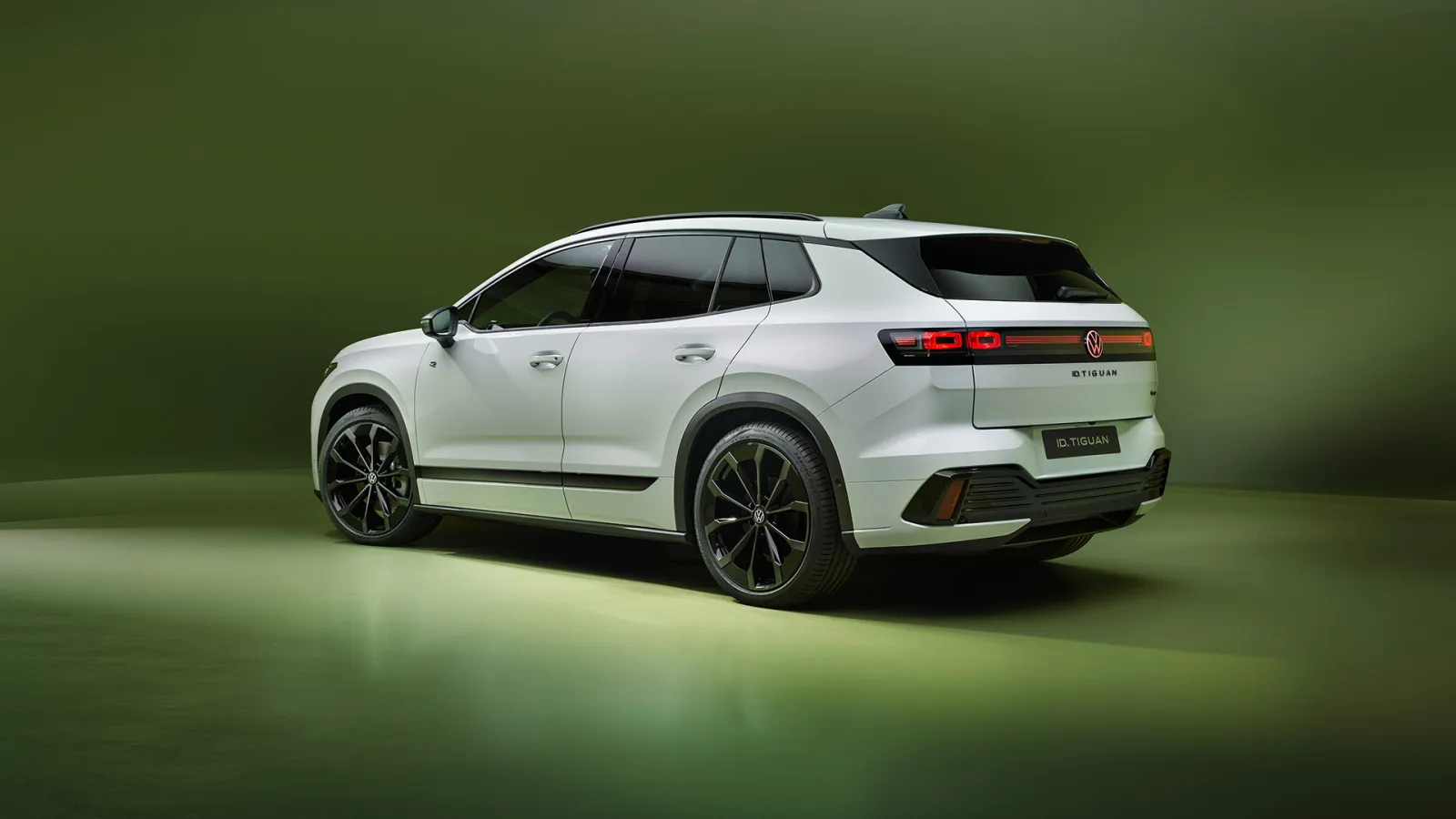
The ID. Cross is the smallest of Volkswagen’s electric SUVs, below the ID. Tiguan, which went on pre-sale this monthfrom 42,695 euros ($47,900) in Germany as the replacement for the ID.4.