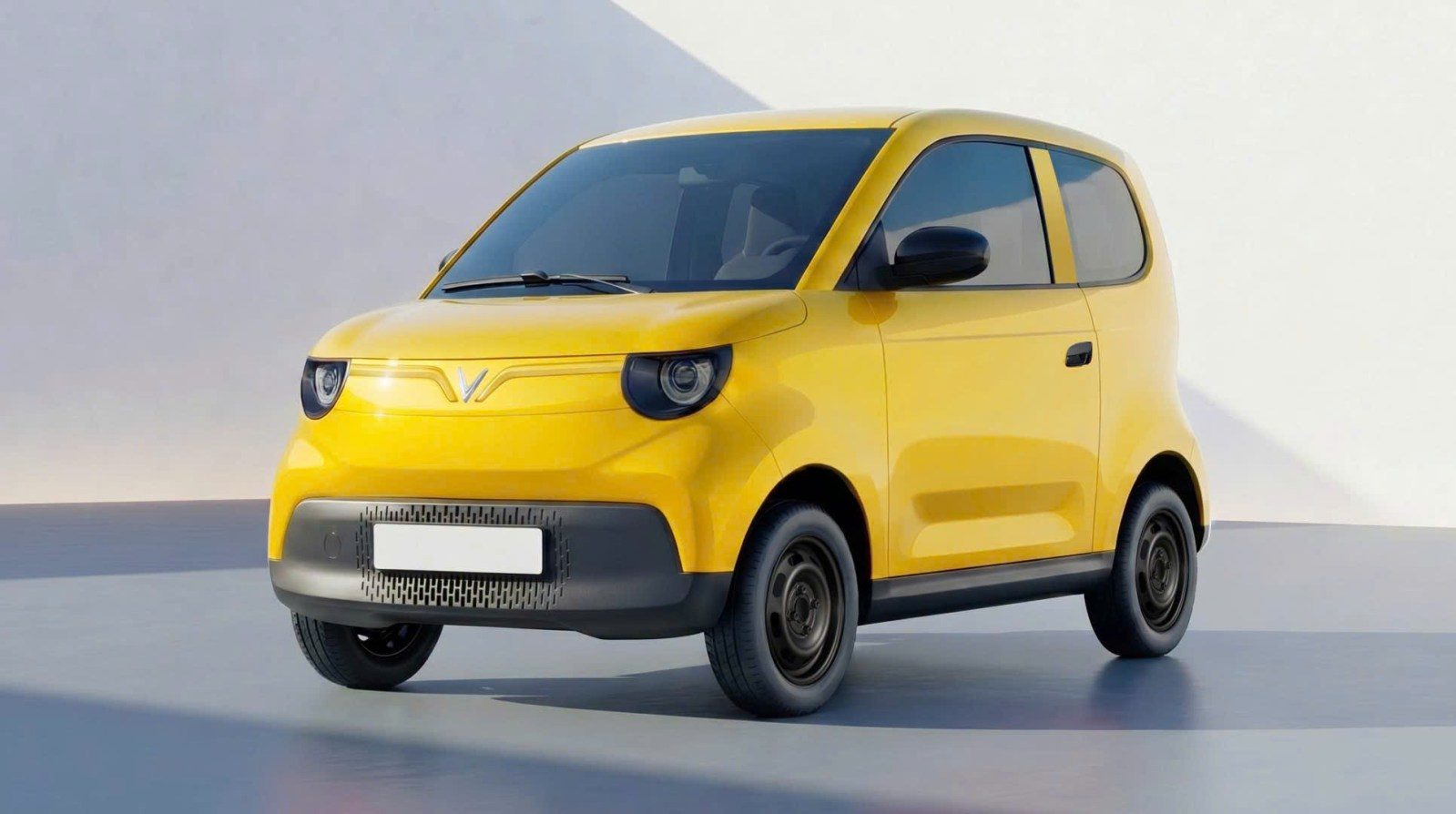

VinFast said that launching its VF 2 microcar in Europe and North America would not be “entirely out of place,” even as the Vietnamese automaker has yet to announce formal plans to bring the model beyond its home market.
“In many developed markets, even entry-level vehicles have become increasingly expensive,” the company wrote in a statement late last week.
VinFast pointed to average new-vehicle transaction prices exceeding $50,000 in the United States by the end of 2025 — a figure confirmed by Kelley Blue Book data from Cox Automotive — and argued that a genuinely affordable city car now occupies a price point that has become surprisingly rare.
The VF 2, launched in July, is a two-door, four-seat city car measuring just 3,090 mm long, powered by an 18.3 kWh usable battery delivering up to 210 km (130 miles) of NEDC range.
Top speed is limited to 80 km/h (49.7 mph). In Vietnam, the model sells for about $7,200. The brand compares the price with a premium motorcycle.
VinFast is not alone in eyeing the segment.
A wave of automakers from China to Europe is now moving to fill the gap between urban quadricycles and conventional compact cars, driven by affordability pressures, tightening city space and a new EU regulatory framework that rewards small electric vehicles built on the continent.
BYD Racco Tech
BYD is developing a new electric minicar for international markets including Europe, built around the X-Pack battery and powertrain architecture first used in its Japan-exclusive Racco kei car, according to a late-August report by Nikkei.
New models using the platform are expected within several years, as the Shenzhen-based automaker seeks to recoup its investment in the technology by applying it more broadly.
X-Pack integrates major electrical components — including the inverter — into a single battery pack mounted beneath the vehicle floor, rather than housing them under the bonnet.
For the Racco, the layout frees interior space that would otherwise be lost to Japan’s strict kei dimension limits of 3,400 mm in length.
Capacity ranges from 22.4 kWh to 35.84 kWh, delivering up to 320 km (198.8 miles) of WLTC range and making the Racco Japan’s first electric kei car to exceed 300 km.
Europe is the most immediately plausible destination.
In 2025, the EU announced a new small EV classification — generally known as the E-Car or M1E category — offering subsidies for compact EVs under 4.2 metres built within the bloc.
BYD’s Hungary plant would serve as the most likely production site, allowing the company to qualify for those incentives while avoiding the countervailing duties applicable to EVs imported from China.
Exporting the Racco itself, on the other hand, looks unlikely.
BYD Executive Vice-President Stella Li told Autocar last year that the company would be interested in bringing a kei-style car to Europe — “if there’s some space, we can bring that car here” — but the vehicle was engineered around Japanese crash-test requirements and dimensional limits.
Standard European type approval would require significant re-engineering.
A European-built derivative could also open a second market beyond Europe: because EU and Australian vehicle regulations share broadly similar foundations, a model built to meet the M1E standard could plausibly satisfy Australian rules too, giving BYD a single design for multiple markets.
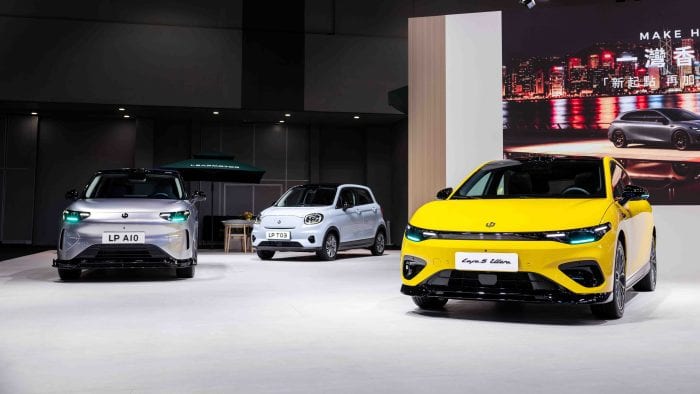
A European model would slot beneath the existing Dolphin Surf in BYD’s lineup, competing directly with the Dacia Spring and Leapmotor T03 in exactly the ultra-affordable segment the Racco was built to target at home.
A Growing Field
Stellantis announced in May that a new compact EV priced at around €15,000 ($17,400) would enter production at its Pomigliano d’Arco plant in Italy from 2028, under the E-Car framework.
Renault is preparing the Twingo E-Tech at about 3,790 mm. The Hyundai Inster, at 3,830 mm, targets similar buyers.
At the smallest end of the European spectrum, quadricycles occupy a different regulatory lane entirely.
Citroën’s Ami, Fiat’s Topolino and Opel’s Rocks-e are L6e/L7e vehicles limited to 45 km/h (28 mph), carrying batteries of five to six kWh and selling for a fraction of a conventional car’s price.
Swiss manufacturer Microlino revives the Isetta-style bubble car with up to 228 km (141.7 miles) of WLTP range. Renault’s Mobilize Duo targets similar urban niches.
China already dominates the micro EV segment by volume.
SAIC-GM-Wuling’s Hongguang Mini EV has sold more than 1.8 million cumulative units across five generations, starting at about $6,200 domestically.
Geely’s Panda Mini, Changan’s Lumin and a range of models from Chery, Baojun and others compete in the same A00 class — vehicles typically measuring 2,900 to 3,300 mm, priced under $10,000 and sold overwhelmingly within China and Southeast Asia.
Why Now
Several forces are converging, including average new vehicle prices in the US hitting above $50,000, driven by a mix of large SUVs, full-size pickups and luxury trims in the US.
Europe faces a similar affordability squeeze: entry-level models have grown larger, heavier and more expensive with each generation, and several sub-€20,000 ($23,200) options have exited the market entirely.
Electric powertrains help reverse that trend.
Without the packaging constraints of combustion engines — no gearbox, no exhaust system, no fuel tank — designers can deliver usable interior space within a far smaller footprint.
VinFast’s VF 2 seats four in dimensions smaller than today’s Fiat 500.
BYD’s X-Pack architecture pushes the same logic further, integrating drivetrain components into the battery to reclaim cabin volume.
Regulation adds momentum, with Europe’s new M1E category and Japan’s established kei framework both rewarding compact dimensions with subsidies, tax advantages and lighter compliance burdens.