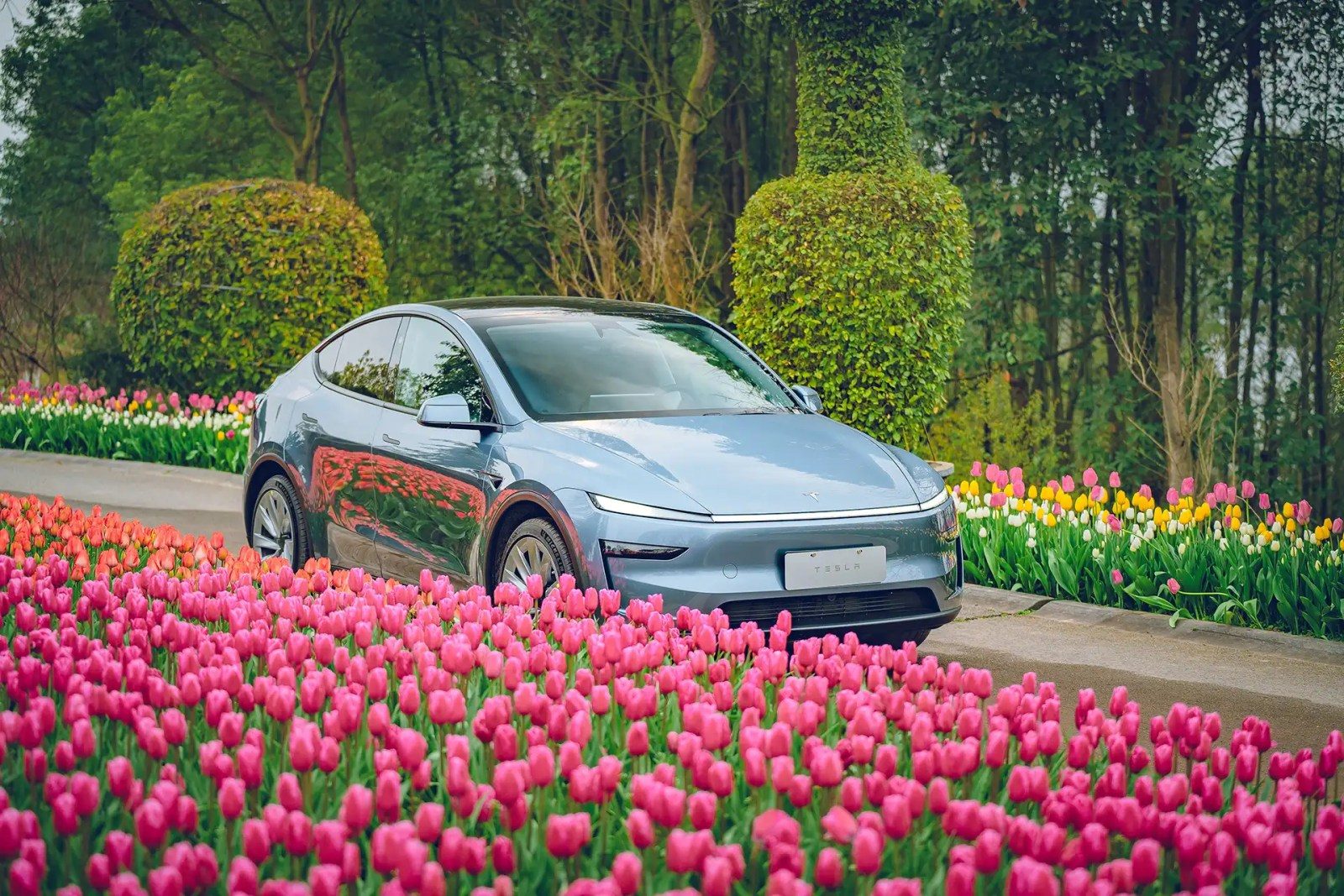

Tesla China denied on Friday raising prices on the Model Y in the domestic market, pushing back against recent reports that claimed the automaker had adjusted its lineup pricing at the start of May.
In a statement sent to several Chinese media outlets, the company said the Model Y has not seen a price increase and directed consumers to its official website for the latest pricing and policies on all models.
The denial came after reports circulated that Tesla had raised the price of the Model Y Long Range version by 18,000 yuan ($2,600) and the Performance version by 20,000 yuan ($2,900).
According to Tesla‘s Chinese website, the Long Range Rear Wheel Drive (RWD) SUV is priced from 288,500 yuan ($42,500), while the All Wheel Drive begins at 313,500 yuan ($46,200).
The claims gained traction amid a broader wave of speculation that Chinese automakers were preparing price hikes in response to rising component costs.
Surging Costs
Since September 2025, a widening supply gap in the global memory market — driven by surging demand and constrained production capacity — has pushed storage chip prices higher, drawing attention to downstream cost pressures across the auto industry.
The impact of rising storage chip costs has shown up in advanced driver-assistance features.
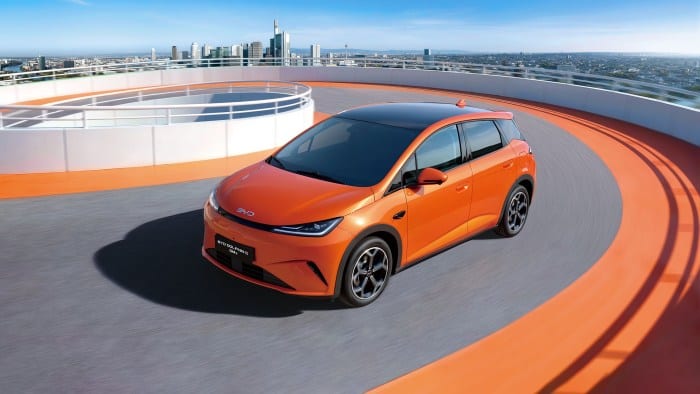
On April 28, BYD announced it would raise the optional price of its DiPilot “God’s Eye B” LiDAR-assisted driving package to 12,000 yuan — a 21.2% increase — on select Dynasty, Ocean, and Fangchengbao models, citing substantial increases in global storage hardware costs.
Chinese EV maker Nio was also the subject of price increase rumors — with reports claiming the company planned to raise vehicle prices in the second quarter.
However, an internal source at Nio told Chinese media outlet The Paper that the EV maker currently has no such plans.
The EV maker’s founder and CEO William Li had previously acknowledged that rising memory chip prices could add between 3,000 and 5,000 yuan to the cost of high-end new energy vehicles, while acknowledging the pressure remained within the company’s price range.
Tesla’s China Sales Context
The statement arrives at a sensitive time for Tesla in its second-largest market.
Data from the China Passenger Car Association (CPCA) released earlier this week showed that Tesla’s retail sales in China dropped nearly 10% year over year in April to 25,956 units, placing the company 13th among domestic automakers.
The Model Y accounted for roughly 90% of Tesla‘s domestic retail volume in April, with 22,990 units sold — up 15% year over year but sharply down from March’s 56,107 domestic retail figure.
Total wholesale deliveries from Gigafactory Shanghai reached 79,478 units in April, with exports accounting for 53,522 vehicles — the second-highest export month on record for the plant.
The figures are consistent with Tesla‘s well-documented quarterly production cycle, which prioritizes shipments overseas early in each quarter before shifting focus to domestic buyers.
The broader Chinese auto market has been in what CPCA described as a “slow recovery” phase since the start of the year, following the reimposition of a 5% minimum purchase tax on electric vehicles beginning January 1.
The policy has weighed on demand across the industry.
Financing Push, Not Price Hikes
Rather than raising prices, Tesla has been moving in the opposite direction.
Earlier this week, the company launched a new “Easy Loan” auto financing plan in China, lowering the entry barrier for vehicle purchases.
The program is available for the locally produced Model 3, Model Y, and Model Y L through May 31.
It allows buyers to start with a down payment as low as 55,900 yuan ($7,760) on the rear-wheel-drive Model 3, with monthly installments of 2,193 yuan ($305) and an annualized interest rate of approximately 0.99%.
A balloon payment of 45,500 yuan ($6,320) is due at the end of the five-year term.
The move follows Tesla‘s decision to scrap its seven-year, low-interest loan option in China at the end of April, after several Chinese automakers halted similar ultra-long-term loan services as financial institutions tightened credit risk exposure.
The company has, however, retained a zero-interest financing plan for up to five years.
Accommodative financing has been a critical tool for Tesla in China’s intensely competitive EV market — where BYD, Geely, Leapmotor, and Xiaomi all outsold the US brand domestically in April.
Widespread Price Increases Unlikely
Despite the rising cost pressure, China’s Passenger Car Association (CPCA)’s Secretary General Cui Dongshu said at a May 11 briefing that car prices are expected to remain relatively stable overall.
Cui noted that profit margins among Chinese automakers are currently highly polarized — premium brands still maintain gross margins above 20% on many models, giving them limited incentive to raise prices.
Meanwhile, low- and mid-range automakers face clear profitability pressure, but with competition intensifying and the market remaining largely stagnant, broad-based price increases are not feasible.
He also pointed out that a wave of new models entering the market at ultra-low prices is squeezing existing automakers and effectively locking in the industry’s price floor.
CPCA’s current price monitoring shows no obvious upward trend, according to Cui, who described the competitive environment as too intense for large-scale price movements in either direction.