
Chinese automaker BYD announced on Tuesday that it is raising the price of an optional advanced driver-assistance feature across several of its vehicle lineups, citing increasing hardware costs.
The B-tier, LiDAR-equipped God’s Eye package will increase from 9,900 yuan ($1,450) to 12,000 yuan ($1,760) — a 21.2% hike.
The system is available in select models under BYD‘s Dynasty and Ocean series, which includes models such as the Seal family and Dolphin compact cars, plus the premium Han sedan and the Tang SUV.
The new pricing takes effect on May 1. Customers who place a deposit order by April 30 will not be affected.
BYD attributed the increase to a significant rise in global storage hardware costs, adding that the adjustment was necessary to maintain product quality and user experience.
The company did not specify which components were affected or name suppliers; it also did not indicate whether similar increases are planned for the A-tier or C-tier configurations.
God’s Eye
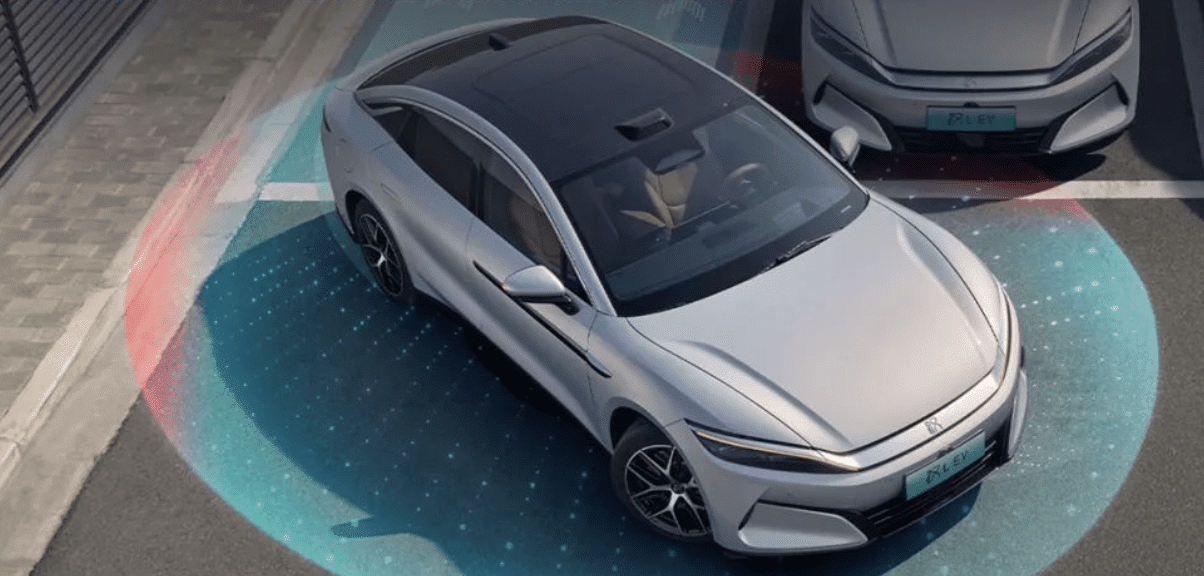
The God’s Eye platform is BYD‘s in-house developed intelligent driving assistance system.
Launched in February 2025 under the banner of an “Intelligent Driving for All” initiative, it was positioned as a way to bring advanced driver-assistance features to mass-market vehicles — not just premium ones.
The system is offered in three tiers.
The A-tier, also called DiPilot 600, uses a triple-LiDAR setup and is reserved for models from BYD‘s ultra-premium Yangwang sub-brand.
The B-tier — DiPilot 300, and the subject of this week’s price increase — features a single LiDAR unit and is available on select models from the Denza premium brand and certain BYD-branded vehicles.
The C-tier, DiPilot 100, relies on a triple-camera system without LiDAR and is the most widely deployed version. It runs on mid-range processors from Nvidia and Horizon Robotics.
The mass-market tier is equipped on models spanning prices from 70,000 yuan to 200,000 yuan ($9,700–$27,700), including the entry-level Seagull hatchback — known as Dolphin in overseas markets.
At launch, BYD said the platform’s safety framework included over 1,000 km of autonomous driving with zero takeovers, autonomous emergency braking at 100 km/h, and a 99% success rate in automated valet parking.
Functions across the tiers include highway and urban expressway navigation on autopilot, automated valet parking with remote retrieval, and memory-based navigation for commuting routes.
Rapid Adoption
The scale of deployment has grown quickly.
In a media session last July, BYD executives had already disclosed that usage of assisted parking features had climbed to over 60%, up from 30–40% before the system launched.
Highway Navigate-on-Autopilot reached peak usage rates of 90%, while urban NOA adoption remained lower, at around 20–30%.
Yang Dongsheng, director of BYD‘s Automotive New Technology Research Institute, attributed part of the uptake to a liability policy the company introduced alongside a major over-the-air update in July 2025.
The Shenzhen-based company became the first automaker globally to accept full responsibility for accidents occurring while its L4-level parking system is engaged, covering all safety-related losses without requiring users to file insurance claims.
“Since we introduced the parking safety guarantee, we’ve seen car owners using the feature more confidently,” Yang said at the time.
BYD said on Monday that as of the end of March, more than 2.85 million of its vehicles were equipped with assisted driving systems.
According to the company, the God’s Eye platform generates over 180 million kilometers of driving data per day.
BYD‘s approach of making the camera-based C-tier standard while charging for the LiDAR-equipped B-tier attempts to balance hardware costs with the need for data collection to train the model.
The 2.85 million vehicles the company says are now equipped with assisted driving represent a fraction of BYD‘s total active fleet — the company sold over 4.6 million vehicles in 2025 alone — suggesting most buyers are currently opting for the standard C-tier or models without the system.
Competitors’ Approach
BYD‘s decision to charge separately for its LiDAR-equipped ADAS tier sits between two emerging strategies in China’s EV market.
Tesla prices its Full Self-Driving (FSD) package in China —only partially approved there — at 64,000 yuan ($8,900), more than five times the cost of BYD‘s God’s Eye B option after the increase.
The Elon Musk-led company shifted FSD to a subscription-only model in the United States earlier this year, though a subscription plan has not yet launched in China.
XPeng, which had included its ADAS system as standard across all models since mid-2022, reversed course at the start of this year.
The Guangzhou-based automaker reintroduced paid smart driving packages as optional extras across four updated models in January, with its Ultra SE system priced at 12,000 yuan and the higher-tier Ultra system at 20,000 yuan — both using XPeng‘s proprietary Turing AI chips.
The move brought XPeng’s B-tier pricing to the same level as BYD‘s updated God’s Eye B.
Premium group Nio has taken a different path, offering its advanced driver-assistance features with at least five years of complimentary access with new vehicle purchases, while Li Auto includes its smart driving suite free of charge across its lineup.
Cost Pressures
Rising costs across the global memory supply chain are widely seen as a key factor behind the price increase, as storage chip prices continue to climb sharply.
From the fourth quarter of 2025, DRAM and NAND Flash entered a new upward pricing cycle, with major suppliers — including Samsung, SK Hynix, and Micron Technology — successively raising contract prices.
The price increase is modest in absolute terms — roughly $40 per vehicle — but it is notable as one of the few instances where BYD has raised pricing on a feature rather than cutting it.
The Chinese automaker has been at the center of a prolonged price war in its home market, slashing vehicle prices across its lineup to defend market share.
Despite that, the company continues to see slower domestic sales, as the Chinese market becomes increasingly saturated.
China’s automakers are now turning to overseas markets instead.
BYD has not yet introduced the God’s Eye platform in its European lineup, currently offering a more basic set of driver-assistance features in the continent.
The company established a European R&D center in Budapest last year, focused on intelligent driving technologies and next-generation EV systems.
Earlier this year, BYD begun trial production at its first European passenger vehicle factory in Hungary.