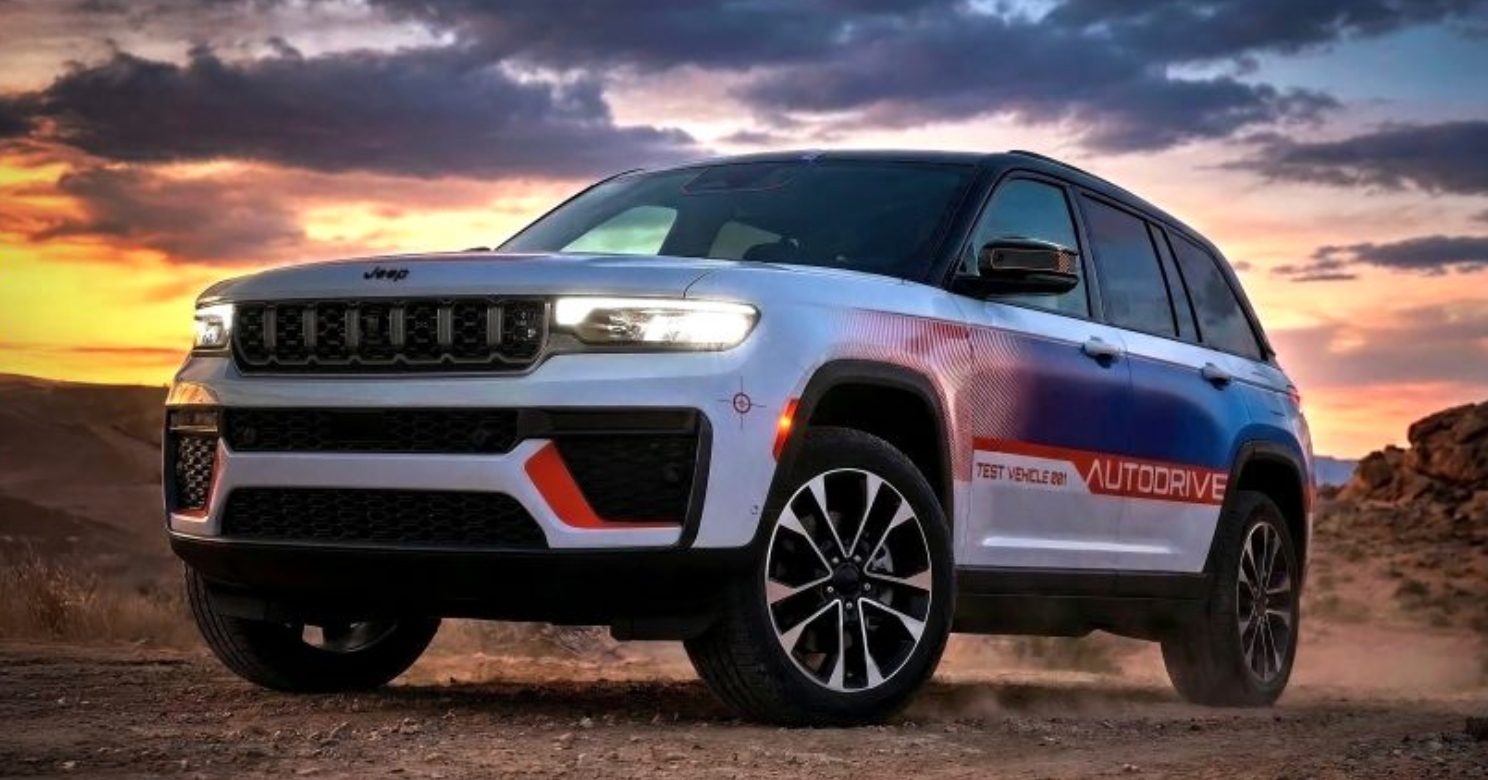

Stellantis will integrate the AI driving system of British startup Wayve into its vehicles, the companies said, with the first North American cars to offer hands-free, supervised driving arriving in 2028.
The partnership pairs Wayve’s AI Driver with Stellantis‘s STLA AutoDrive platform to deliver what the companies call Level 2++ driving, a hands-free but supervised system that works in both city and highway conditions.
The deal was unveiled during Stellantis’ Investor Day in Michigan, where CEO Antonio Filosa laid out the ‘FaSTLAne 2030’ plan that includes roughly $25 billion in North American product and brand investments through the rest of the decade.
The agreement builds on a recent strategic investment Stellantis made in the London-based company, deepening a relationship the two framed as a path toward more automated driving over time.
“Combining our STLA AutoDrive platform with Wayve‘s groundbreaking AI-first approach creates a genuinely intuitive and enjoyable hands-free driving experience,” said Ned Curic, Stellantis‘s chief engineering and technology officer.
A Faster Path to Deployment
The initial focus is door-to-door supervised driving across highway and urban scenarios, with the platform designed to evolve toward more advanced automation as regulations allow.
The first vehicle integration is planned for North America in 2028.
Wayve co-founder and CEO Alex Kendall said the two companies had already shown how quickly the system could be adapted to Stellantis vehicles, bringing up a prototype in less than two months.
Stellantis said early development on its vehicles has already begun.
An AI Approach Without HD Maps
Wayve‘s system differs from many rival driver-assistance technologies in that it does not rely on HD maps.
The company uses what it calls end-to-end embodied AI, processing data from onboard sensors to interpret traffic in real time and anticipate how its actions will affect other road users.
The approach is designed to generalize across geographies and vehicle types rather than being tuned to a single car or hardware setup, which the companies said would allow faster deployment and continuous improvement from real-world driving data.
For Stellantis, the STLA AutoDrive platform is meant to provide a common foundation for rolling out driver assistance across its portfolio of brands, which spans Jeep, Ram, Dodge, Chrysler, Peugeot, Fiat and others.
A Well-Funded Partner
Wayve has drawn heavy backing from across the technology industry.
In April, the company announced a $60 million investment from AMD, Arm and Qualcomm Ventures, extending a Series D round that had previously raised $1.2 billion from financial investors, technology companies and automakers.
The partnership represents the commercial next step after Stellantis participated in Wayve’s $1.2 billion Series D round in February 2026, which valued the London startup at roughly $8.6 billion and also drew Nissan, Mercedes-Benz, Microsoft, Nvidia and Uber.
The chipmakers’ involvement spans the automotive computing stack, which Wayve said would make it easier for carmakers and fleet operators to deploy its system across different hardware.
Wayve develops software intended to handle point-to-point navigation across environments and vehicles, ranging from Level 2+ “hands off” driving to Level 3 and Level 4 “eyes off” operation.
Robotaxi Ambitions
Separately from the Stellantis deal, Wayve is pursuing a robotaxi program with the ride-hailing giant Uber.
The two plan to expand trials to more than 10 cities globally, introducing vehicles in select markets as the rollout progresses.
They aim to move from pilots that use safety operators toward a scalable robotaxi service built for long-term deployment.
The Stellantis agreement, by contrast, is focused on supervised driver assistance in privately owned vehicles rather than driverless fleets, at least in its first phase.