Mercedes-Benz told U.S. dealers it aims to sell more than 330,000 vehicles in the country in 2027, a plan built on new combustion-engine models while its EVs remain a small part of U.S. sales.
The target is about 5% above Mercedes’s 2026 total, according to the Automotive News report. That implies about 315,000 vehicles this year, short of the 325,000 the brand had targeted at the start of 2026.
Mercedes-Benz USA retailed 221,200 passenger cars in the first nine months. Reaching about 315,000 would require roughly 93,800 in the fourth quarter, 18% more than the 79,350 it retailed in the final quarter of 2025 and 23% more than the third quarter’s 76,200. The report did not say whether the targets include vans.
Mercedes executives told retailers the company will keep investing in V8 and six-cylinder engines, the report said.
Greg Gates, Mercedes-Benz USA’s Vice President of Sales and Network Operations, told Automotive News that the model-year 2027 GLE, GLS and S-Class are “the first building blocks of our ongoing product offensive.”
“That will be further complemented as we get into 2027 with Model Year ’28 vehicles, both on the ICE side but also some additional BEV vehicles,” he said. He did not name the electric models.
EV Sales Remain Small
Mercedes-Benz USA does not disclose U.S. electric vehicle sales. Mercedes sold an estimated 5,711 electric vehicles in the U.S. in the first nine months of 2026, down 45.5% from 10,487 a year earlier, according to Kelley Blue Book estimates published by Cox Automotive.
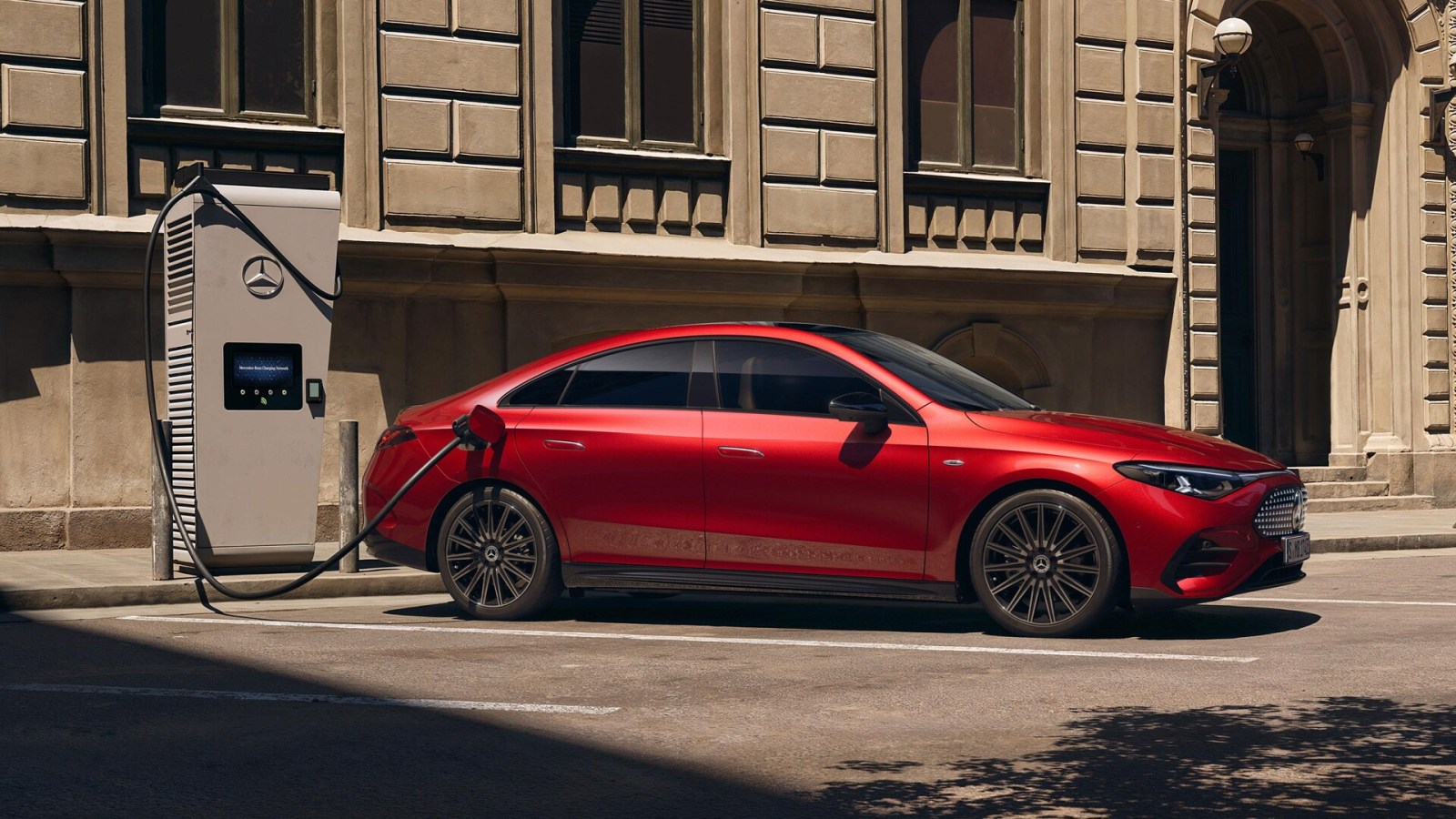
Third-quarter sales rose 17.1% to 2,701, helped by 974 units of the new electric CLA. Those figures equal about 3.5% of the 76,200 passenger cars Mercedes-Benz USA reported for the quarter, although the two sources count sales differently.
Mercedes-Benz USA’s 2027 model-year guide, published on October 22, lists new electric versions of the GLC, GLB and C-Class. The GLC 400 4MATIC Electric, priced from $63,500 with up to 350 miles of EPA-rated range, arrives at U.S. dealers in fall 2026, and the GLB Electric, from $49,900, follows in late 2026.
The C 400 4MATIC Electric is due in spring 2027, and the electric CLA starts at $47,950. The EQE SUV returns for 2027 with no equipment changes. All prices exclude destination charges of $1,450 or $1,550.
The broader U.S. EV market fell 38.6% to an estimated 266,630 vehicles in the third quarter, according to the same Cox report. The year-earlier quarter was inflated by buyers rushing to claim the federal EV tax credit before it expired on September 30, 2025.
The loss of that credit also hit plug-in hybrids. Mercedes’ global plug-in hybrid sales fell 38% in the third quarter to 33,472, partly due to “the elimination of tax incentives in the United States,” its third-quarter interim report said.
Mercedes’ luxury rivals have moved in opposite directions. Lexus sold an estimated 16,659 EVs through September, up 212.0%, while BMW fell 54.9% to 15,735 and Audi dropped 90.8% to 2,736, the Cox estimates show.
The U.S. picture contrasts with Europe. Almost one in three Mercedes cars sold in Europe in the third quarter was fully electric, and the electric GLC, CLA, GLB and GLA are sold out there for the rest of 2026, the Mercedes-Benz Group said in October.
Globally, fully electric models made up a record 16.8% of Mercedes-Benz Cars sales in the third quarter, with 68,400 units, up 61%. The group said the electric CLA expanded into markets including the U.S. during the quarter.
Behind BMW and Lexus
Mercedes-Benz USA reported retail sales of 221,200 passenger cars in the first nine months of 2026, down 1%, and 76,200 in the third quarter, up 4%, according to its own release.
Those figures put it nearly 66,000 units behind BMW and more than 41,000 behind Lexus, according to the Automotive News Research & Data Center. BMW of North America reported 287,154 BMW-brand sales through September, up 4.3%, which is 65,954 more than Mercedes.
The Mercedes-Benz Group, which counts sales on a different basis, reported 238,333 U.S. car sales in the first nine months, up 12%, and 75,300 in the third quarter, up 6%.
A Bigger Role for the U.S.
Mercedes has a goal of 400,000 U.S. retail sales a year by the end of the decade, which would top its 2015 peak of 343,088, according to Automotive News.
Mercedes announced in March that it plans to invest $7 billion in the U.S. through 2030, including $4 billion at its Alabama plant. Automotive News reported this month that Mercedes had pushed back the start of GLC production there to May 2030 from late 2027, which the company has not confirmed.
“Our commitment to Tuscaloosa and our planned U.S. investment of $7 billion through 2030 has not changed,” a Mercedes spokesperson told Motor1.
“We have to see how the market develops,” Gates said. “But it’s not so much around the number itself than ensuring that it’s sustainable, and that we’re continuing to grow year-over-year.”
The U.S. is gaining weight as China shrinks.
Mercedes-Benz Cars sales in China fell 29% to 297,000 vehicles in the first nine months, pulling global sales down 7% to 1,244,400, the group said. That compares with 238,333 in the U.S. on the same basis, narrowing China’s lead to 58,704 from 205,541 a year earlier.
Mathias Geisen, the Member of the Board of Management responsible for sales, stressed the importance of the U.S. market at the meeting as growth stalls in China, the report said.
“Leadership believes the U.S. could become Mercedes-Benz’s largest market in 2027,” one of the retailers at the meeting told Automotive News.
Mercedes also presented a new dealer margin structure and a complimentary maintenance program for 2027, and said it is rebuilding its lease portfolio. Captive financing penetration is above 70%, Gates said.
On the charging side, Mercedes-Benz High-Power Charging reached 100 locations in North America this month, three years after opening its first hub, with 934 charging ports.