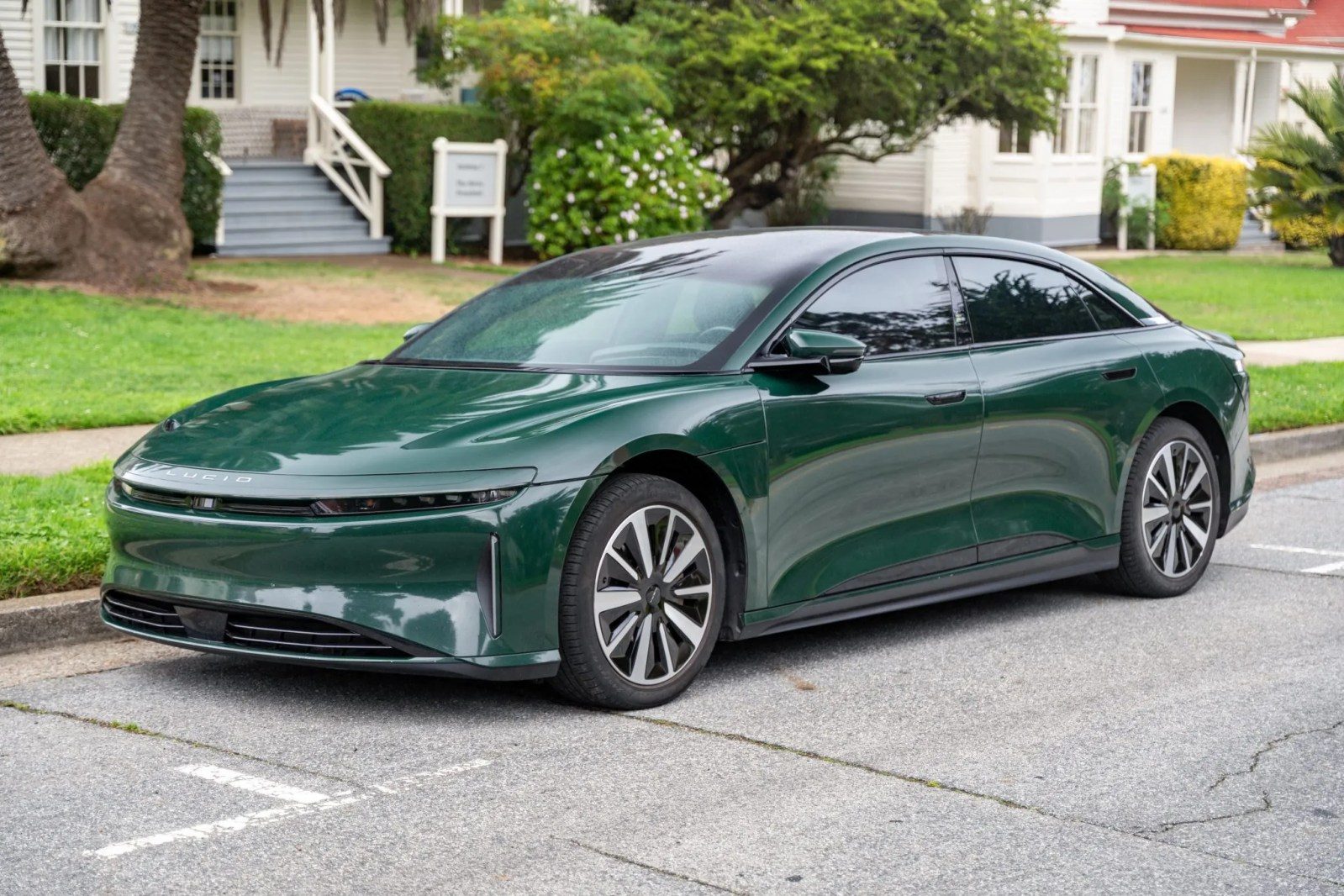

Lucid Motors began rolling out a major over-the-air software update to its Air sedan, the first feature release for the debut model in nine months.
The California-based EV maker is shifting its software team’s focus back to the sedan after months of intensive work fixing issues and rolling out new features on the Gravity SUV.
Version 2.9.0 activates Plug & Charge protocol support at Tesla Superchargers across North America, refines the company’s DreamDrive driver-assistance suite, and expands Smart Energy and Navigation capabilities.
According to the community platform Lucid Tracker, it is the Lucid Air’s first feature-tagged release since version 2.8.0 on July 30, 2025 — when the company opened the Tesla Supercharger network to all Air owners with an approved adapter.
The nine-month gap stands in sharp contrast to the cadence of Gravity software releases over the same period, which included three feature updates as the company worked to resolve persistent owner complaints that drew an apology from interim chief executive officer Marc Winterhoff in December.
The Lucid Air averaged 32 days between releases over the period, against 23 days for the Gravity, according to Lucid Tracker data.
The average gap between Air feature updates stretched to 270 days, nearly three times the Gravity’s 92-day cadence.
The update delivers on a commitment the EV maker made to Engineering Explained host Jason Fenske in January, when the company outlined an extensive list of Lucid Air software improvements in development that included “enabling plug-and-charge with Tesla Superchargers for Air customers,” as EV reported at the time.
Plug & Charge at Tesla Superchargers
The update marks the first time the Lucid Air supports the Plug & Charge protocol at Tesla‘s network, allowing owners to plug in and begin charging without manually initiating sessions through the Lucid mobile app, provided a payment method is linked to their Lucid Wallet.
Air owners previously had to start charging via the app using a saved credit card.
The new protocol handles authentication and billing automatically once the connector is engaged.
A Lucid-approved NACS-to-CCS adapter, priced at $220 before taxes, remains required.
The Air charges at up to 50 kilowatts at Tesla Superchargers, gaining roughly 200 miles of range per hour, well below the more than 300 kilowatts the sedan accepts at CCS-equipped DC fast chargers.
Unlike the Lucid Gravity SUV, which features a native NACS port and supports higher charging speeds at Tesla stations, the Air relies on the adapter solution.
Lucid began shipping the adapters to Air owners in late July 2025, opening access to more than 23,500 TeslaSuperchargers. The newly launched 2026 Air sedan, also revealed last July, does not feature a native NACS port either.
Navigation search results now include compatible Tesla Supercharger locations, allowing owners to find, route to, and charge at the network directly from the in-vehicle interface.
DreamDrive Refinements
The update rolls out improvements to Lucid‘s DreamDrive driver-assistance suite.
Lane Change Assist maneuvers are smoother, the company said, with turn signals now turning off earlier when the lane change is complete.
Adaptive Cruise Control will provide a slight acceleration boost when passing slower vehicles on the left, allowing the Air to overtake more quickly.
Route planning now offers new routes in real time with charging stops to ensure owners arrive at their destination with range to spare.
Refined traffic light visuals along the route reduce clutter, according to the release notes.
The DreamDrive update for the Air follows a broader software roadmap detailed at Lucid‘s March 12 investor day, when the company outlined plans to deliver hands-free highway driving for Gravity, city drive assist, and an artificial intelligence assistant by the end of 2026, hands-free city driving in 2027, and Level 4 autonomy by 2029.
Smart Energy and Charging
Beyond Tesla Supercharger integration, the update expands Lucid‘s Smart Energy features.
Scheduled Charging will now start as expected if owners plug in within six hours of their scheduled time, allowing the vehicle to take advantage of off-peak hours. Otherwise, the vehicle will wait until the next session.
Owners can adjust their Current Limiter setting directly in the Lucid mobile app, giving more flexible control over how the vehicle fits into a home’s energy use.
Range on Arrival on the Instrument Cluster Panel now matches the preferred range unit and stays synchronized with Navigation.
Audio, Media and Interior Lighting
The update improves call handling across apps and Bluetooth stability during calls, and addresses radio availability after the vehicle wakes up.
For SiriusXM users, playback is more reliable during and after slow network connections, with improved Channel and Podcast details, Favorites syncing, and resumption of playback after a phone call.
Channels owners unfavorited are now removed everywhere.
On the PureLux Trim, ambient lighting options will display Lucid Themes colors.
Separately, the vehicle’s Shock & Tilt alarm will now go silent automatically if the owner does not respond after five consecutive alerts, while continuing to send notifications through the Lucid Mobile App.
Cosmos Looms Over Software Roadmap
The Air update comes as Lucid‘s software team faces a sharply expanding workload before year-end.
Production of the company’s third model, the midsize crossover Cosmos, is scheduled to begin by the year end.
The vehicle will be the first Lucid to feature Nvidia’s DRIVE AGX Thor computing platform and to target Level 4 autonomous capability.
Cosmos will introduce a third concurrent software stack to a team that has been simultaneously maintaining the Air’s UX 2.x platform, rolling out the Gravity’s UX 3.0 platform, and preparing UX 3.0 for the Air sedan, planned for early fall 2026.
The Air sedan currently runs on Android-based architecture that the company has acknowledged makes some customization more difficult than the Linux-based systems used by Tesla, as EV reported in January.