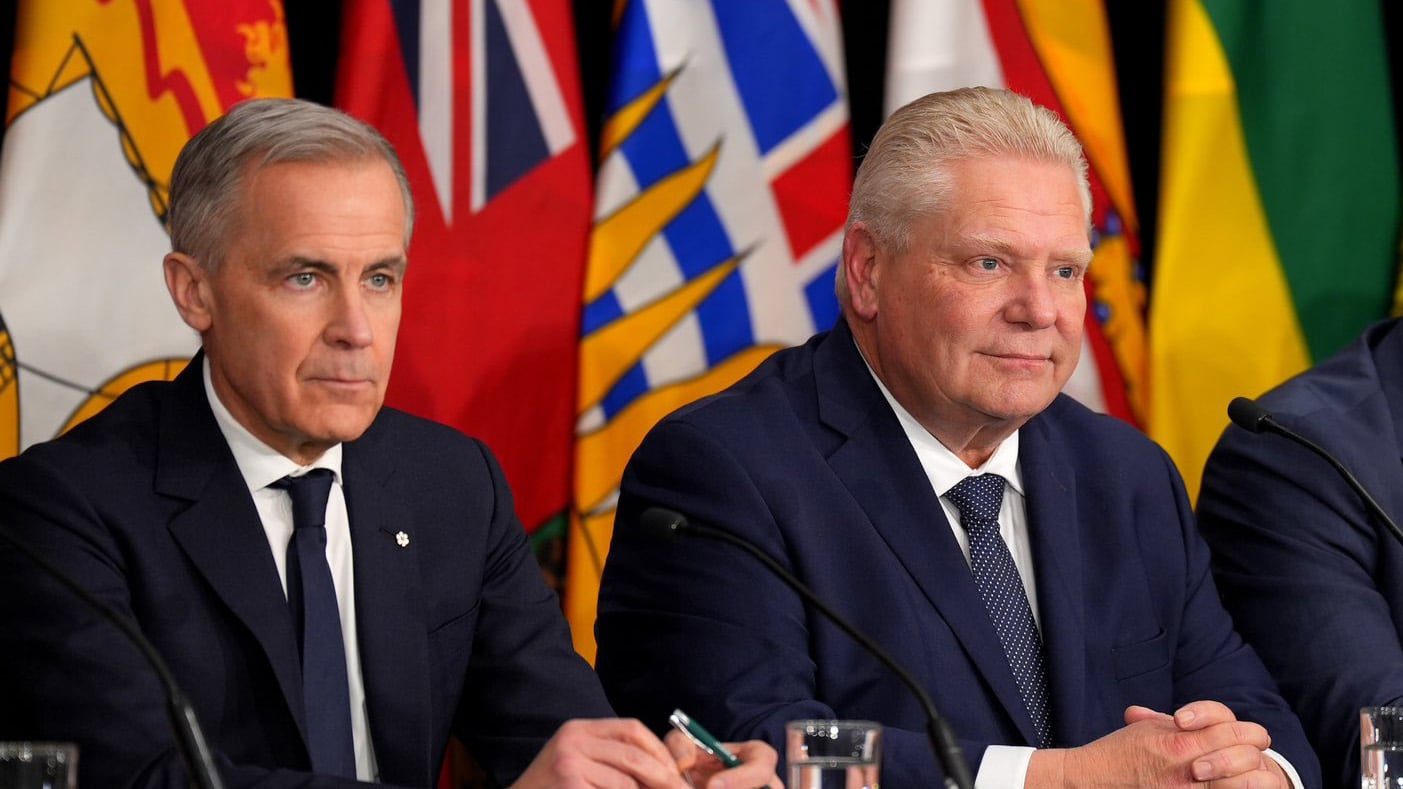

Ontario Premier Doug Ford said US tariffs have cost American automakers and consumers $110 billion, and that Canadians are already buying fewer American vehicles, in an interview on CNN on Tuesday.
“States like Michigan and Ohio and Texas and Kentucky, the auto states that are manufacturing autos, it’s cost the American people and the auto companies $110 billion on these tariffs,” Ford told Wolf Blitzer.
Ontario Premier did not say over what period, or give a source for the figure.
The interview aired hours before Ottawa announced counter-tariffs of up to 50% on $27.6 billion of American goods, and a day after President Donald Trump said tariffs on Canadian vehicles, parts and steel would rise to 50% on January 1.
“A Decrease”
Ford’s most specific claim concerned demand rather than duties.
“Our — we’re the number one purchaser of autos off America anywhere in the world, 400% more than than anyone,” he said. “And what’s happening now, we’re seeing a decrease in Canadians buying American vehicles, which is going to hurt the auto workers.”
He offered no figures for the decline while putting the consumer cost at “up to $5,000 more on automobiles” for American buyers, adding that tariffs would cost them “a few thousand dollars more” across other goods.
Ontario Is the Sector’s Home
Ontario builds the overwhelming majority of Canada’s vehicles, and its plants and suppliers are tightly integrated with factories in Michigan and other US states, with parts crossing the border repeatedly before final assembly.
That integration is what the collapsed negotiations were about.
US Trade Representative Jamieson Greer said on Monday that the American offer covered cars, passenger trucks, sport utility vehicles and pickups, and that Canada wanted medium and heavy-duty trucks added: “We want the heavies. We want the heaviest trucks available.”
Prime Minister Mark Carney said on Saturday that without truck relief, Ford‘s new Ontario plant building F-350s and larger pickups “would have been excluded. No rationale.” Chevrolet Silverado production in Oshawa falls in the same category.
Ottawa’s counter-tariff package, announced Tuesday, pointedly left the auto sector alone. “Other existing counter-tariffs against the US, including autos, remain in place,” the finance department said, keeping the remission framework that ties relief to Canadian production.
Trump Concedes One Dependency on Camera
CNN played Ford a clip of the president on aluminium.
“And you know selfishly we need aluminum in this country,” Trump said. “We don’t have it. We get it all from Canada for the most part and we need it badly.”
Asked whether Trump was deliberately targeting Canadian industry, Ford answered with an inventory.
“You need us to continue buying steel and aluminum. You need the potash for the agricultural sector — 90% of the potash goes down to your great farmers,” he said. “And there’s no other place to get it. If you want to get it off Russia, that’s fine.”
He continued: “The uranium that gets shipped from Saskatchewan to Ontario, refined in Ontario, and then gets enriched into the US. Not to mention the 4.1 million barrels of oil that Alberta ships down every single day. And our high-grade nickel — 65% of all the high-grade nickel that you use for your military, for manufacturing, for aerospace, comes from Ontario.”
The Electricity Threat Reversed in a Day
On Monday Ford told the Associated Press he would begin cutting off electricity and critical minerals if the trade war escalated, and that if Trump kept attacking Canadian manufacturing, “he better have a pack of batteries.”
Blitzer put that to him directly.
“What I was saying, Wolf, is that everything is on the table right now, but would I rather send more electricity to power your plants and power your data centers and power other areas and homes that you don’t have?” Ford replied. “We have the electricity that the US needs and I’m more than happy to send them more if we get a fair deal.”
Ontario supplies power to 1.5 million homes and businesses in New York, Michigan and Minnesota.
In March 2025 the province imposed a 25% surcharge on those exports; Trump threatened to double steel and aluminium tariffs, and both sides withdrew within days.
He made the same offer on minerals: “I want to open up our critical mineral market rather than depending on China that has cornered the market. No one has more rare earth minerals, critical minerals than Ontario does. I want to partner with the US.”
The Temperature Came Down
Ford opened by acknowledging the exchange with Trump, who had called him a “Flunky” of Carney after the premier said the president could kiss his backside.
“Things got a little heated. It got a little personal yesterday between the president and myself,” Ford said. “But I want to make a deal, a good deal for the American people, good deal for the Canadians.”
He rejected calls from Canadians to expel the US ambassador to Canada, Pete Hoekstra. “I don’t agree with expelling any American diplomats, especially the ambassador. He has a job and a role to play.”
And he broke with Carney’s decision to suspend negotiations, having told AP on Monday: “I never believe in walking away from the table.”
Sovereignty, and Lake Ontario
Trump posted on Tuesday that the United States was “giving serious consideration to changing the name of Lake Ontario to Lake America in that we don’t expect to be doing much business with Ontario any longer,” and shared artwork of the change.
“I think it’s a lot of rhetoric,” Ford said, noting Ontario alone is the top customer for 17 states and second for 12 more, and would rank as the world’s third-largest trading partner if it stood alone. “Nine million Americans wake up every single morning to produce a product, a widget or a service for Ontario.”
Told Trump had called Canada “easily the most difficult and unreasonable” country he deals with, Ford said: “Canada has to stand up for their sovereignty. He’s not attacking every other country saying that we’re the 51st state. That will never happen.”
He said Ontario added 52,000 jobs last month, “more than the entire US combined,” and that Canada would keep diversifying its trade.
“Make no mistake about it, Wolf, Canadians still love the American people,” he said. “They don’t see eye to eye with the president by any means, but we love the American people and I do as well.”
Ford’s last sentence before closing the interview was, “God bless America. God bless Canada. Let’s get a deal done.”