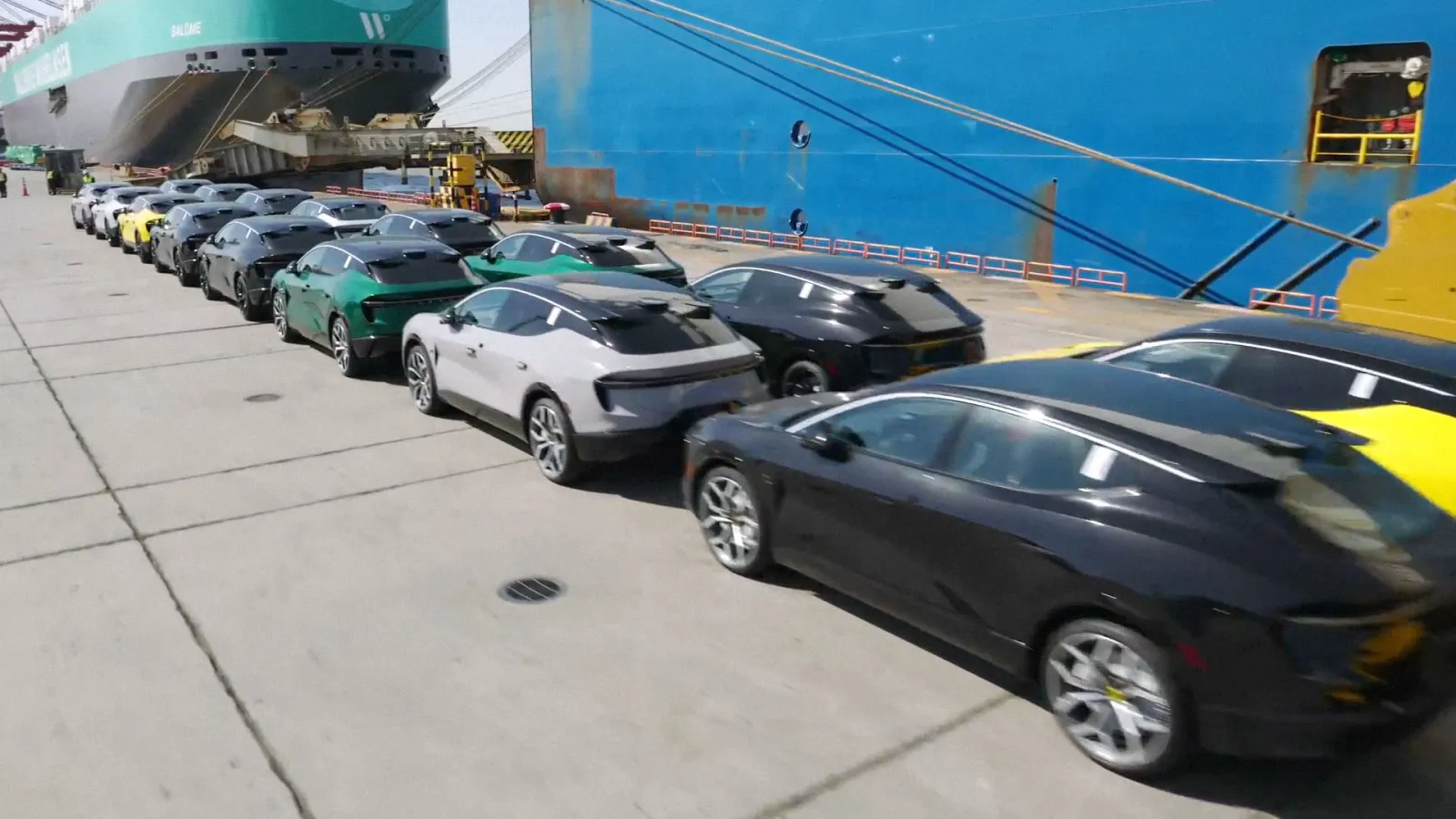
Canada will review whether Chinese electric vehicles should be kept out of military and government sites, Transport Minister Steven MacKinnon said, as the Liberal government faces questions over a low-tariff import quota that has so far gone mostly to Tesla.
Asked by Global News on Wednesday whether Ottawa would limit Chinese EVs’ access to military and government facilities, MacKinnon said “that will be part of a more cross-governmental review of that matter that would involve Public Safety and other departments.”
Pressed on why the government would allow cars that might need location limits, he said it is “always on the lookout for risks” that connected vehicles bring.
MacKinnon also said Transport Canada is still certifying some Chinese automakers to sell vehicles in Canada, Global News reported.
A Review Without a Timeline
MacKinnon did not say when the review would start or finish, or which vehicles it would cover. The government has not announced any restriction.
Several of Canada’s allies already limit Chinese vehicles at defense sites. Germany recently announced a ban on some Chinese vehicles in secure military and government locations, Global News reported, citing Der Spiegel.
The U.K., Poland and Czechia also have full or partial bans on military bases, it said. Poland has told service members not to connect their work phones to the cars’ systems.
‘Primary Beneficiary’
The quota at the center of the debate has so far gone mostly to a U.S. automaker that builds cars in Shanghai.
Adam Chambers, the Conservative Shadow Minister for Innovation, Science and Industry, said he had been told “90 per cent of the quotas have gone to Tesla,” CTV News reported.
“Would Canadians be happy to know so far that Tesla so far is the primary beneficiary of the Chinese electric vehicle policy?” Chambers said. “Is the intention to enrich Mr. Musk?”
MacKinnon said he did not have “recent numbers,” but that “Tesla obviously manufactures in China and some of that quota in the past has been used for Tesla vehicles.”
International Trade Minister Maninder Sidhu has acknowledged that most of the China-built EVs that have entered Canada “are Teslas around $40,000,” according to CTV.
Prime Minister Mark Carney said as much in May. “Historically, they’re all Teslas. It looks like most of the ones that’ll come in are Teslas as well in the short term,” he told the Economic Club of New York on May 28, The Canadian Pressreported.
Carney, speaking by video from Shenzhen at the New York Times DealBook Summit on Wednesday, said he had owned a Tesla but sold it. “Sorry, Elon, I don’t have it anymore,” he said.
What the Data Show
Global Affairs Canada does not name the automakers behind the imports. It does not disclose company names or shipment details “due to commercial confidentiality considerations,” spokesperson Rachael Dolan told The Canadian Press in October.
Its weekly utilization report, last updated on November 13, does break imports down by customs line.
Of the 16,211 vehicles imported since March, 15,460, or 95.4%, were fully electric passenger cars, the category that covers the Shanghai-built Model 3. Another 702 were conventional hybrid SUVs and 49 were fully electric SUVs or vans.
Daniel Ross, Director of Strategic Market Insights at Canadian Black Book, estimated that 259 Lincoln Nautilus hybrids, 18 Lotus Eletre SUVs and about 200 Polestar 2 sedans arrived between March and September, according to The Canadian Press. The rest were estimated to be Teslas.
Tesla stopped taking Canadian orders for the Shanghai-built Model 3 Premium in October, saying “high demand exhausted Tesla’s import quota.” The rear-wheel-drive version had been priced from C$39,490 ($27,600).
Its website says ordering will resume “if Govt of Canada issues more quota, expected March 2027.”
Chinese Brands Next
The security review comes as China-based brands prepare to use the quota.
A second China-based automaker has cleared Transport Canada’s requirements and started importing, with an expected import price below C$35,000 ($24,400), Global Affairs Canada said this week, without naming it.
The November 13 report recorded a single fully electric SUV or van valued at or below C$35,000 in November, the first in that customs bracket since imports began.
Sidhu said in Manila last weekend that more affordable Chinese EVs would arrive by the first quarter of 2027.
From the second quota year, starting March 1, 10% of the quota will be reserved for vehicles with an import price of C$35,000 or less, rising to 50% by 2030. That price is a customs value, not the retail price.
The current six-month window, which runs to February 28, holds 33,397 permits. Of those, 608 had been used as of November 13.