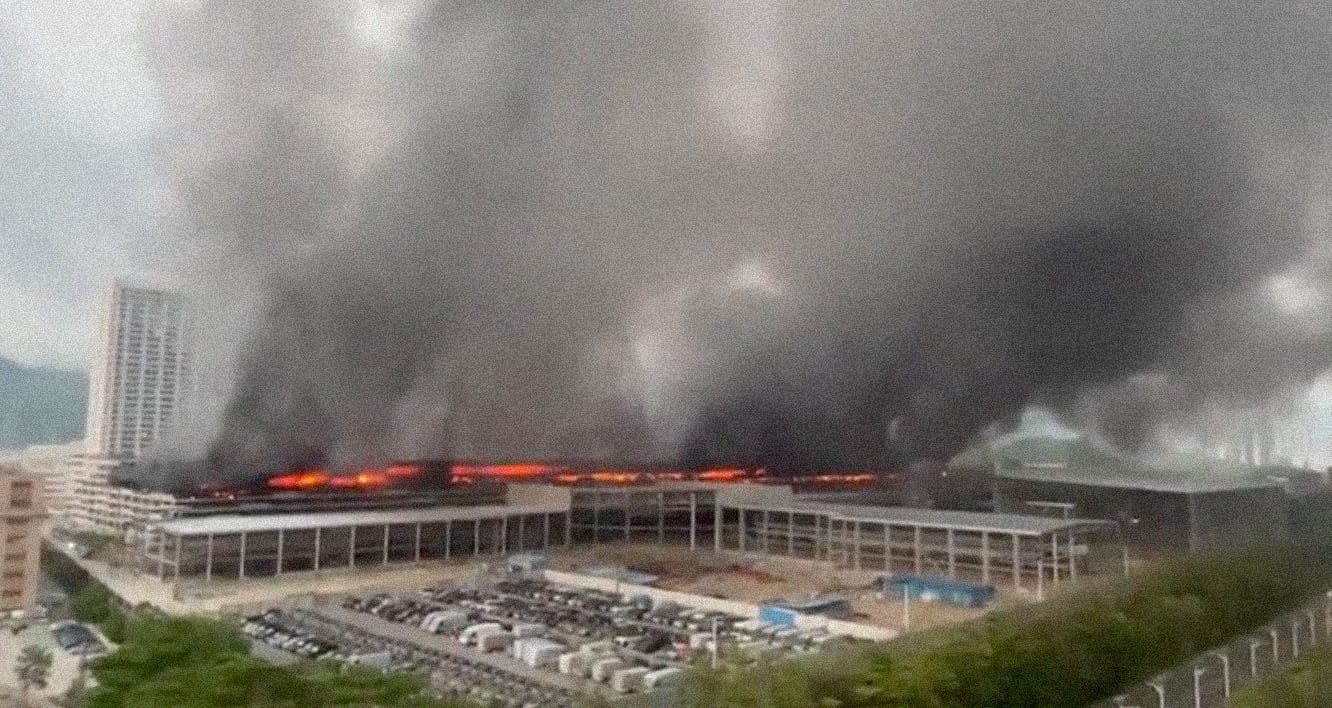

A fire broke out at approximately 2:48 AM on Tuesday at a multi-storey parking garage inside BYD‘s Pingshan Park campus in Shenzhen, destroying vehicles stored at the facility before being fully extinguished.
There were no casualties or injuries, according to a bulletin issued by the Shenzhen Pingshan District Fire Rescue Bureau.
The blaze did not affect production operations of the world’s largest new energy vehicle (NEV) manufacturer.
BYD said in a statement that the garage was “a dedicated area for test and scrapped vehicles” and did not involve finished cars or production facilities.
“Today in the early morning, a stereo garage in our Pingshan Park caught fire. This garage is a dedicated area for test and scrapped vehicles. The fire has now been extinguished, with no casualties,” the company said.
Cause
Preliminary investigations cited by Sina Finance and East Money attributed the fire to external construction workers who were dismantling idle equipment in BYD‘s No. 20 plant area.
The workers’ operations reportedly ignited insulation cotton and other combustible materials.
Battery or electric vehicle self-ignition has been explicitly ruled out as a cause, according to local media reports.
A full investigation into losses and responsibility is ongoing.
The fire occurred in a multi-storey automated parking structure located within BYD’s Pingshan Park complex in the Pingshan District, Shenzhen. The campus is one of BYD‘s largest manufacturing and R&D sites.
The incident is not expected to have any impact on BYD’s output or delivery schedules, based on the company’s statement.
BYD Context
BYD sold approximately 4.3 million vehicles globally in 2025, making it the world’s largest new energy vehicle manufacturer by volume.
In the first quarter of 2026, and only accounting for fully electric vehicles, BYD was surpassed by Tesla.
Last year, the Chinese giant paid an average of approximately 147,000 yuan ($21,400) per employee in total compensation, according to the company’s annual report.
The figure — derived from total staff costs equivalent to 15.94% of the company’s 803.97 billion yuan in revenue, divided by a year-end headcount of 869,600 — covers salaries, bonuses, social insurance contributions, housing fund payments, and other statutory benefits.
The average compensation in 2025 rose from the 124,000 yuan reported a year earlier.