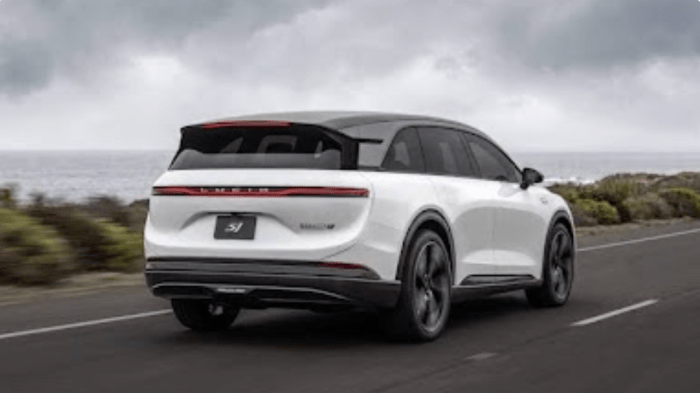

Rivian shares reached a new three-month low of $13.84 on Friday morning, even as the company began production of its most affordable model and CEO RJ Scaringe confirmed this week that additional lower-priced R2 variants are already in development.
Since reporting its first-quarter earnings on April 30, Rivian’s stock has declined for five consecutive trading sessions.
The stock price drop obscures the company’s latest news on the upcoming R2 SUV — for which it said on Thursday the configurator will be opening in June, with first customer deliveries scheduled for the same month.
Earlier this week, founder and CEO RJ Scaringe exclusively told Reuters that the company is already working on upcoming trims of the model besides the three first announced in March.
Additionally, Volkswagen Group became the company’s largest institutional shareholder, surpassing Amazon — after the company met targets tied to its joint software co-development program with the automaker.
On Friday, Rivian announced that its upcoming software update will introduce the long-awaited AI Assistant feature the company promised for “early 2026” last December.
Late 2025 Rally
Rivian‘s shares traded as low as $10.36 in early 2025, in reaction to global trade tensions that affected most stocks in the US.
Since then, the company’s stock has seen several seasonal fluctuations, generally trading between $11 and $18.
After trading as low as $12.39 in early November, the company’s stock traded 24.2% higher by the end of the month.
By then, investors were shifting their focus from near-term delivery weakness — after the termination of the federal EV tax credit in the US by the end of the third quarter — to software and the upcoming R2 launch.
The rally accelerated in December ahead of Rivian‘s ‘AI & Autonomy Day,’ where executives detailed progress on hands-free highway assist, point-to-point navigation, and Level 4 autonomy development — recasting the company as an AI play alongside Tesla.
The stock had its 2025 peak at $22.69 on December 22, capping a roughly 80% surge from the November low.
Early 2026
Shares gave back much of those gains in January, falling 25% in the month after annual delivery figures confirmed the 18% year-over-year drop — still an effect of incentive changes in the US.
Analysts have flagged Rivian‘s persistent cash burn and capital needs, as the company prepared to launch the R2 SUV into the world — the model RJ Scaringe said repeatedly will push the EV maker towards profitability.
The stock bottomed around $13.58 in early February, just a week before Rivian reported fourth-quarter 2025 earnings results.
The results showed the company’s first full year of positive gross profit at $144 million and a narrower net loss of $3.626 billion.
During the earnings call, Chief Financial Officer Claire McDonough also revealed that management’s 2026 delivery guidance — of 62,000 to 67,000 units — depended almost entirely on a near-flawless R2 production ramp.
By then, investors awaited news on the model’s launch, production and deliveries timeline.
The model debuted at the SXSW Festival in Austin on March 12, with a Dual-Motor Performance trim priced at $57,990.
Rivian, which had promised to price the R2 as low as $45,000, had already warned that the model would first launch with a higher-priced trim. The entry-level variant is expected in late 2027.
Uber Deal, R2 Launch
Shares recovered through March as Rivian announced the $1.25 billion Uber robotaxi deal involving up to 50,000 autonomous R2 vehicles.
At the same time, the Volkswagen joint venture completed its winter testing milestone — unlocking the $1 billion equity tranche that allowed VW to become its largest institutional shareholder.
However, the Uber deal’s SEC filing also revealed that Rivian had quietly abandoned its 2027 profitability target, citing rising R&D costs tied to its accelerated autonomy roadmap.
The stock rallied to around $17.50 in April as the company officially started building saleable R2 units.
Back to $13
Shares slid back to roughly $14 in early May, after first-quarter earnings on April 30 showed a narrower-than-expected loss but failed to spark sustained buying.
At the same time, the company announced that the US Department of Energy (DOE) loan for the upcoming Georgia plant was trimmed to $4.5 billion from $6.57 billion, leading the company to scale back capacity to 300,000 vehicles.
The stock now sits near the $13.57 level that served as the pre-rally equilibrium in late 2025.
Other EV Makers
Tesla‘s shares, which reached their all-time high of $498.83 in late December, have dropped over $100 in the first four months of the year.
Since April 7, when it traded at its lowest of $337.24 — mirroring its weakest day of 2025, which was the same one — the stock has rebounded by over 20%.
As of press time, the Elon Musk-led company’s shares were trading nearly 4% higher at $427.
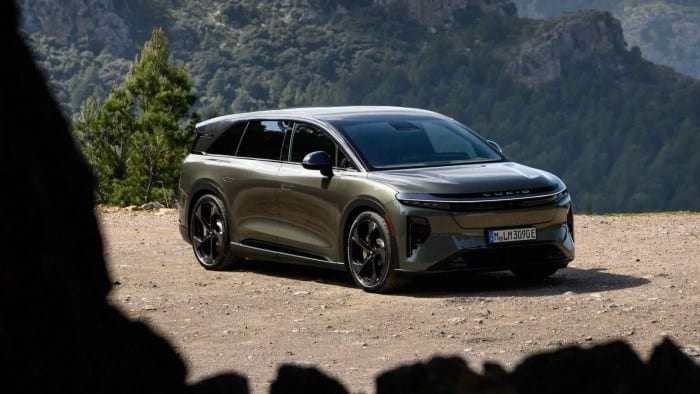
Lucid Motors, on the other hand, has seen its stock decline to new lows over the past few months, despite the 1-for-10 reserve stock split it executed in September 2025.
Since December 31, 2025, when the stock closed at $10.57, Lucid‘s share value has nearly halved. Last week, it reached a new all-time low of $5.62.
As of press time, the EV maker’s stock was jumping 3%, trading at $6.23 — a 98% loss from its highest in 2021.
Geely-backed Polestar also executed a 1-for-30 reverse stock split late last year, as shares traded below $1.00 — the minimum threshold to trade in the Nasdaq.
Polestar traded at around $21 — a jump of over 6% — on Friday morning.