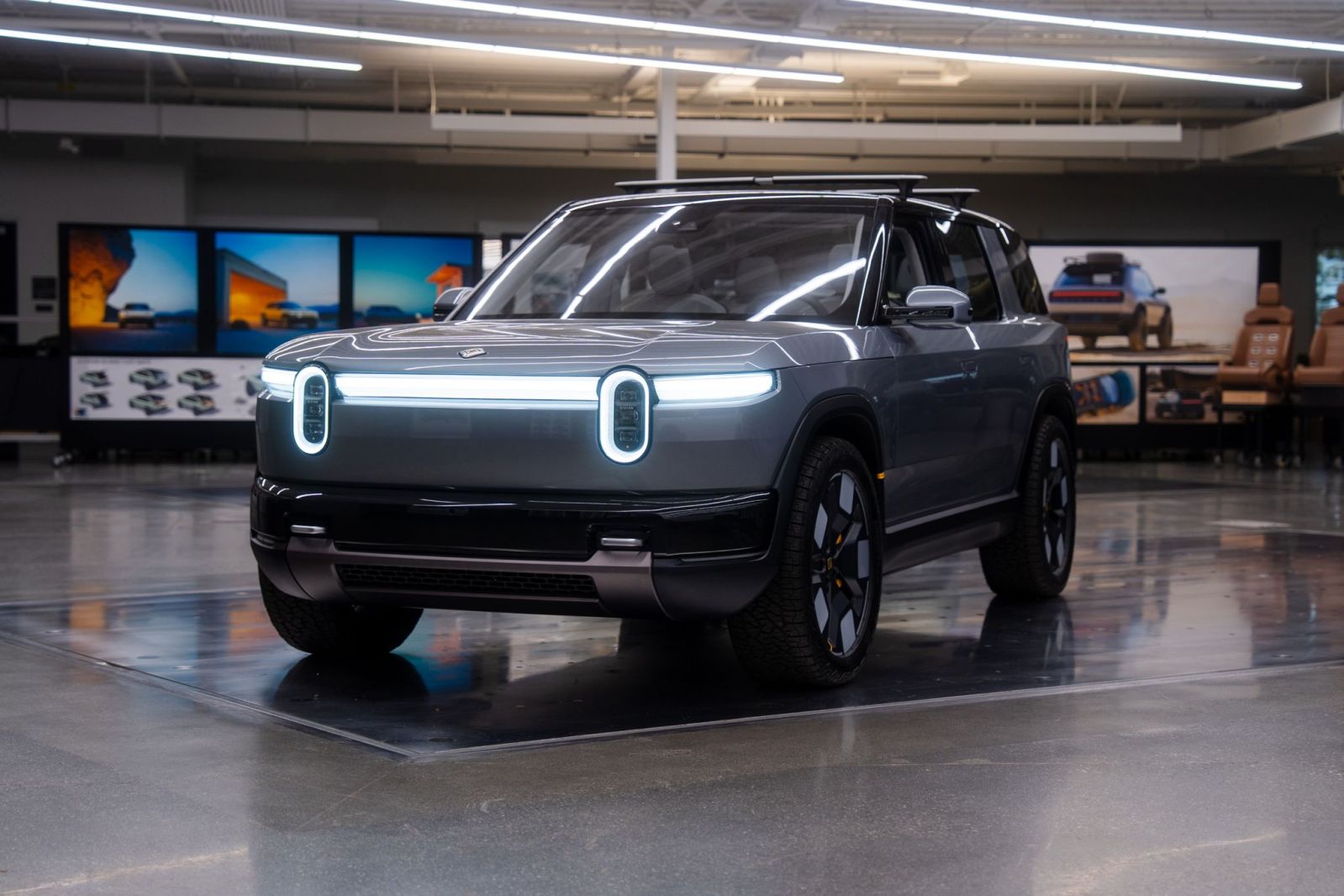

During a fireside chat with Barclays on Wednesday, Rivian‘s Chief Financial Officer Claire McDonough said that recent US policy changes are making it easier for the company to enter the European continent.
The EV maker’s upcoming R2 SUV, starting at $45,000, was designed for global markets, and Rivian intends to export it to Europe and internationally.
“One of the policy changes that has happened that is a net benefit to Rivian is actually the reduction in the tariffs of vehicles exported from the US to Europe,” McDonough noted.
The exports “previously had a 10% tariff; now that’s gone down to zero,” the executive stated, adding that it “makes it an even more attractive proposition for us to continue to grow and export abroad.”
“We’ll start focused on the ramp here in North America, but certainly have the opportunity to go international,” McDonough clarified.
The more affordable SUV is expected to begin production in early 2026. According to founder and CEO RJ Scaringe, Rivian intends to start deliveries in the first half.
Distribution in Europe
In September, Scaringe told Goldman Sachs analyst Mark Delaney that direct-to-consumer “is still the plan for Europe.”
The chief executive noted then that “the environment there is quite a bit different than what we have in the United States,” as Europe supports “more of an omnichannel-based approach.”
While saying that local infrastructure in Europe “has to be built,” Scaringe added, however, that “the ease of accessing things like service infrastructure is a little bit easier.”
On Wednesday, the company’s CFO reaffirmed the idea and opened the door for other approaches.
“From a distribution standpoint, we want to make sure we’re owning the customer relationship,” McDonough stated.
Despite that, she added that Rivian “certainly can look and explore different avenues or approaches for the advancement of our products in new geographies.”
Other Approaches
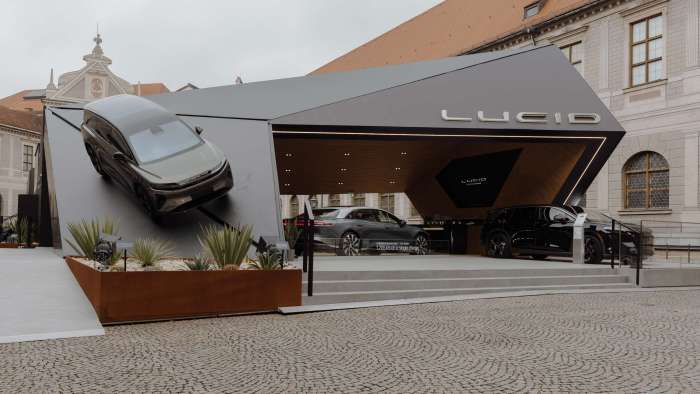
US electric vehicle maker Lucid Motors expanded to Europe in 2022, with several showrooms across Germany, the Netherlands, Norway and Switzerland.
Recently, however, it said that it will use local dealerships in some of the eight European markets it plans to enter in 2026.
By partnering with local dealership groups, brands can save on infrastructure costs while reaching more customers.
Despite having launched in the Old Continent three years ago, Lucid is struggling with demand across its four markets.
Last month, sales of the California-based luxury EV brand in Europe halved for the fourth consecutive month.
Chinese EV maker Nio, which also debuted with a direct-to-consumer model, is switching to a mixed business model by integrating dealerships in upcoming markets.
The company has recently launched in Austria and Belgium, and will debut in Portugal next week, with both its main premium marque and the sub-brand Firefly.
Amazon EDVs in Europe
The company established its European entity, named Rivian Europe B.V., in the Netherlands in 2020.
The executive highlighted that the EV maker is already active in Europe, providing services to Amazon, which operates a fleet of Rivian electric delivery vans on the continent.
“We’ve been selling vans to Amazon in Germany, for example,” she noted, adding that “we do have some physical infrastructure in Germany right now and would continue to expand that as well.”
Last month, a job posting listed on its website showed that Rivian is preparing to launch its mobile support service in Europe.
The EV maker was looking for Mobile Automotive Mechatronics Technicians based in the German city of Munich.