
Written by Cláudio Afonso | LinkedIn | X
Onvo, the sub-brand of the EV maker Nio, registered 1,800 vehicles in China between November 25 and the first day of December, according to data shared by multiple automotive bloggers on the Chinese platform Weibo on Tuesday.
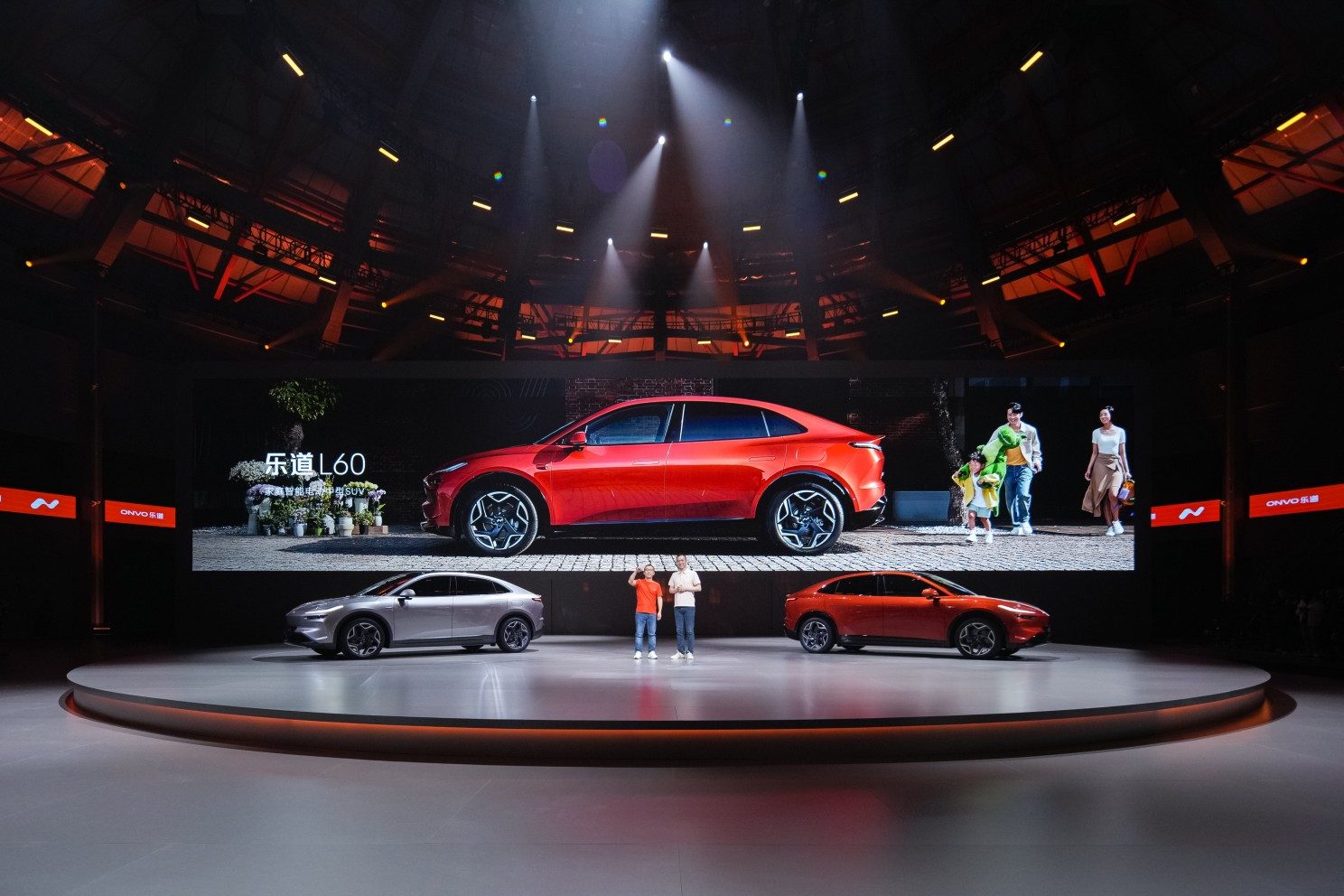
The brand’s registrations in the last week of November rose by 38.5% compared to the previous week, as the company continues to scale up production of its debut model, the family-oriented SUV L60.

For the full month of November, Onvo delivered 5,082 vehicles, up 17.6% from October when it delivered 4,319 units. Deliveries of the Nio brand decreased for the second consecutive month to 15,493 vehicles.
On Sunday, the company reaffirmed on its official Weibo account that it aims to “exceed 10,000 units in a single month” in December doubling deliveries from last month.
Onvo delivered 832 vehicles in September — with deliveries beginning only on September 28 — and had initially targeted 5,000 units for October, its first full month of production. However, actual deliveries fell short, totaling 4,319 units.
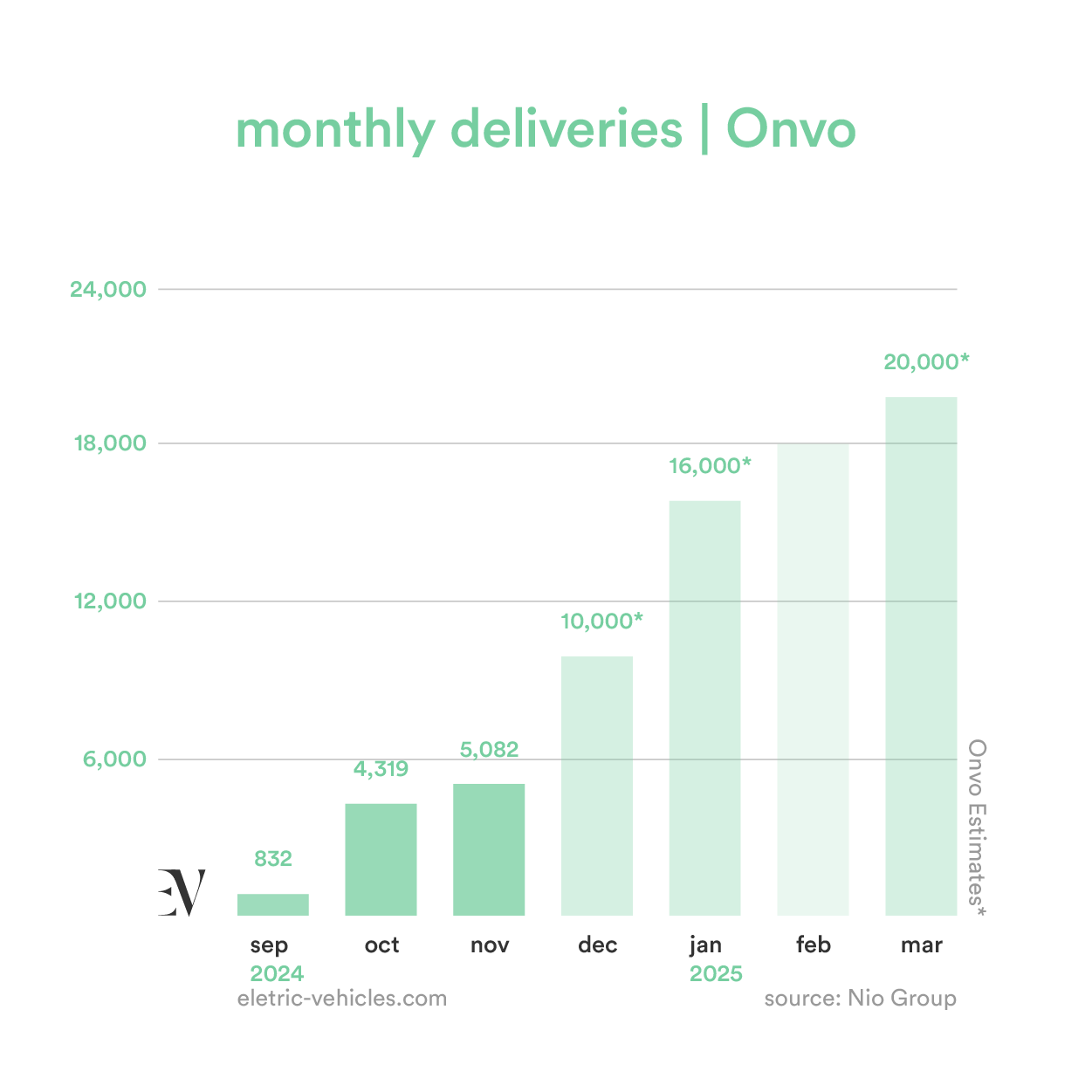
Despite recent slower-than-expected production ramp-up, the executive has reaffirmed the company’s goal of delivering more than 10,000 units in December and over 20,000 by March next year adding that if these goals are not met, he will step down.
The parent brand, Nio, recorded 4,000 units, marking a 5% increase from the previous week. Overall, Nio Group’s registrations rose nearly 10% to 5,300 units, compared to 4,820 in the week of November 11–17.
Onvo is planning to launch two new vehicles in 2025. A 6-7 seat SUV will be unveiled by the end of the first quarter with deliveries starting “around May” 2025.
A second model, which will be the brand’s first sedan, is planned to be unveiled in the second half of the year, the automotive blogger ThinkerCar said on X last week adding that the brand “will maintain a pace of launching one new vehicle annually in the future”.
The L60’s standard-range model, featuring a 60 kWh battery, is priced at 206,900 yuan ($28,400), while the long-range 85 kWh variant starts at 235,900 yuan ($32,380).
Written by Cláudio Afonso | LinkedIn | X