
Nio founder and Chief Executive William Li admitted on Wednesday that the decision to refresh the Onvo L90 SUV less than nine months after launch would affect the interests of existing owners.
Citing significantly lower sales figures in the first months of 2026 compared to late last year, Li framed the launch of the new iteration as essential for competing in China’s hyper-competitive EV market.
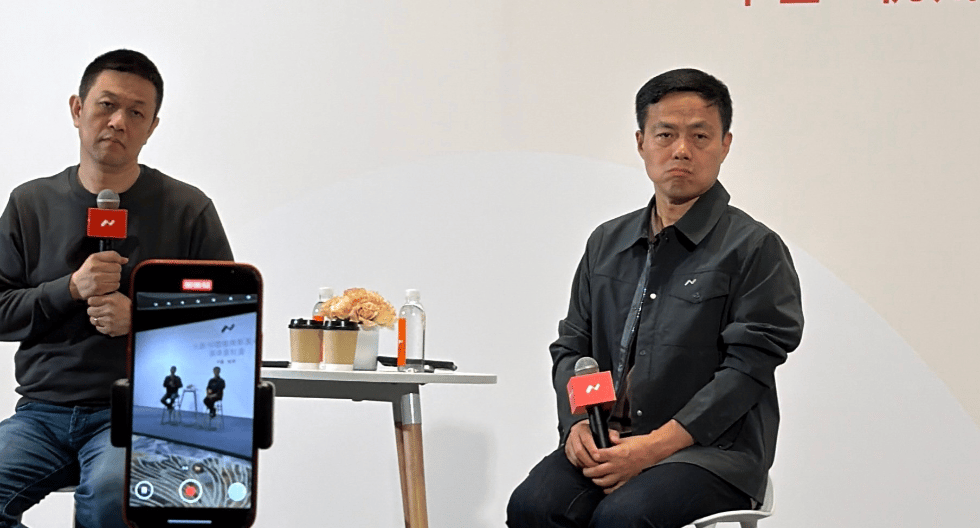
Speaking to reporters at a media briefing following the 2026 Onvo L90 launch event, Li acknowledged the impact of fast-moving product cycles on early customers.
“Some users who just bought a car will feel frustrated. Their interests will be affected to some extent,” Li said in remarks translated from Mandarin.
The Nine-Month Refresh
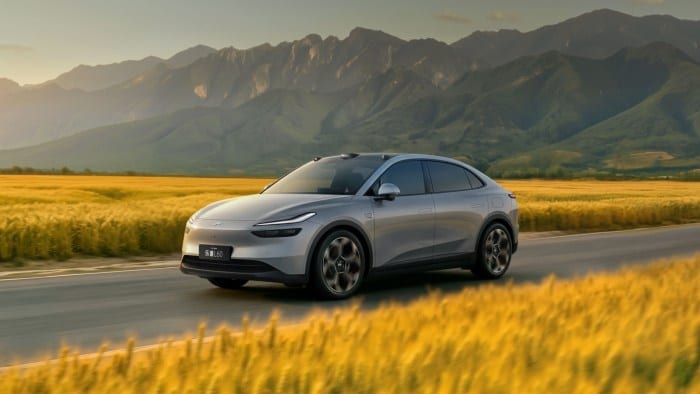
The 2026 L90 was officially launched at an Onvo event on Tuesday — just 263 days after the first-generation L90 began customer deliveries on August 1, 2025.
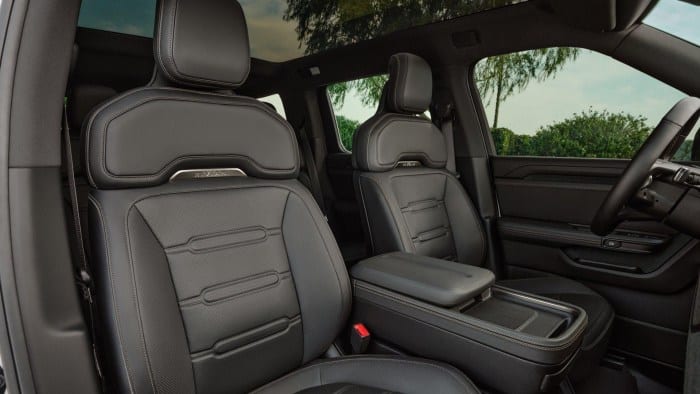
The updated SUV adds Nio‘s in-house-developed Shenji NX9031 chip for the first time, along with an optional LiDAR-equipped flagship trim — ending the pure-vision smart driving approach Onvo had promoted since its 2024 launch.
Despite component costs rising by roughly 10,000 yuan ($1,450) according to Onvo’s head of product Eric Yu, Nio held the 2026 L90’s starting price flat at 265,800 yuan ($36,940), or 179,800 yuan under the Battery-as-a-Service subscription plan.
Deliveries of the 2026 L90 are scheduled to begin on May 9, 2026.
The Sales Collapse
Li’s defence was framed against a striking sales trajectory that saw the original L90 go from one of Nio‘s strongest-ever launches to its fastest-declining model within six months.
“Last year, in less than five months, we sold more than 43,000 units,” Li said. “But as you can see, since January this year, the market has been very low. We have sold more than 3,000 units in a month. But this is already ranked fourth in the industry.”
The L90 delivered 10,575 units in August 2025 — its first full month of sales — followed by 10,997 units in September and 8,428 by late October, reaching its 30,000th delivery 86 days after launch.
Cumulative deliveries from launch through the end of March totalled 49,527 units, and the L90 crossed the 50,000-unit milestone on April 3, — less than nine months after sales began.
Monthly performance deteriorated sharply in 2026.
The L90 delivered just 1,502 units in January, a 64% month-over-month decline.
February deliveries fell further amid Chinese New Year disruption, before recovering 155% month-over-month to 3,360 units in March.
The March figure matches the monthly volume referenced by Li and it reflects a roughly 80% decline from the original L90’s strongest month.
Quick Update
Li defended the refresh cadence as a commercial necessity rather than a choice, arguing the alternative was losing relevance with new customers entirely.
“If we don’t update these latest technologies, or if we don’t update and update, then we really can’t participate in the competition in this market,” Li said. “In fact, from the perspective of a car company, if it can be updated for three years, why update it for two years? If it can be updated for two years, why update it for one year?”
The EV maker’s founder and CEO explicitly conceded that rapid updates work against Nio‘s own cost structure — accelerating depreciation on spare parts inventory and raising development costs.
“In fact, from the perspective of a car company, the faster the update, the higher the development cost, which means that our silent cost has a lot of sunk. For example, if you haven’t used up the spare parts, you will be silent, you will be sunk. This is very low,” Li said.
But the alternative — standing still in a market racing toward newer chips — was worse, Li argued.
“But if you have a car with a self-driving chip, a car with a seating chip, a car with a lot of chips, if you have a main chip like this, the market has already used the latest chip. If you still use the original, this is definitely from the perspective of the user, from the perspective of the new user, he will not buy it. He will definitely buy another car.”
The Mobile Phone Analogy
Li drew a direct parallel with the smartphone industry to justify the refresh cadence, arguing the car industry has no choice but to follow mobile-phone refresh cycles when central computer chips are involved.
“Java technology, as can be understood in mobile phones, change the chip once every year, some even change it once a year or twice every year,” Li said. “And there is a small update. So this is definitely going to be extended to cars. Car chips are definitely a bit slower.”
Li framed the reality as inescapable for automakers dealing with the modern software-defined vehicle.
“You are still dealing with the market. You have to have someone buy your new car. You can’t simply say that my original user is enough. I don’t think this is the case,” Li said.
Why Hardware Upgrades Aren’t Coming
Some existing L90 owners had called on Nio to retrofit the 2026 model’s Shenji NX9031 chip and LiDAR into earlier vehicles. In a separate segment of the briefing, Li told reporters the upgrade was technically possible but blocked by legal and cost barriers.
“From the upgrade of the hardware itself, we can do it. Technically, we can do it,” Li said. “But there are two other problems that we can’t ignore. One is the legal issue, and the other is the cost issue.”
On the legal side, Li said Chinese regulations make annual vehicle inspection compliance impossible to guarantee after such structural modifications.
“In fact, we have repeatedly confirmed this legislation, including discussions with some relevant departments,” Li said. “In conclusion, basically, it is impossible to promise the follow-up, including the follow-up annual inspection, and so on. Will there be such a problem on the road? No one can promise this.”
On cost, Li described a retrofit as requiring replacement of the central computer unit, sensor network and roof structure — effectively a full vehicle teardown.
“In terms of cost, it is not simply to insert a chip, or add a LiDAR. Because it has to replace the whole CCC. The original CCC cannot be used. As you know, this thing is very expensive. It is the most expensive part of the car. The central computer unit,” Li said.
“It is equivalent to disassembling the whole car. It is equivalent to replacing a person’s nerves.”
The retrofit cost, according to Li, runs into tens of thousands of dollars per vehicle — even a 50/50 split with the owner would leave the customer paying heavily.
“But the cost is very high. It is tens of thousands of dollars. Such a cost,” Li said. “So even if we are willing to pay half of the cost, and the user pays half of the cost, the user also has to pay a lot of money.”
The Compensation Package
In lieu of a hardware retrofit, Nio offered existing L90 owners a multi-part compensation package, detailed at the briefing by Onvo‘s brand chief Fei Shen.
“Whether it is the original 5-year NOP [Navigate on Pilot] or what was said at the press conference yesterday, the old users have 30,000 points. Then, L90 users can buy any new version of L90 in the future. There are also 10,000 new credits and so on,” Shen said. “This can only say a little bit of our heart. But in general, we still have to thank the old users for their support.”
Nio also committed to a major July 2026 update to the ‘Coconut’ operating system as reported by EV on Tuesday, extending software parity to existing vehicles.
“I think everyone can rest assured that our pure world version will definitely continue to evolve,” Shen said. “Because after all, now everyone is working together, and the data is all together. More data will come back. It will only be better. As I said yesterday, we will release a large version of the original ‘Coconut’ in July. We will make a big upgrade.”
Shen framed the situation as a reflection of Onvo‘s newness as a brand still learning how to communicate product transitions.
“This is also the first time Onvo is a very new brand. We have been dealing with the first batch since September. It has been a year and a half since the first batch. In fact, it is still a very new product.”
Li on User Trust and Company Sustainability
Li closed his remarks by framing the refresh decision as ultimately serving existing owners — by ensuring Nio‘s continued financial viability.
“In the future, as a user-oriented company, when we make these decisions, we have to consider the interests of the existing users. If you have some knowledge about how to do business in the future, you should know that we will not completely ignore this matter. This is not our style of doing business,” Li said.
“I think at that time, I understood one truth, which is to make the whole company operate well. This is the biggest benefit for the user.”
“But on the other hand, if the brand does well, and the company can operate steadily and sustainably in the future, I think this will give us the ability to fulfill our long-term promise to our users.”
What Comes Next
The L90 refresh arrives as Nio prepares to bring two additional high-priority products to market: the Nio ES9 and the Onvo L80 — a five-seat variant of the L90.
Nio reported 35,486 group-wide deliveries in March, pushing first-quarter volumes above guidance.
The Onvo brand’s cumulative deliveries have passed 140,000 units across both the L60 and L90.
Pre-orders for the 2026 Onvo L90 opened at the April 21 launch event, with deliveries set to begin May 9.