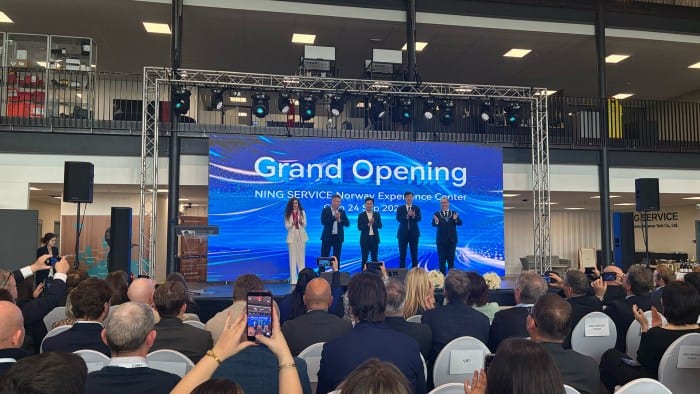
Nio Inc.‘s premium brand failed to register a single vehicle in the Netherlands in April — the first time the nameplate has been completely shut out of the Dutch market since entering the country in October 2022.
Data from the Dutch automotive association BOVAG showed that the group registered six vehicles in April — all of them from the Firefly sub-brand.
The premium Nio brand contributed zero units, after registering one in March and two in April 2025.
At the group level, the six registrations represent a slight uptick from the five units recorded in March.
On a year-over-year basis, total volume tripled from two units in April 2025 — though the comparison is distorted by the fact that Firefly had not yet entered the market a year ago.
The sub-brand began Dutch deliveries in August 2025.
The figures only capture newly registered vehicles purchased outright — not vehicles operating under the Nio Subscription business, as EV exclusively learned.
Nio Brand
April marks a new low for the premium brand’s Dutch operations.
The zero-registration result follows a first quarter in which only six Nio vehicles were registered — representing an 84.6% plunge from the 39 units delivered in the first quarter of 2025.
Through the first four months of 2026, the Nio brand has now registered just six vehicles in the Netherlands.
In the same period a year earlier, the brand had posted 41 units — a decline of 85.4%.
Between 2023 and 2024, the company was registering around 20 to 40 vehicles per month in the Netherlands.
The result places April alongside June and November 2025 as among the weakest months on record for the premium brand in the Dutch market.
Firefly Introduction
Firefly accounted for all six of the group’s April registrations, continuing a pattern that has defined 2026.
Through the first four months of the year, the sub-brand has recorded 29 of the Nio Inc.’s 35 total Dutch registrations — roughly 83% of volume.
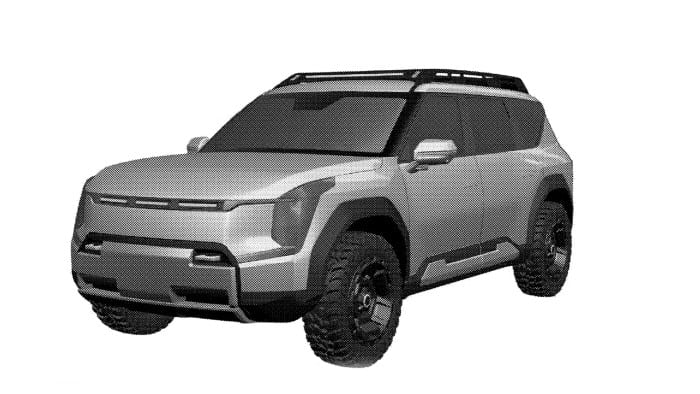
The compact hatchback, designed at Nio‘s Munich design center and priced from €29,900 in the Netherlands, was conceived specifically for European consumers.
Firefly brand chief Daniel Jin said in late March that early 2026 sales had fallen “considerably” but maintained the brand’s expansion targets of entering between 20 and 30 countries this year.
Despite being positioned as the group’s European spearhead — founder and CEO William Li wrote to employees earlier this year that Firefly serves as the “pioneering brand for global market entry” — the sub-brand’s Dutch numbers remain in single digits on a monthly basis.
Aging Inventory
The weak results reflect deeper structural issues that continue to weigh on Nio‘s European business.
Every vehicle currently offered in the Netherlands — and across Europe — was built in 2023 and 2024 under the company’s NT 2.0 platform.
The refreshed lineup launched in China during the first half of 2025 has not reached European showrooms.
The company unveiled 2026 model-year updates for the ET5, ET5 Touring, ES6 and EC6 at the start of April, but whether these will be exported to Europe remains unknown.
Nio faces a combined 30.7% tariff on vehicles imported into the EU — a 20.7% countervailing duty on top of the standard 10% import levy — further compressing margins on any European shipments.
A source familiar with the company told EV that the majority of registrations during the brand’s initial European rollout were first-time fleet entries for subscription vehicles — meaning much of the apparent volume in 2022 and 2023 reflected fleet building rather than discrete customer sales.
The current near-zero figures partly reflect that the fleet has already been registered and is cycling internally, but also that no meaningful volumes of new vehicles have been shipped to Europe in recent years.
European Restructuring
The Dutch results come as Nio continues to overhaul its European operations.
As EV exclusively reported in March, the company quietly dismantled its unified European management structure in February, splitting the region into six separate departments and shifting sales toward a dealer and distributor model.
A new Europe Sales & Network Development team has been tasked with expanding sales channels via general distributors or dealerships across Europe, excluding Norway.
The move marks a formal departure from the direct-sales model that defined Nio‘s European entry.
The company is also seeking subtenants for its four flagship German showrooms in Berlin, Frankfurt, Düsseldorf and Hamburg — one of the clearest signals yet that its high-cost retail model is being unwound.
Whether the Amsterdam Nio House, the largest in Europe at 2,700 square meters, will face a similar fate remains unclear.
Nio‘s Vice President Mark Zhou admitted in late February that the company made “fundamental miscalculations” in its European expansion, including bringing vehicles that were too large for local preferences and underestimating regulatory complexities.
Across its five original European markets — Norway, Germany, the Netherlands, Sweden and Denmark — Nio brand registrations fell 31% in 2025 to 1,129 vehicles.
The 2026 figures are tracking well below that pace.
Co-founder and president Qin Lihong said in March that the company targets “several thousand” overseas deliveries for the year — a modest ambition that underscores how far expectations have fallen from the brand’s initial European push.