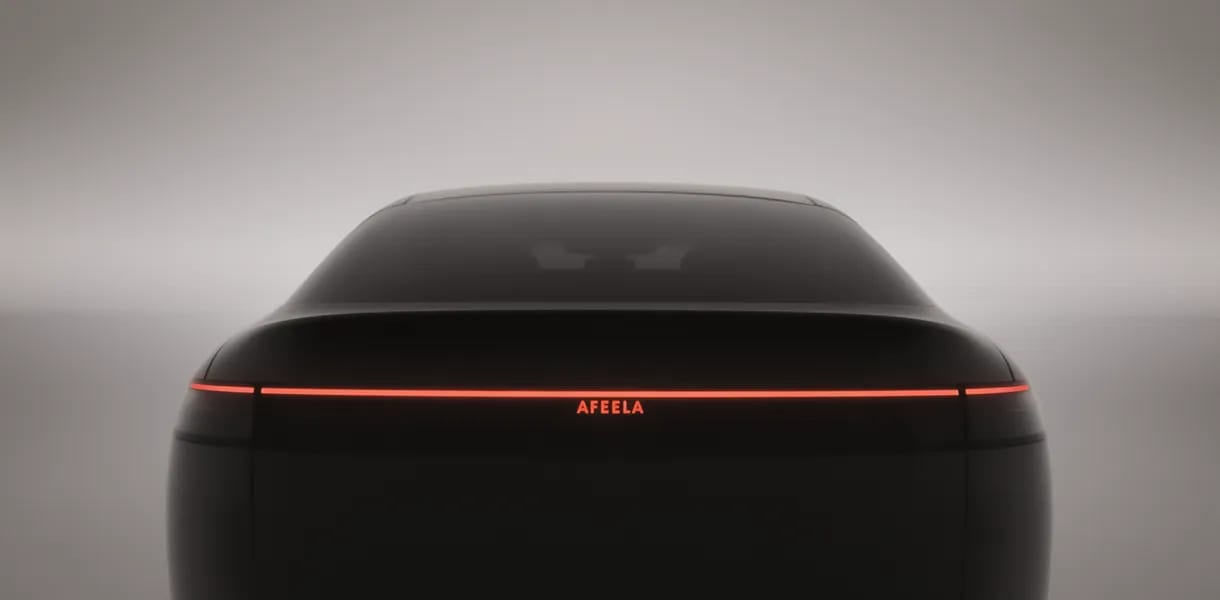

Sony Honda Mobility announced on Tuesday that the joint venture will scale down its operations and reassign employees to the two parent companies, less than a month after the development of both models was scrapped.
Tuesday’s announcement formally winds down the joint venture’s independent structure, less than four years after its founding by Sony Group Corp. and Honda Motor Co.
The three companies said in a joint statement that they have concluded it would be “difficult to find ways to bring products and services aligned with SHM’s founding purpose to the market in the short to medium term under the existing framework.”
Employees at SHM are expected to be reassigned to the parent companies and related entities “taking into account their individual preferences,” the statement said.
The announcement formalises the structural unwinding of a partnership that was established with considerable fanfare in September 2022 as a combination of Sony’s entertainment technology and Honda’s automotive manufacturing expertise, targeting a new category of premium software-defined electric vehicles.
What Today’s Announcement Says
The three companies framed the decision as a direct consequence of Honda’s March 12 reassessment of its electrification strategy, which led to the joint cancellation of SHM’s first vehicle programme on March 25.
“Following this decision, SHM employees are expected to be reassigned to the parent companies and related entities in principle, taking into account their individual preferences,” Sony, Honda and SHM said.
The three companies committed to continuing discussions “on the optimal form of collaboration between them, with the aim of bringing new value to the user experience through software in anticipation of an era where advanced driver assistance systems become mainstream.”
The language effectively repositions the Sony-Honda partnership from a vehicle-building joint venture into a software-focused collaboration targeting the ADAS market.
The statement reaffirmed a commitment to “the principles set out at the founding of the joint venture — contributing to and leading the evolution of mobility.”
The March Afeela Cancellation
SHM announced on March 25 that it was discontinuing the development and launch of both the Afeela 1 sedan and a second model that had been under development.
The company said at the time that it “does not have a viable path forward to bring the Models to market as originally planned” because “SHM will not be able to utilize certain technologies and assets that were originally planned to be provided by Honda at the time of SHM’s initial business planning.”
The Afeela 1 was to share key technologies and assets with Honda’s now-cancelled 0 Series vehicles.
The announcement came four days after SHM held the grand opening of its Afeela Studio and Delivery Hub in Torrance, California on March 21 — a ribbon-cutting ceremony attended by the mayor of Torrance and Afeela 1 reservation holders.
By the following Wednesday, the vehicle those reservation holders had signed up for no longer existed.
Reservation holders for the Afeela 1 in California received full refunds, the company said at the time.
SHM also operates studio locations in Beverly Hills, Century City, San Diego and San Jose. The future of those facilities was not addressed in Tuesday’s statement.
Honda’s EV Retreat
The SHM scale-down follows one of the most dramatic financial reversals in the modern automotive industry.
Honda announced on March 12 that it would cancel three EV models planned for production in the United States — the 0 Series Sedan, the 0 Series SUV, and the Acura RSX — citing “recent changes in the business environment” including the removal of federal EV subsidies and intensifying competition from Chinese manufacturers.
The company said it expected total losses of up to 2.5 trillion yen ($15.7 billion), split roughly evenly between the current fiscal year and the next.
Honda now expects an operating loss of between 270 billion and 570 billion yen for the fiscal year ending March 2026, compared with a previously forecast operating profit of 550 billion yen — a swing of as much as 1.12 trillion yen in a single year.
It would mark Honda’s first annual loss since the company began disclosing consolidated financial results.
“The situation changed far more rapidly than we expected,” Honda Chief Executive Officer Toshihiro Mibe told reporters on March 12. “The suspension of EV subsidies in North America undercut growth, and competition in China meant we couldn’t provide attractive models or maintain our competitive edge.”
The three cancelled US models had been months from the start of production.
The Japanese automaker had already completed trial manufacturing of the Afeela 1 at its East Liberty plant in Ohio and was preparing to begin building 0 Series vehicles at the neighbouring Marysville facility.
Honda also said it was writing down the value of some Chinese operations and abandoning its target of having 30% of global vehicle sales be electric by 2030.
The company plans to pivot to hybrids in the US market, targeting 2.2 million hybrid sales by 2030.
What SHM Was Meant to Be
The Afeela brand was conceived as a fusion of Sony’s entertainment technology and Honda‘s automotive manufacturing expertise.
The Afeela 1 was to feature 40 sensors — including 18 cameras, one LiDAR, nine radars and 12 ultrasonic sensors — with an EPA-estimated range of approximately 300 miles. It was to be priced from $89,900.
At CES 2026 in January, SHM showcased a crossover SUV prototype as a potential second model, targeting a launch as early as 2028.
Just weeks before the March cancellation, the company was still operating as though deliveries would begin in California before the end of 2026.
SHM Chief Executive Officer Shugo Yamaguchi described the Torrance studio opening on March 21 as representing “how we envision the future of mobility — thoughtful, human-centric, and shared.”
Canada Hub in Doubt
A spokesperson for Honda Canada has said that the company’s commitment to a C$15 billion ($11 billion) EV production hub in Alliston, Ontario — first announced in April 2024 — is being “evaluated as market conditions change.”
Honda suspended the programme last May as it reassessed the tariff environment and slowing EV demand. The automaker said it plans to revisit the timeline in 2027.
The original plans included a new EV assembly plant, a battery plant, and cathode active material processing facilities in partnership with Asahi Kasei.
What Comes Next
The three companies’ closing commitment hinted at collaborating on software “in anticipation of an era where advanced driver assistance systems become mainstream.”
Neither Sony nor Honda disclosed the financial terms of the SHM scale-down, including any residual equity arrangements, asset write-offs, or severance commitments tied to the employee reassignment process.