
BYD is reportedly working on a mini EV specially developed for the Japanese market, according to local media outlet Nikkei. The vehicle is planned to launch in the second quarter of 2026 marking the first time the China giant develops a country-specific vehicle.
The automaker sold 2,223 EVs in Japan in 2024, a 54% surge year over year, surpassing Toyota’s 2,038 units — which faced a 30% drop for the domestic brand.
BYD’s Japan-dedicated model will be kei-jidosha vehicle, known for their smaller size and ideal for major urban environment such as the capital Tokyo which has over 14 million inhabitants.
Also known as ‘Mini-EVs’ represents about 40% of new car sales in the country, according to the report.
To meet the standards, these vehicles must not be longer than 3,400 mm, wider than 1,480 mm, or taller than 2,000 mm. These cars are also limited to 64 horsepower.
China giant BYD, which has strong price competitiveness and sells both fully electric and hybrid models, will manufacture the product domestically and export it to Japan.
It is set to feature a 20kWh battery with 180km WLTC range, heat pump AC system and 100kW fast charging capability. The estimated cost is approximately 2.5 million yen ($17,750).
In comparison, Japan’s best-selling box-shaped EV is the Nissan Sakura, which sold for 2.6 million yen ($18,250). The model is also the best-selling electric vehicle in the country.
BYD in Japan
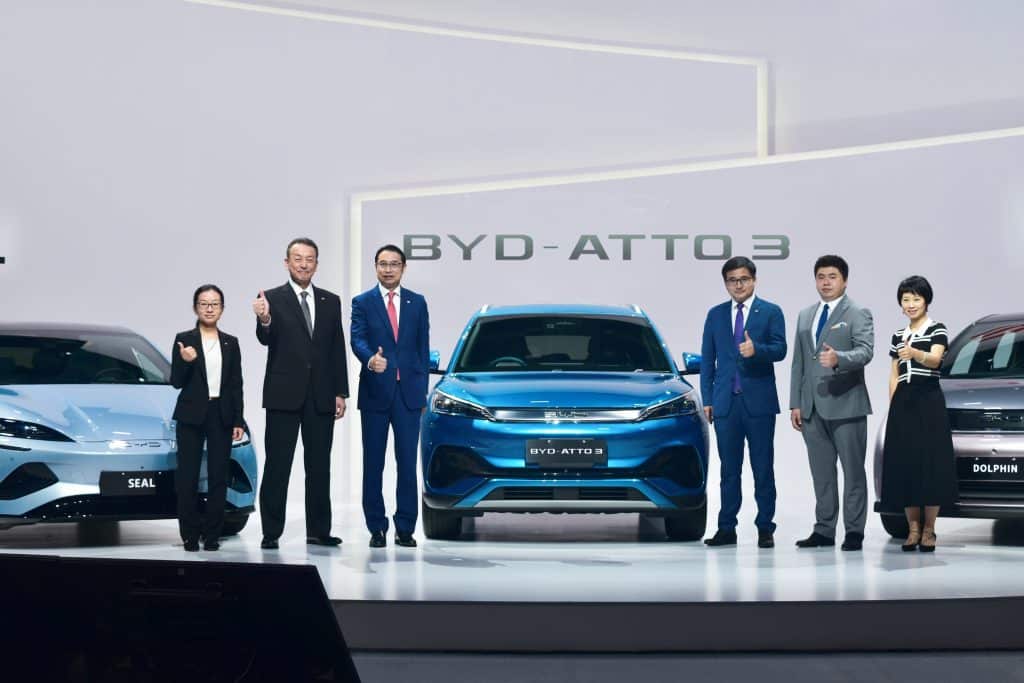
BYD entered the Japanese market in early 2023 with the Atto 3 SUV, priced around $30,000 and competing with popular domestic models like the Toyota RAV4 and Honda CR-V.
Later in the year, BYD introduced its Dolphin model, starting at 2.99 million yen ($19,000), which was set to rival with the top-selling Toyota Prius and Nissan LEAF.
EV Adoption
Japan has set a goal for all sales of new passenger vehicles to be electrified vehicles by 2035. However, in 2024, as one in eight cars sold worldwide was a NEV, the electric vehicles market share in the country was just 2.2%.
EV sales in the country fell just below 60,000 units last year, a 33% plunge year-over-year and a drop for the first time in four years. Nissan led the market with a roughly 50% share.