
Bentley Motors said on Monday that its first fully electric model, a luxury SUV, will be called the Torcal, and set the car’s global reveal for September 23 in London.
The naming marks a first step for what becomes Bentley‘s fourth model line, joining the Continental GT, Flying Spur and Bentayga, and continues the brand’s practice of drawing names from landscapes.
The Torcal takes its name from El Torcal de Antequera, a limestone landscape of stacked rock formations, cliffs and labyrinths in Andalusia, Spain.
Bentley also tied the name to the Latin torquere, meaning “to twist” and the root of the word torque, casting it as a nod to the effortless progression the company associates with its cars.
Chairman and CEO Frank-Steffen Walliser called the Torcal “the most considered car in our history,” pointing to the performance, comfort and British craftsmanship the brand has built over 107 years.
The landscape convention follows the Bentayga, named after a rock formation in Gran Canaria, the Bacalar, drawn from a lagoon town in southern Mexico, and the Batur, named for the volcanic region of Bali.
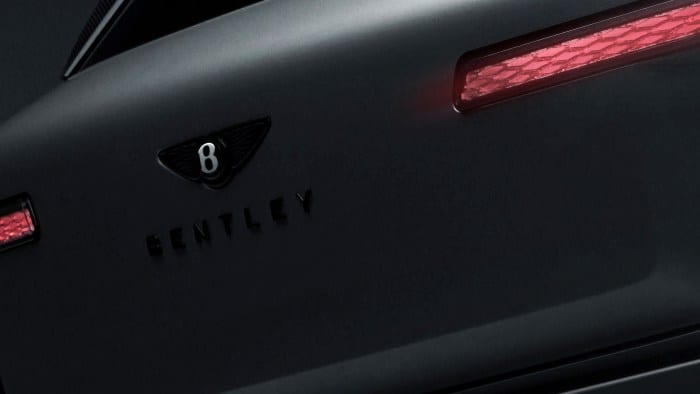
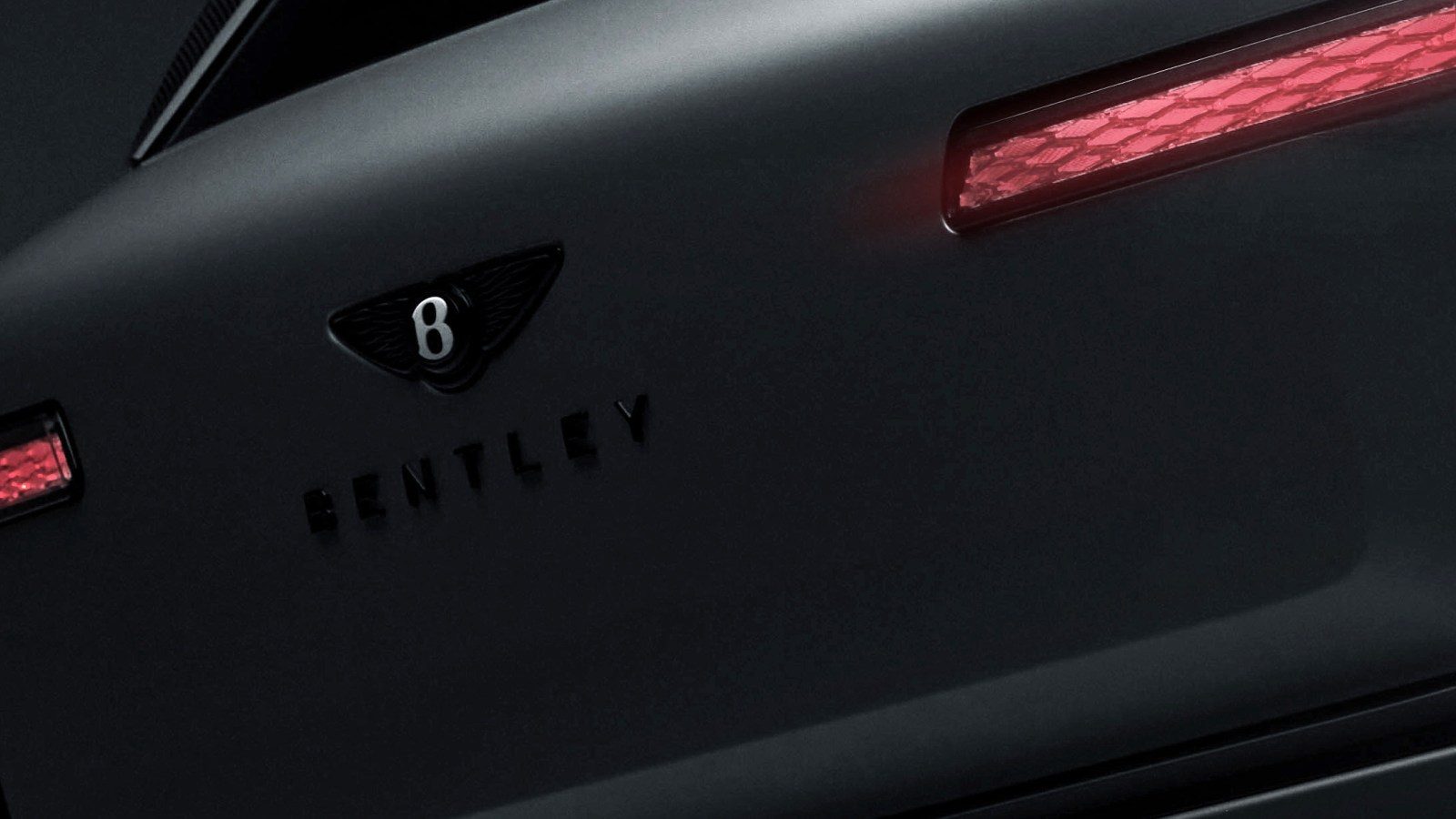
Bentley released a single teaser image showing the rear of the car, confirming an upright SUV silhouette with slim, diamond-motif taillights and a darkened badge, but withheld the details that matter most.
Powertrain, range, pricing and seating were not disclosed, and the company confirmed only that the Torcal is a battery-electric urban SUV that will sit below the Bentayga in size.
The brand said more information would follow in the coming weeks, in a staged build-up to the September event.
A Cautious Turn to Electric
The naming lands as Bentley‘s electrification plans run years behind their original schedule.
The company’s 2020 Beyond100 strategy, unveiled in its centenary year, promised a first electric Bentley in 2025 and an all-electric range by 2030, targets it has since walked back repeatedly.
Then-chief executive Adrian Hallmark framed that plan as an end to combustion engines by 2030 and the start of a full family of electric cars.
The original strategy committed £2.5 billion over a decade to electrification, new models and manufacturing, alongside a pledge of end-to-end carbon neutrality by 2030.
Under the revised Beyond100+ strategy, the first EV slipped to a late-2026 reveal with deliveries in 2027, and the all-electric ambition moved to 2035.
In November, Bentley went further, committing to extend both combustion and plug-in-hybrid models until at least 2035 and to introduce a new model, hybrid or electric, each year through that date.
The Torcal, then, arrives as an addition to the range rather than a replacement for anything, and as the first of a planned series of electric cars the company describes as a step toward an all-electric lineup by the middle of the next decade.
The brand has called the car a crucial step on that journey, and expects customer deliveries during 2027, roughly two years later than the timeline it set when it first promised an electric Bentley.
Bentley has cast the slower pace as customer-led, with executives arguing that ultra-luxury buyers have been slower to accept electric cars than the industry expected, and that charging infrastructure has lagged.
Walliser has said many luxury buyers still associate the segment with the combustion engine and have been reluctant to switch, a view that has shaped the retreat.
Hybrids Carry the Range
While the Torcal signals Bentley‘s electric future, plug-in hybrids anchor its present.
Bentley has retired its 6.0-litre W12 engine and now sells the Continental GT, its GTC convertible and the Flying Spur only as plug-in hybrids, built around a V8 the company markets as an Ultra Performance Hybrid.
The Bentayga is offered with a V8 or a V6 plug-in hybrid, and the next-generation Bentayga due around 2028 will be a plug-in hybrid rather than the electric model once planned, after a platform change.
That leaves the Torcal, for now, as the only battery-electric car in a range the company intends to keep offering with combustion and hybrid power well into the 2030s.
The strategy mirrors a broader retreat among luxury makers that set aggressive electric targets earlier in the decade and have since softened them as demand cooled.
What the Torcal Will Face
The Torcal enters a thin but growing field of ultra-luxury electric SUVs.
Reporting has placed the model on the Volkswagen Group‘s Premium Platform Electric, the architecture shared with the coming Porsche Cayenne Electric, with an expected range above 300 miles, though Bentley has confirmed none of those details.
Its styling is expected to build on the EXP 15 concept Bentley showed last year, and spy images have pointed to a curved, portrait-oriented central screen paired with physical controls, a balance the brand’s design chief has said customers still want.
Rivals will include the electric Lamborghini Urus and, over time, whatever Rolls-Royce fields beyond its Spectre coupe, in a segment where badge and craftsmanship weigh as heavily as range.
The ultra-luxury electric SUV remains a nascent category with few direct competitors on sale, giving Bentley room to try to define it much as its Continental GT once did for grand tourers.
Hand-built at Bentley‘s Crewe headquarters in England, the Torcal is central to a plant overhaul the company has called the largest investment in its history, including a dedicated electric assembly line.
The site, which Bentley says has run carbon-neutral manufacturing for years, is being remade around a new design centre, paint shop and logistics centre to support the shift.