On Thursday morning, Tesla’s stock reached a fresh 15-month low of $148.70 per share coinciding with a market capitalization falling below $500 billion.
This decline followed Deutsche Bank analyst Emmanuel Rosner’s rating downgrade from Buy to Hold, with a revised price target of $123, down from $189, earlier in the day.
Rosner’s decision is based on the “high likelihood” of a Model 2 push-out and the company’s shift in strategic priority to Robotaxi.
According to Rosner, Deutsche’s Buy rating was contingent on Tesla’s next-generation vehicle, priced at $25,000, arriving late next year. This move was expected to drive volume, margins, and free cash flow, potentially positioning Tesla as a dominant force in the Western electric vehicle market.
However, delaying the Model 2 rollout will impose “significant” pressure on earnings and free cash flow estimates beyond 2026.
Rosner notes that Tesla’s future now hinges on the company’s ability to achieve full driverless autonomy, a task laden with “significant technological, regulatory, and operational challenges,” according to Deutsche Bank.
The firm perceives Tesla’s pivot to Robotaxi as a “thesis-changing” development and expresses concern over the potential need for a “painful transition in ownership base.”
Rosner suggests that investors who were previously focused on electric vehicle volumes and cost advantages may reconsider their positions, possibly being replaced by AI/tech investors with longer investment horizons.
On Tuesday, Tesla introduced its 0 percent interest financing program to the German market.
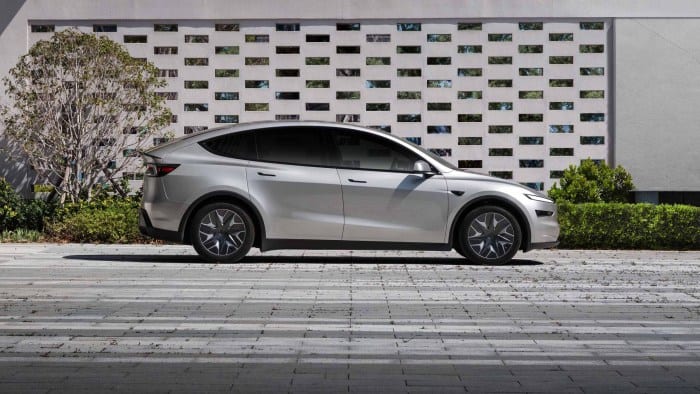
The incentive, launched in China earlier this month, is now available for Model Y Long Range Dual Motor or Performance variants in the German market. The Model Y Performance begins at €59,990, with the Long Range dual motor variant available at €54,990.
The world’s largest EV maker issued an email on Monday to all employees announcing a >10% reduction in its global staff representing more than 14,000 employees.
Tesla recently reported producing 433,371 vehicles, with 386,783 delivered, falling short of Wall Street’s expectation of 431,000 units delivered.