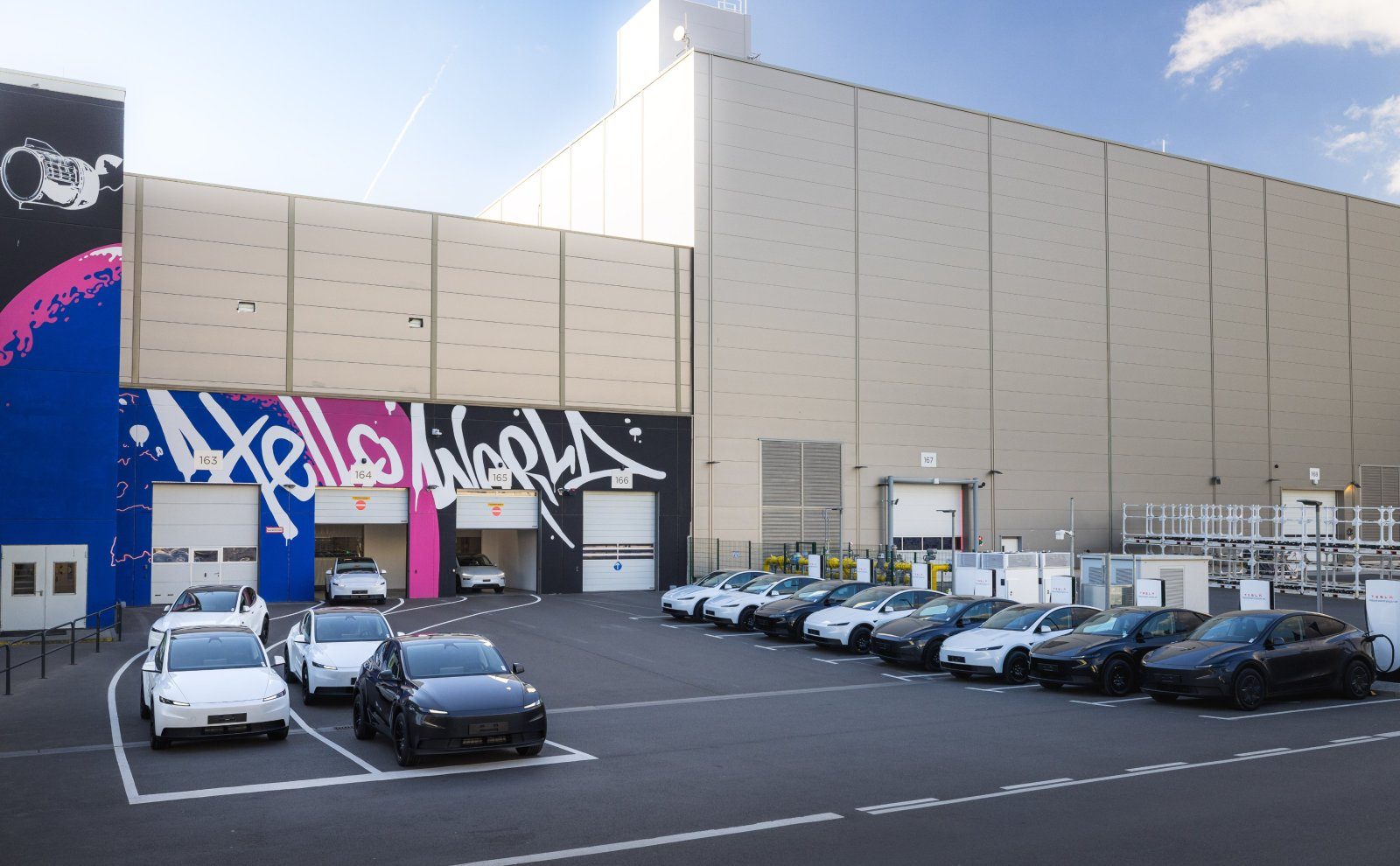

Tesla‘s Model Y was the best-selling electric vehicle in Germany in March with 6,841 new registrations — and 86% of those went to private buyers.
The private buyer share stands in stark contrast to the direct rival from Volkswagen, where just 12% of the ID.4 registrations in March were private, according to data cited by the German automotive outlet Auto Motor und Sport.
The data points to a structural divide in how the two brands reach the German market as nearly nine in ten Model Y registrations in March were private.
The bulk of Volkswagen‘s ID.4 volumes in Germany flow through corporate fleets, dealer registrations, and other commercial channels, with private customers accounting for just 12% of March sales.
The figures come as EVs overtook both petrol and diesel vehicles for the first time in a single month in Germany.
Total BEV registrations reached 70,663 in March — a 66.2% year-on-year increase — giving electric cars a 24% share of all 294,161 new passenger vehicle registrations, according to the Federal Motor Transport Authority (KBA).
Tesla registered 9,252 vehicles in Germany in March — a 315.1% year-on-year increase — giving it a 3.1% share of the total market, according to KBA data.
The Volkswagen brand registered 52,556 vehicles, up 3.2%, maintaining its position as the market’s dominant force with a 17.9% share.
Across the full EV segment in Q1 2026, Volkswagen led with 23,888 BEV registrations, followed by Skoda with 17,958, Tesla with 12,829, Audi with 12,462, and BMW with 11,885, according to KBA data.
The Company Car Gap
The low private buyer share for the VW ID.4 reflects a broader pattern in Germany’s automotive market, where corporate fleets — known as Dienstwagen — account for the majority of new car registrations.
In March, 65% of all new registrations were commercial, according to the KBA.
German companies have traditionally offered employees a choice of company cars from approved manufacturer lists, which in many cases are limited to domestic brands.
Volkswagen, BMW, Mercedes-Benz, and Audi dominate these lists.
Tesla‘s position in Germany’s corporate car market has faced specific headwinds.
In February 2024, SAP — Germany’s largest technology company — stopped offering Tesla vehicles as company cars, citing pricing volatility that complicated fleet planning, as Bloomberg reported at the time.
While there is no evidence of a widespread, industry-wide ban on Tesla as a company car option across German employers, the combination of limited fleet penetration, corporate car policies favouring domestic brands, and isolated but high-profile exclusions such as SAP’s helps explain why Tesla‘s sales in Germany skew so heavily toward private buyers.
Tesla’s Q1 Comeback
In the final month of Q1, Tesla offered a €3,000 “Tesla Bonus” on selected Model Y variants until March 31, in some cases combined with zero-percent financing.
Tesla sold 19,390 vehicles in Germany throughout 2025 — nearly half the 37,574 units registered the previous year, a 48.4% decline, according to KBA data.
The March 2026 result was the company’s best monthly performance in Europe’s largest auto market since December 2022, when it registered more than 17,000 units.
In Q1 2026, Tesla registered 12,829 EVs in Germany — 9,252 of them in March alone, representing 72% of the quarter’s total — placing the brand third behind Volkswagen (23,888) and Skoda (17,958) for the quarter, according to KBA data.
The Model Y’s 6,841 March registrations represented a 379.1% year-on-year increase, making it the best-selling SUV in Germany across all powertrains for the month, according to the KBA.
The Model Y accounted for 9.7% of all BEV registrations in Germany in March. Tesla’s Model 3 added a further 2,356 units.
The refreshed Model Y is priced from €39,990 following the launch of the Standard variant in European markets in October.
Tesla also debuted the Model 3 Standard in late 2025, starting at €36,990. The flagship Model S and Model X, priced from €109,990 and €114,990 respectively, were discontinued after Tesla ended production on March 31.
Incentives and Labour
The March rebound comes as Germany’s reinstated EV purchase incentive begins to filter through the market.
The federal government confirmed in January that the new scheme applies retroactively to all eligible EVs registered since January 1, 2026, with private buyers eligible to receive between €3,000 and €6,000 depending on household income and family size.
The programme replaces the previous Umweltbonus, which was abruptly scrapped in late 2023 and triggered a sharp slump in German EV demand throughout 2024 and early 2025.
Tesla‘s German operations remain entangled in a labour dispute with IG Metall, Europe’s largest industrial union.
In the works council election held at Giga Berlin on March 2-4, IG Metall’s vote share fell from 39.4% in 2024 to 31.1%, securing 13 of the council’s 37 seats — well short of the majority it had targeted.
The management-aligned Giga United list won approximately 41% of the vote.
The election followed weeks of escalating tensions, including a criminal complaint filed by Tesla accusing an IG Metall representative of secretly recording a works council meeting — an allegation that prosecutors subsequently dropped after finding no evidence of a recording.
CEO Elon Musk sent a pre-recorded video message to the plant’s roughly 10,700 workers warning that planned expansion at Giga Berlin would not proceed if the union gained influence on the council.
Broader EV Market
Ten of the 20 best-selling EVs in Germany in Q1 2026 came from the Volkswagen Group, with Skoda’s Elroq leading the cumulative Q1 rankings at 10,399 units.
BMW‘s new Neue Klasse iX3 entered the rankings for the first time in March, though Auto Motor und Sport noted that a significant number of those registrations were dealer demonstrator vehicles.
Among Chinese brands, BYD registered 3,438 vehicles in March — a 327.1% year-on-year surge — reaching a 1.2% market share.
Leapmotor, which entered Germany through its partnership with Stellantis, rose 318.1%. XPeng climbed 211.9% as it prepares to begin deliveries of its P7+ sedan in the country.
The Chinese EV maker Nio, which has established its Design Center in Munich over a decade ago, registered just two vehicles in March.