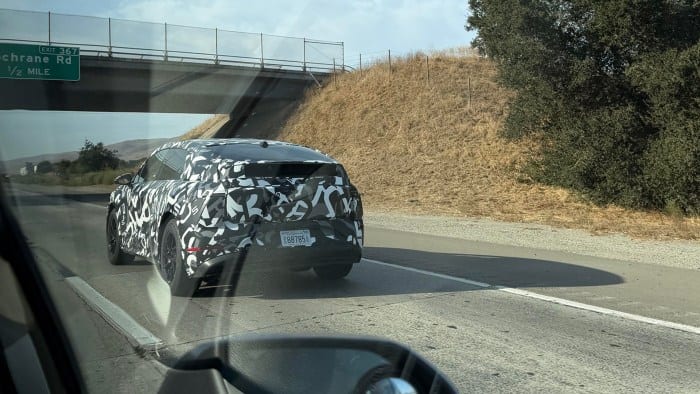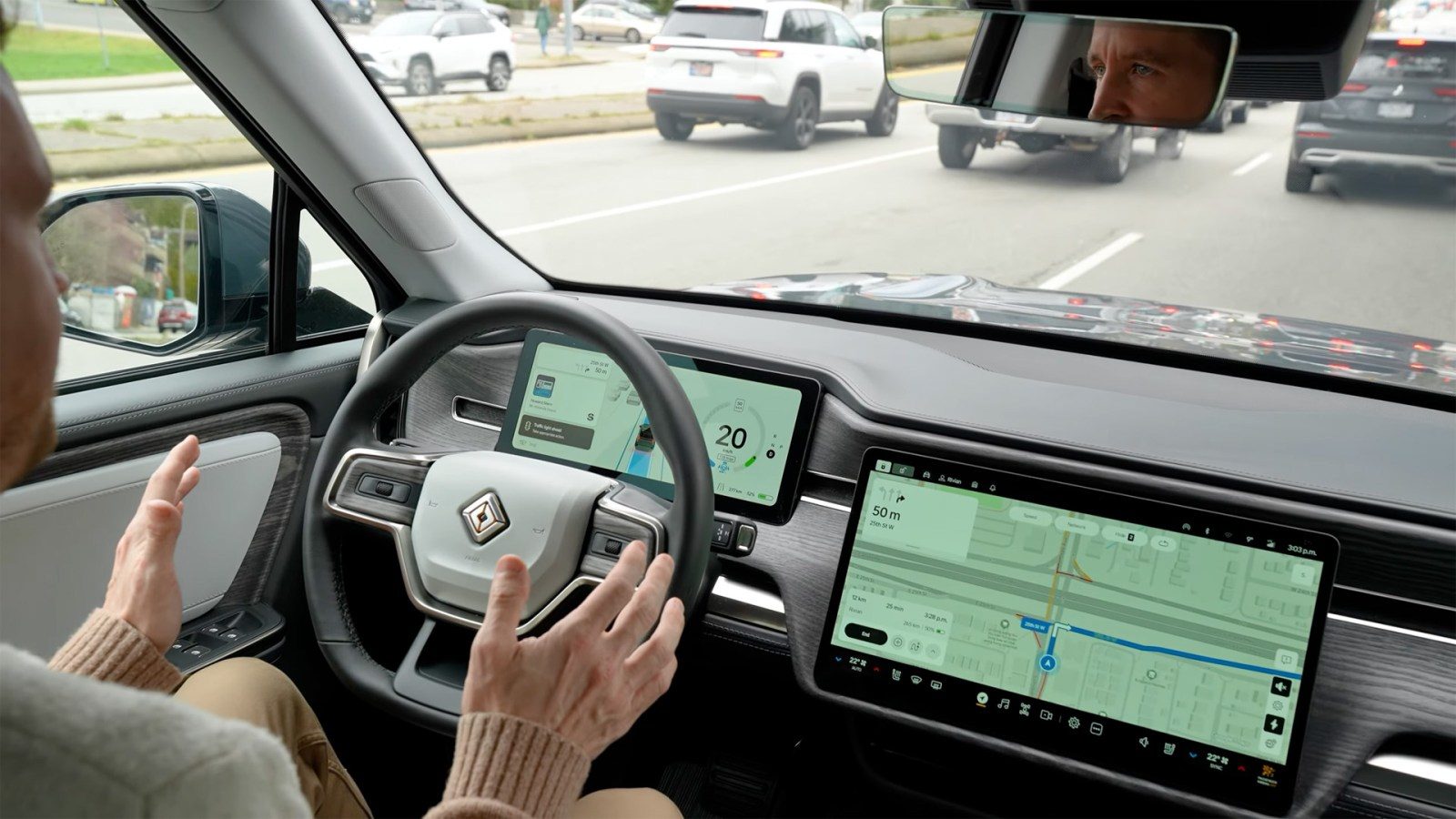

Rivian shares reversed an initial post-earnings rally on Thursday afternoon, after chief financial officer Claire McDonough flagged that R2 launch complexity will negatively impact automotive gross profit in the second and third quarters.
The stock closed the after-hours trading down by more than 4% and extended losses into Friday’s pre-market session, declining roughly 9.3% from the late-session high.
Rivian maintained its annual guidance while saying it expects to deliver between 9,000 and 11,000 R1, R2 and vans in the second quarter — signalling a major push in the second half of the year.
Shares of the EV maker had spiked to an intraday high of $16.99 in the final hour of regular trading on Thursday before reversing sharply after Rivian released its earnings report and held its conference call.
The decline came despite Rivian reaffirming all key elements of its 2026 guidance, including delivery volumes of 62,000 to 67,000 vehicles, an Adjusted EBITDA loss of $1.80 billion to $2.10 billion, and capital expenditure of $1.95 billion to $2.05 billion.
Q2 and Q3 Margin Warning
The disclosed Q2 and Q3 margin warning, delivered both in McDonough’s prepared remarks and in answer to BNP Paribas analyst James Picariello, appeared to be the single most consequential disclosure of the report.
“While we continue to believe our gross profit will increase year-over-year, we expect the complexity of a new vehicle launch will negatively impact our automotive gross profit in the second and third quarters before becoming a benefit for our overall operations in the fourth quarter as we ramp production and deliveries,” McDonough said in her prepared remarks.
The warning had already been made during Rivian‘s Q4 2025 call held last February.
The CFO reinforced the framing in response to Picariello’s specific question on margin expectations.
“As we think about the subsequent quarters of Q2 and Q3, we’ll see the introduction and turn on of both all of the depreciation expense, the new manufacturing team that is established that will be producing the vehicles,” McDonough said.
Rivian is planning to begin a second production shift for the R2 model later this year.
“As they’re in the process of ramping up the first shift of operation, we’ll see some of the complexity associated with lower volumes on the new R2 line. As a result of those attributes, we do anticipate seeing an impact to our automotive gross profit over Q2 and Q3 before we start to see the overall benefits of the ramp,” the CFO added.
The company expects to “exit 2026 with a trajectory of positive automotive gross profit,” McDonough said.
Rivian‘s automotive gross margin for the first quarter was already negative at -7%, with the segment posting a $62 million gross profit loss compared with a $92 million gain in the same period last year.
The Q2/Q3 margin warning, combined with sequential delivery guidance of 9,000 to 11,000 vehicles in the second quarter — implying flat-to-down sequential volumes versus the first quarter’s 10,365 deliveries — meaningfully reframed the path to the back-half ramp.
Tariff Exposure
McDonough also addressed the company’s tariff exposure under questioning from Bank of America analyst Alexander Perry.
“We did not book anything this quarter associated with IEPA tariffs,” McDonough said, referring to the International Emergency Economic Powers Act tariffs imposed by the Trump administration. “We do believe that the recovery of those IEPA tariffs is possible in the future.”
The framing left an unbooked tariff exposure hovering as a risk factor that could affect future quarters.
Stock Reaction
The stock reaction reflected investor focus on the path to the back-loaded ramp rather than the reaffirmed full-year numbers.
Rivian is now signaling that automotive margins worsen for two consecutive quarters before improving — a sharper glide path than analysts had been modeling.
The company’s full-year delivery target of 62,000 to 67,000 vehicles, when combined with the 10,365 first-quarter actuals and the 9,000 to 11,000 second-quarter guidance, leaves a second-half delivery requirement of between approximately 41,635 and 46,635 vehicles to hit the full-year midpoint.
That works out to between approximately 20,800 and 23,300 deliveries per quarter in the third and fourth quarters — roughly double the Q1 rate, with the entire growth dependent on R2 ramp execution.
Wall Street analysts split sharply in their first reactions to the report, with three of four firms checked by EV either raising price targets or reiterating bullish ratings, while Mizuho lifted its target but maintained an Underperform.
Evercore: Outperform at $18
Evercore ISI analyst Chris McNally reiterated an Outperform rating and $18 price target on Rivian, pointing to the R2 production start and the Georgia capacity expansion as confidence signals.
“R2 ship(ment) remains on course with ’26 guide reiterated as saleable R2 production has begun at Normal facility,” McNally wrote.
“RIVN is putting their Capex $$s where its mouth is and raised ‘Phase 1’ capacity of Georgia from 200k to 300k (’27/’28 Capex elevated), with RJ citing ‘a level of confidence in our products & our business…the level of enthusiasm for the product has just been outstanding,'” McNally added.
The analyst flagged that Rivian could begin its second night shift earlier than the previously communicated year-end timing, and that R2 demand should be channel-checkable from August to September by imputing wait times from order confirmations.
Cantor: Neutral at $19 Target
Cantor Fitzgerald analyst Andres Sheppard maintained a Neutral rating and raised his 12-month price target to $19.
“For Q2, we expect ~10,000 total deliveries, followed by a material step-up in 2H26,” Sheppard wrote.
“We continue to view Rivian’s R2 initial deliveries as the most material catalyst for this year, and are encouraged after the company reaffirmed it is on-track for initial customer deliveries in 2Q26,” he added.
Sheppard noted Rivian‘s total liquidity of approximately $5.4 billion as of the first quarter, with management expecting an additional $2.6 billion later this year.
“We remain Neutral in the near term, as we await a better entry point and granularity on the company’s monetization plans for autonomy,” he added.
Needham: Buy at $23 Target
Needham analyst Chris Pierce reiterated a Buy rating and $23 price target on Rivian.
“We reiterate our Buy rating following 1Q results, with R2 now transitioning from narrative to reality as saleable production begins and customer deliveries approach,” Pierce wrote.
“While the EV demand backdrop remains softer than expected, raising the bar for R2, we continue to view upcoming delivery milestones and early conversion trends as critical catalysts to bridge sentiment into a more meaningful 2027 ramp,” he added.
Pierce flagged the Georgia Phase 1 capacity increase to 300,000 units as a reinforcement of medium-term demand outlook, while cautioning that the build-out shifts the path to “an execution dependent outcome.”
Mizuho: Underperform at $13 Target
Mizuho analyst Vijay Rakesh raised his price target on Rivian to $13 from $11 while maintaining an Underperform rating.
“RIVN reported ~in-line MarQ revenue at $1.38B (cons. $1.39B),” Rakesh wrote.
He flagged six key takeaways: the reaffirmed 2026 delivery guidance midpoint, Q2 expected at approximately 10,000 units down 3% sequentially, automotive margins essentially flat sequentially at -6.8%, and the R2 dilutive to margins in the second and third quarters with a rebound in the fourth quarter.
Additionally, the analyst mentioned that the R2 production is on track at 155,000 capacity, and the Georgia capacity has been increased by 50% to 300,000 units.
Rakesh noted he believes US EVs remain challenged, with North American battery EV volumes estimated to fall roughly 13% year-over-year in 2026.
He estimates 2026 Rivian deliveries at approximately 59,000 units, up 39% year-over-year, compared to consensus of approximately 63,000 and his prior estimate of 60,000.
What’s Next
Investors will be watching whether Rivian follows through on the H2-loaded ramp implied by its reaffirmed full-year guidance, with second-half deliveries needing to reach approximately 41,600 to 46,600 vehicles.
The company’s R2 customer deliveries in the “coming weeks” will mark the first hard data point on consumer demand, with delivery waiting times expected to give a glimpse of the demand the brand has for the Premium version of the model.
The next test of Rivian‘s margin trajectory comes in the second-quarter report expected for late July, when the impact of R2 launch complexity on automotive gross profit will become visible.