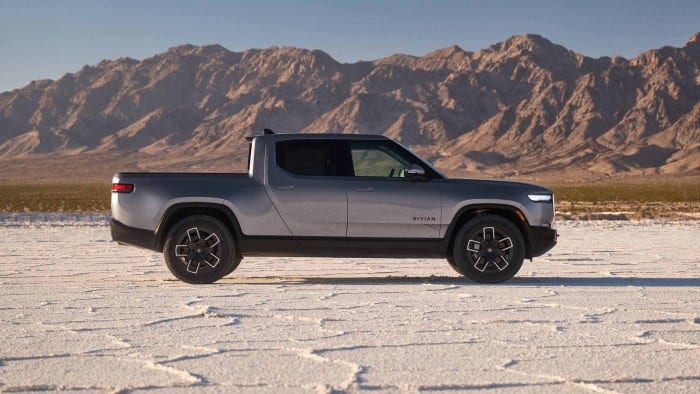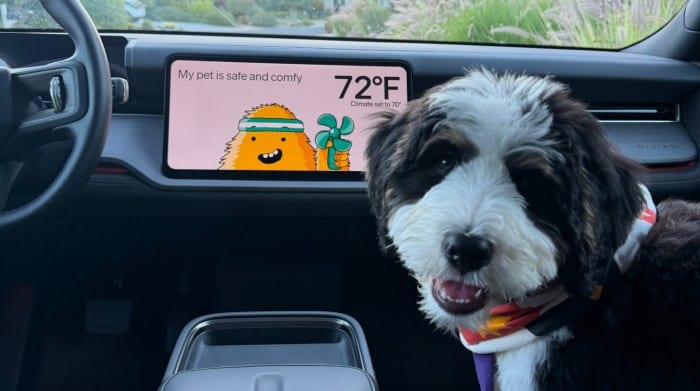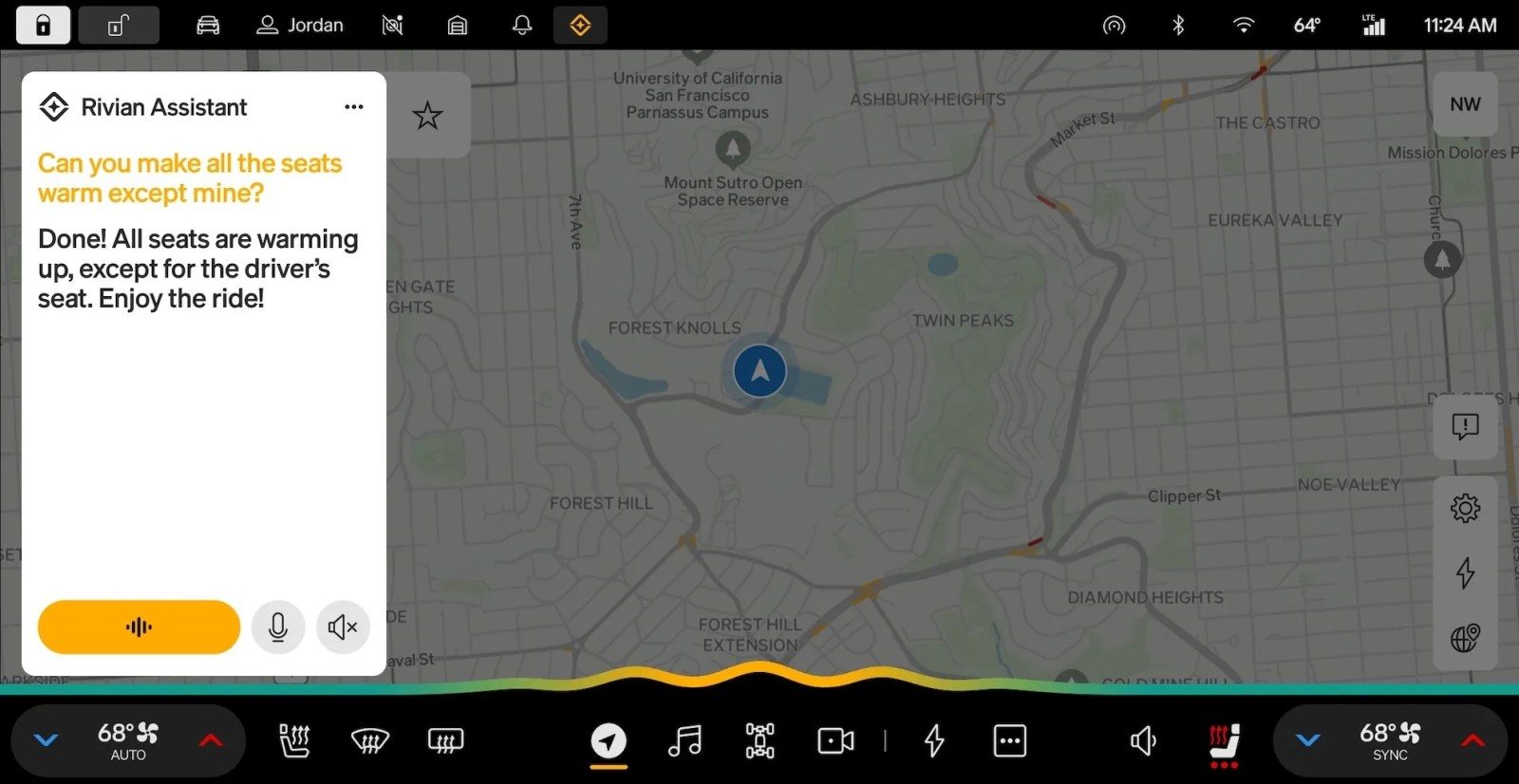

Rivian is expanding its in-vehicle AI ambitions with the rollout of Rivian Assistant — a new voice-enabled system that began arriving through firmware update 2026.15 for existing R1 vehicles earlier this week.
The assistant is also debuting in a more advanced form on the R2 SUV, for which internal deliveries started last month — with customer deliveries expected to begin in June.
The company has described its AI assistant as a significant step toward turning Rivian vehicles into more conversational, proactive software platforms rather than traditional automobiles with basic voice controls.
While current-generation R1T and R1S owners are receiving the assistant now, Rivian executives say the R2’s version will feature substantially more powerful onboard AI hardware and software capabilities.
Onboard AI Compute
According to Rivian‘s Chief Software Officer Wassym Bensaid, both Gen 1 and Gen 2 R1 vehicles already process voice recognition locally inside the vehicle.
The architecture allows faster responses and improved privacy, as many commands do not need to be routed through cloud servers.
However, the R2 is expected to take the system significantly further.
Bensaid revealed that the R2 will include “much more capable Edge AI compute” rated at 200 Sparse TOPS (tera operations per second), along with the ability to run a local large language model, or LLM, directly within the vehicle.
The distinction could become one of the defining differences between Rivian’s current and next-generation vehicle platforms.
For R1 owners, the assistant primarily handles local voice processing and standard natural-language requests such as navigation, climate adjustments, music playback and general vehicle controls.
The R2, by contrast, is expected to support far more advanced conversational interactions, since the LLM operates directly on the vehicle rather than depending heavily on cloud infrastructure.
The local AI approach could also allow the R2 to continue processing sophisticated requests even in areas without cellular coverage — a capability increasingly viewed as important for off-road and adventure-oriented EVs.
Industry analysts — including both McKinsey & Company and Morgan Stanley — see onboard AI compute becoming a key competitive battleground among automakers as vehicles evolve into software-defined platforms.
The increased processing capability inside the R2 may also support Rivian’s longer-term ambitions around hands-free and eyes-free driving systems, although the automaker has not announced a timeline for such features.
Rivian Assistant Rollout
Rivian‘s AI Assistant rolled out earlier this week with the company’s software update 2026.15.
The feature was first unveiled at the company’s inaugural Autonomy & AI Day in Palo Alto on December 11, 2025.
After promises of an “early 2026” launch, the timeline slipped. The feature was absent from the 2026.03 update in February.
When the 2026.07 release notes were published in early April — four months after the original commitment — the assistant was again missing.
In March, a Rivian loaner vehicle was spotted running a pre-release version of the assistant, offering the first look at its settings panel and confirming two wake words alongside toggles for Natural Interruption and Keep Listening modes.
The assistant is available only on vehicles with an active Connect+ subscription or trial, and is currently limited to English.
The feature replaces Amazon’s Alexa integration — when Rivian Assistant is turned on, the vehicle automatically disables Alexa and all Alexa integrations.
Drivers can activate Rivian Assistant by saying “Hey, Rivian” or “Okay, Rivian,” using a steering-wheel thumbwheel shortcut, or selecting the assistant icon from the center display.
The assistant can perform tasks including finding nearby destinations, adjusting HVAC settings, managing media playback through services such as Spotify and Apple Music, and generating stories for passengers during long trips.
Rivian said the system is designed to learn user preferences over time, including frequently visited destinations and music habits, in an effort to deliver a more personalized experience.
The rollout also highlights Rivian’s effort to continue supporting older vehicles as it prepares to launch the R2, unlike some automakers that limit newer software experiences to the latest-generation hardware.
The company has said the R2 costs roughly half as much to build as the R1S, citing a simplified zonal electrical architecture that cut 2.3 miles of wiring harness length and reduced connectors by 60%.
R2 Production and Deliveries
Rivian began volume, saleable production of the R2 on April 22 at its Normal, Illinois, plant — about a month after the model’s launch at the SXSW Festival in Austin.
The public online configurator for the R2 SUV opened on Friday — just a week after the company had pushed it to June — allowing customers to build their vehicle on its website.
Only the R2 Performance with Launch Package — priced at $57,990 — will be available to order at launch.
The Premium trim at $53,990 is expected in late 2026, with the Standard Long Range at $48,490 arriving in the first half of 2027 and the base variant at approximately $45,000 in late 2027.