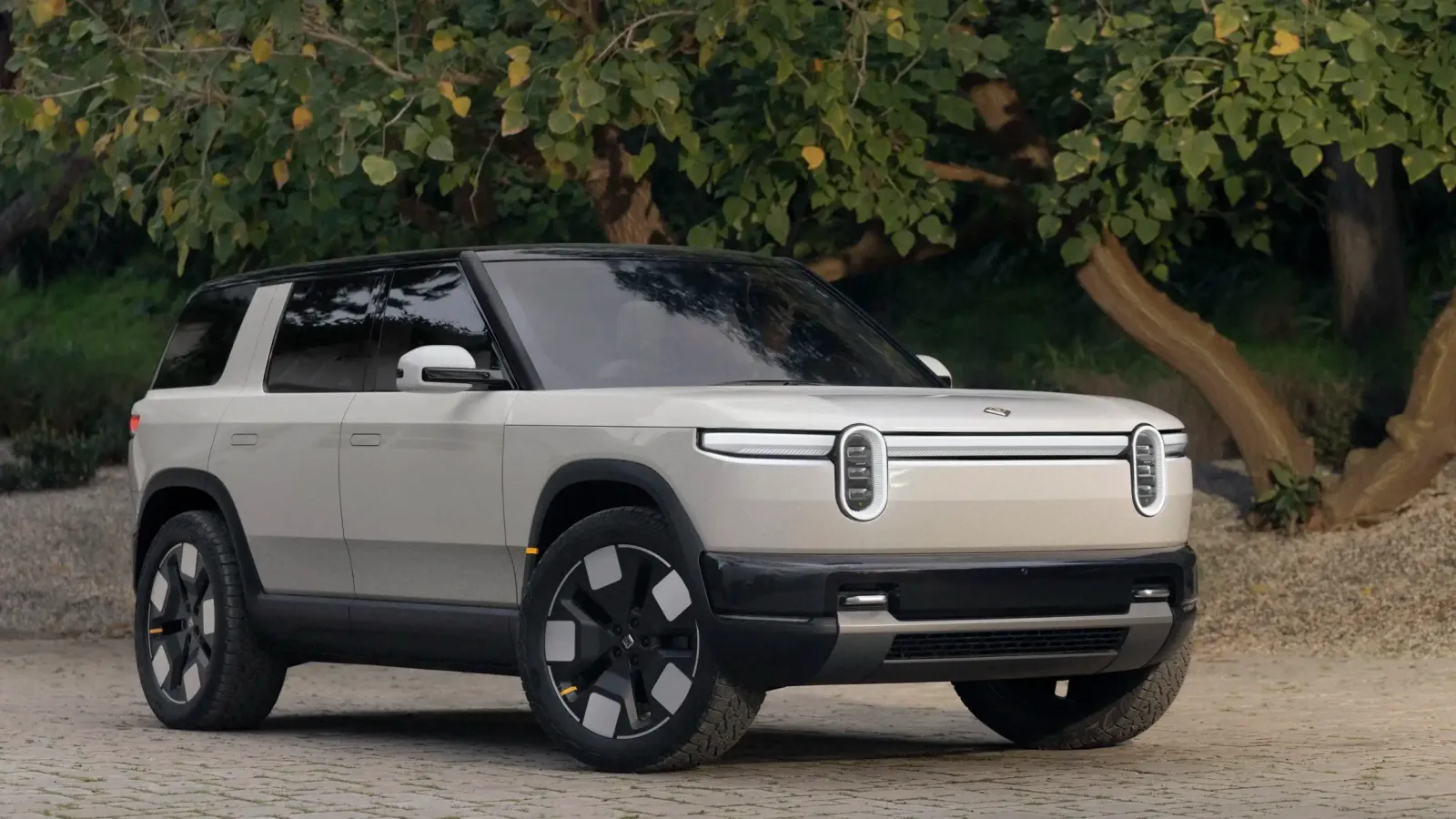
The Chief Executive Officers of Rivian, Lucid and Scout Motors said they are not building their plans around a return of federal support for EVs after Democrats’ midterm election wins, CNBC reported on Sunday.
The three executives told the network in separate interviews this month that they would welcome new help from Washington but are not counting on it.
Their caution follows a year in which Washington removed most federal support for EVs, from the buyer tax credit to the emissions rules that created a market for regulatory credits. Company filings show how each of the three has adjusted since.
Rivian founder and Chief Executive Officer RJ Scaringe said on November 6 that he hopes the incoming Congress and the Republican president can find middle ground on EVs, but that Rivian tries not to plan around such outcomes.
He said a change in Congress would probably matter less for the industry than many expect.
“I think we’re going to actually have a lot of challenges getting things done,” Scaringe told CNBC.
Lucid’s CEO Silvio Napoli, who took the role on June 1, described the company’s stance as planning for the worst and hoping for the best. He spoke on November 9, the day Lucid reported third-quarter results.
“Anything positive, we’ll take it,” Napoli told the network.
Scout CEO Scott Keogh said on November 11 that the Volkswagen-owned brand was set up from the start to operate without relying on legislation or on incentives that may or may not exist.
What the 2025 Law Removed
The tax law President Donald Trump signed in July 2025 ended the $7,500 credit for new clean vehicles, the credit for used ones, and the commercial clean vehicle credit for any vehicle acquired after September 30, 2025, according to the Internal Revenue Service.
The same law reset the civil penalty to zero for carmakers that miss federal fuel economy targets. For 2024, it stood at $17 per vehicle for each tenth of a mile-per-gallon shortfall.
The Environmental Protection Agency (EPA) then repealed all greenhouse gas emission standards for cars and trucks in a final rule that took effect on April 20.
Those rules had a direct value for EV makers. Carmakers that fall short of emissions and fuel economy targets buy credits from those that exceed them.
One measure survived. The manufacturing credit worth $35 per kilowatt-hour of U.S.-made battery cells remains in place with new limits on foreign-entity involvement. It phases down from 2030 and ends after 2032, according to the Congressional Research Service.
Support at the Factory
Keogh said that if lawmakers do offer support, he would prefer it to be aimed at EV production.
“I always prefer it on the production side,” he told CNBC, adding that lower production costs would be passed on to customers.
Scout’s launch pricing was set with buyer incentives in view. When it revealed the Traveler SUV and Terra pickup in October 2024, it said both would start under $60,000, or as low as $50,000 and $51,500 respectively with available incentives.
Scout has not yet built a vehicle for sale. It is targeting initial production at its plant in Blythewood, South Carolina, in 2027 and customer deliveries in 2028.
Keogh said last week that Scout holds about 212,000 reservations for its Terra pickup and Traveler SUV, about 87% of them for range-extended versions that carry a gasoline generator.
Rivian’s Credit Income
Rivian put a number on the policy change in August 2025.
Then-CFO Claire McDonough said back then that the company no longer expected revenue from the affected regulatory credit programs for the rest of that year, and cut its 2025 outlook for credit sales to about $160 million from $300 million.
Scaringe argued on the same call that the rollback would also thin out the competition.
“There’s less incentives for incumbent manufacturers to make the commitment or the transition to electrification,” he said.
Rivian’s deliveries rose 46% to 19,248 in the third quarter of 2026, a record, in the first full quarter on sale for its lower-priced R2, and its revenue passed $2 billion for the first time. The R2 outsold both the R1 and the company’s delivery van, Rivian said.
Rivian still draws income from policy. It booked about $81 million in the quarter from selling regulatory credits to other carmakers, by EV‘s calculation from its earnings presentation.
The company cited “better than expected revenue related to regulatory credits” among the reasons it narrowed its forecast for this year’s adjusted loss before interest, taxes, depreciation and amortization to between $1.75 billion and $1.85 billion. It also lifted the low end of its delivery forecast, to a range of 67,000 to 70,000 vehicles.
Rivian plans a $44,990 version of the R2 for the summer of 2027.
Lucid’s Funding
Lucid’s third-quarter revenue rose 4% to $350.3 million on 3,806 deliveries, and its net loss narrowed to $830.9 million from $978.4 million a year earlier, the company said on November 9.
Lucid’s U.S. revenue fell 10.0% to $253.6 million in the same period, according to its quarterly filing, while its sales in Saudi Arabia more than doubled.
The company said it ended September with $2.0 billion in liquidity, or $3.75 billion including a $1.75 billion increase to a delayed-draw term loan from Saudi Arabia’s Public Investment Fund, its largest shareholder, announced the same day.
Lucid said that should fund it into the fourth quarter of 2027, past the planned start of production of its midsize vehicle in the second half of that year.
The company is funding incentives of its own. It is offering a $15,000 Black Friday credit on the 2027 Gravity for buyers who pay cash.
The Numbers in Congress
The Associated Press’s count on Sunday showed Democrats with 256 seats in the House of Representatives and Republicans with 169. In the Senate, it showed Democrats with 55 seats, including two independents who caucus with them, and Republicans with 44.
Some seats had not been assigned to either party in that count. The new Congress is seated in January.
Any bill restoring EV incentives would still need Trump’s signature. He said after the vote that he would veto legislation he considers “insane,” and overriding a veto takes two-thirds of both chambers.
EVs are absent from the early agenda House Democratic leaders have described.
An agenda set out by House Democratic Leader Hakeem Jeffries before the election, reported by the AP in October, covered health care tax credits, Medicaid, tariffs, the Iran war and oversight of the administration. It did not mention EVs or clean energy.
The party was divided over reviving the credit before the election.
More than 160 House Democrats back the Energy Bills Relief Act, which would restore it by repealing the section of the 2025 law that ended it. Jeffries is not among the cosponsors, and the bill has not moved since it was referred to committees on March 18.
Senate Democratic Leader Chuck Schumer set out plans earlier this year to restore credits for wind and solar power without explicitly mentioning EVs.
Impact of the Cutoff
U.S. EV sales hit a record in the third quarter of 2025 as buyers rushed to use the credit before it expired, with EVs passing 10% of new-vehicle sales for the first time, according to Cox Automotive.
A year later, third-quarter sales fell 39.5% to an estimated 262,649 vehicles, or about 6.4% of the market. That was up 6.1% from the second quarter.
Prices remain a hurdle. The average new EV sold for $56,220 in October, about 10% more than the $51,109 average for all new vehicles, Kelley Blue Book said on November 10. EV incentives averaged 11.3% of the transaction price, against 6.8% for the industry.
Established carmakers posted steeper declines. General Motors‘ U.S. EV sales fell 61.7% to 25,473 in the third quarter, and Ford‘s fell 80.2% to 6,047.