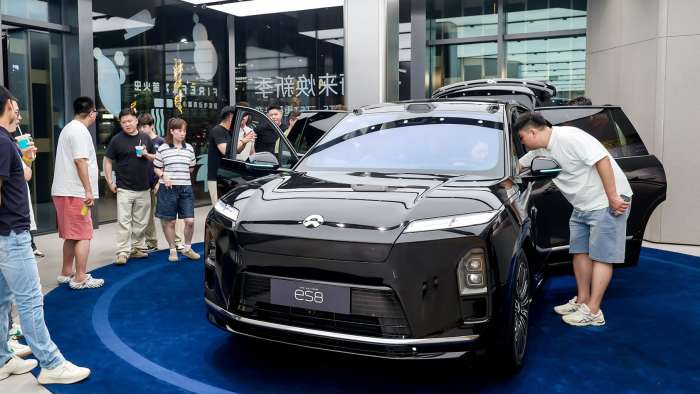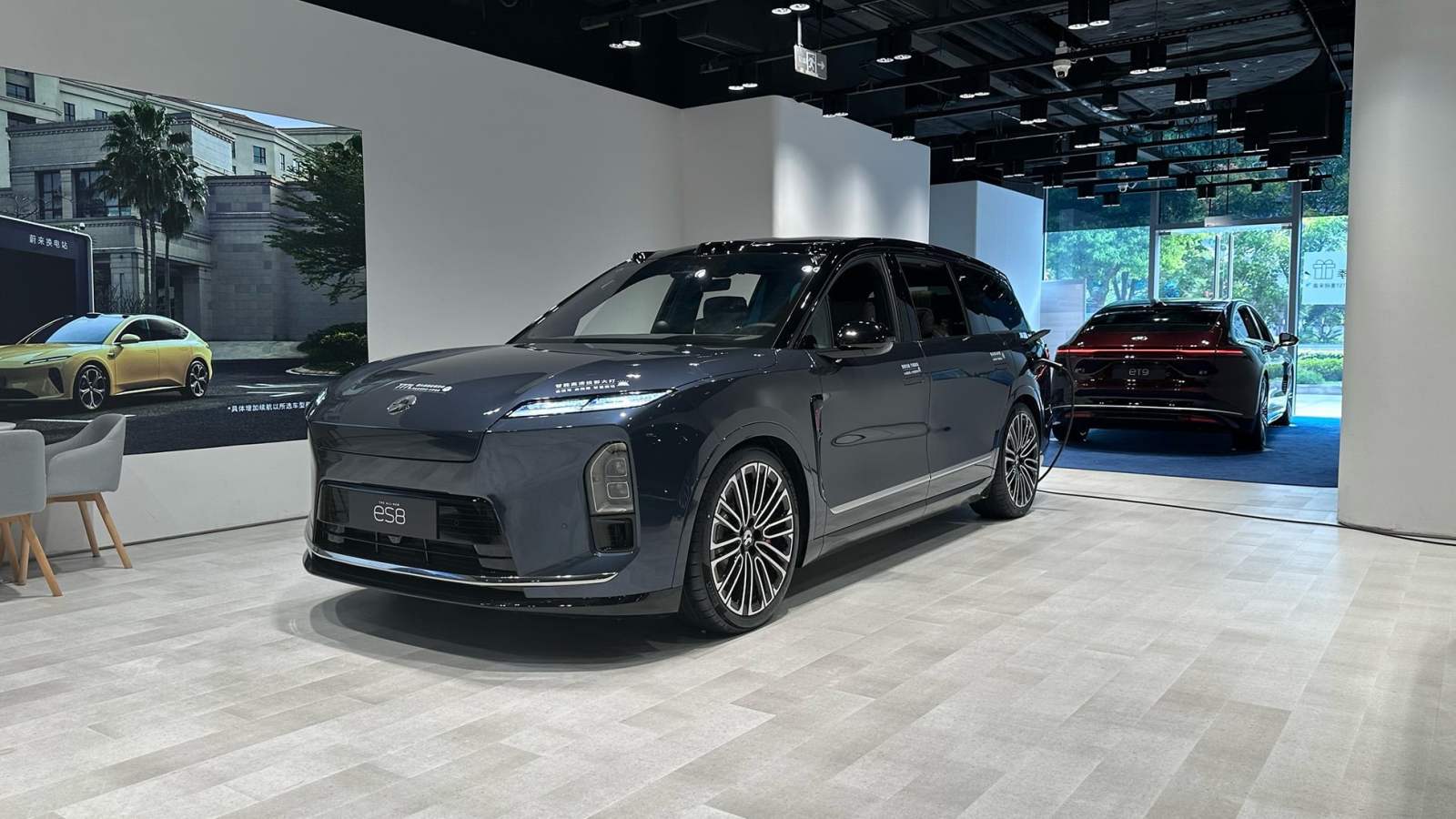

Nio‘s best selling model now carries a delivery wait time of just “one to two weeks” in China, according to the company’s configurator page on Monday — the shortest interval since the third-generation model launched seven months ago.
The latest figure represents a roughly 92% compression from the 24-26 weeks customers faced when the model debuted on September 20.
The timeline has fallen in steady increments week after week as Nio cleared its initial backlog of more than 100,000 firm orders.
The 100,000th unit was delivered last week in Beijing.
The 31-Week Compression
After launching at 24-26 weeks in late September, the timeline contracted to 22-23 weeks by late October, 20-21 weeks in early December, 17-18 weeks in early January, and 13-14 weeks by January 20.
The reductions accelerated through February with an estimated waiting time of 8-9 weeks by February 11, 6-7 weeks by February 25, and into the single digits by early March.
By March 9, the wait stood at 3-4 weeks.
It dropped to 2-3 weeks by April 17 and to today’s 1-2 weeks by April 27 — effectively meaning new orders are now being scheduled at the cadence of Nio‘s production line.
Monthly Deliveries and Production Ramp
Monthly delivery data tracks the underlying production reality.
Nio delivered 2,803 ES8 units in the partial first month of September, ramping to 6,703 in October, 10,689 in November, and a peak of 22,258 in December — making the ES8 China’s best-selling SUV in the 400,000 yuan ($58,500) segment that month.
Average daily deliveries reached approximately 824 units in December, up from 280 at the start of the ramp.
January 2026 deliveries fell 21% sequentially to 17,646 units, then dropped a further 36% to 11,260 in February as the Chinese New Year holiday and an audio signal processing chip shortage weighed on output.
March recovered to 16,255 units — a 44% rebound from February but still 27% below the December peak.
The continued compression of wait times despite the March production rebound is the clearest evidence that Nio‘s capacity has caught up with the order flow.
The March Incentive Response
Nio launched a substantial incentive package on the first day of March.
For ES8 buyers, the company offered a 10,000-yuan ($1,460) purchase tax subsidy, seven-year low-interest financing, and five years of free Navigate on Pilot Plus assisted-driving usage.
Customers who purchased an ES8 in January or February received a retroactive reward of 100,000 Nio Points — equivalent to 10,000 yuan.
Deutsche Bank wrote in an early-March research note that Nio Inc. weekly orders reached approximately 3,500 units in the first three days of March, the highest single-week level for the group so far in 2026.
The brokerage attributed the rebound to the new incentives and characterized the wait-time compression as evidence that “production was outpacing incoming demand.”
The incentive package has not stopped the wait-time compression. Wait times have continued falling every week since.
Cannibalization Question Looms
Some of the wait-time compression likely reflects ES8 reservation-holders deferring or canceling orders to wait for the ES9, Nio‘s upcoming larger flagship SUV.
The ES9 begins customer deliveries on June 1 following an unveiling earlier this year.
The pattern of pre-launch order cancellations would mirror what happened with Nio‘s ET9 flagship sedan and the Onvo L90, both of which saw demand for incumbent models compress sharply in the months before new models reached customers.
The ES9 uses a full-domain 900-volt high-voltage architecture, drawing power from a 102-kilowatt-hour ternary lithium-ion battery supplied by CATL.
The system delivers a CLTC-rated range of up to 635 kilometers and supports ultra-fast charging that can add 255 kilometers of range in five minutes when paired with Nio‘s 600-kilowatt hyperchargers.
Margin Anchor
The ES8’s importance to Nio‘s recently achieved profitability complicates the demand-softening story.
Co-founder and President Qin Lihong said in late January that the new ES8 carries a 20% gross margin, with an average selling price above 400,000 yuan ($58,500) on the showroom floor.
By those figures, the company generates roughly 80,000 yuan ($11,700) in gross profit per ES8 sold — implying cumulative gross profit of more than 5.7 billion yuan ($834 million) from the model alone since launch.
Nio‘s overall vehicle margin reached 18.1% in the fourth quarter, a five-percentage-point year-over-year increase that the company attributed largely to the ES8 mix.
Founder and Chief Executive William Li said on the Q4 earnings call that the first-quarter 2026 vehicle margin would be “maintained at a similar level as in Q4 last year.”
Li also said on the call that Nio “still” had ES8 order backlogs and was experiencing what he described as “pretty good recovery on the order momentum of the ES8 model.” That commentary referred to the situation in mid-March; today’s 1-2 week wait time suggests that backlog has now been worked through.
Pricing and Variants
The third-generation ES8 was launched on September 20, 2025, priced more than 100,000 yuan below its predecessor.
The six-seat Executive Signature Edition starts at 446,800 yuan ($65,400). The Executive Luxury Edition — available in both six-seat and seven-seat configurations — starts at 406,800 yuan ($59,500).
With Nio‘s Battery-as-a-Service rental model, the entry price falls to 298,800 yuan ($43,700).
The model is produced at Nio‘s third plant in Hefei, Anhui province, which manufactured 43,668 ES8 units in 2025 — exceeding the company’s target by approximately 3,700 vehicles.
What Comes Next
Nio is scheduled to report first-quarter 2026 results in late May, with the ES9 launch and customer deliveries beginning June 1.
Q1 deliveries reached 83,465 units across the group, a 98.3% year-over-year increase that exceeded the upper end of management’s guidance.