A Nio EV factory in Hefei (known as F2) has been rated a 2026 national “excellence-level” smart factory, the company said on Tuesday, four months after the World Economic Forum added one of its plants to its Global Lighthouse Network.
The rating is part of a program jointly run by China’s Ministry of Industry and Information Technology (MIIT) and five other government departments, and is an important tier in the country’s graded system for developing smart factories, Nio said.
The recognition shows that the intelligence of Nio’s advanced manufacturing system “has again received national-level authoritative recognition,” the company said, and reflects its long-term use of “AI and other frontier technologies” in manufacturing.
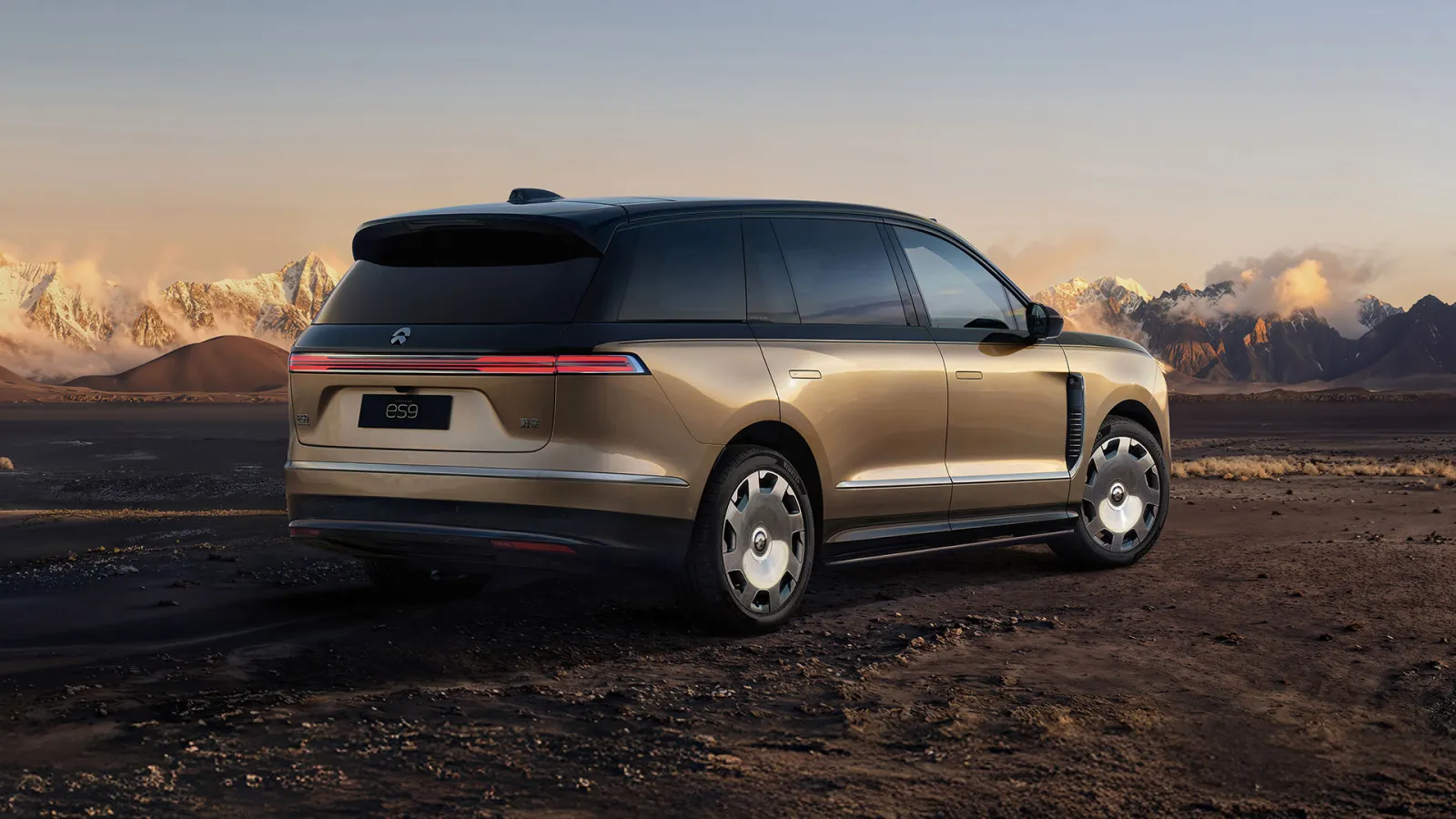
Nio’s sub-brand Onvo shares the production system with the main brand, and its L60 SUV is built at the same Lighthouse factory as Nio’s ES9 flagship.
A four-tier ladder
The MIIT published a list of 253 factories proposed for the 2026 excellence tier on October 19, with a public comment period from October 20 to 26.
China’s smart factory system has four tiers, basic, advanced, excellence and leading, so the excellence tier sits one step below the top. Excellence-level plants are meant to focus on intelligent upgrades and become national benchmarks, according to the report.
The full list was published as an attachment, and the MIIT has not issued a separate statement on Nio’s rating.
What the plant does
The F2 runs Nio’s in-house industrial AI algorithms alongside foundation models and industry-specific models, and AI supports decision-making in 80% of its manufacturing scenarios, the Onvo article said.
More than 90 kilometers (56 miles) of optical fiber were built into the plant when it was constructed, connecting equipment, production lines and processes. A digital twin maps production in real time, and industrial AI analyzes that data and feeds its decisions back to the line, Nio said.
AI is also replacing manual quality checks. An in-house system called “Tiantan” uses the car’s own software and hardware, cloud control and AI algorithms to run more than 1,000 function checks in three minutes, more than 10 times faster than manual inspection, the company said.
An AI inspection station called “Tiantong” checks a whole vehicle in 84 seconds, 48% faster than manual inspection, and lifts defect-recognition accuracy to 99.7%, according to the article. Nio said low accuracy has been a weak point of manual inspection across the industry.
When the World Economic Forum named the plant a Global Lighthouse in June, Nio said a real-time, closed-loop system linking in-car AI, its battery swap network and a digital twin platform managed more than 3.6 million vehicle configurations.
The company said then that the plant’s technology-driven design and sourcing sped up time to market by 44%, and that 90% of its research and development workflows were automated.
The F2 plant had previously been named a National Green Factory by the MIIT and received a “Super Automotive Factory” designation from the China Automotive Technology and Research Center, Nio said in June.
The World Economic Forum runs the Lighthouse Network with McKinsey & Company to recognize factories that deploy advanced manufacturing technologies at scale. Nio’s two vehicle factories had hosted nearly 300,000 visitors since tours began in 2018, it said.
From JAC contract to own license
Nio built its cars under contract with state-owned JAC Motors for most of its history.
In December 2023, it obtained its own vehicle manufacturing qualification under the entity Nio Automobile Technology (Anhui), and agreed to pay 3.158 billion yuan ($473.6 million) for JAC factory assets, including structures and equipment at the Xinqiao plant.
In April 2020, a group of strategic investors led by Hefei City Construction and Investment Holding agreed to put 7 billion yuan ($1.05 billion) into Nio’s China unit for a 24.2% stake, and Nio agreed to base Nio China in the city.
Nio has since added a third factory in Hefei. It quietly began production there in September 2025, and the plant built 43,668 third-generation ES8 SUVs by the end of 2025, according to images shared on Chinese social media.
The group, which also sells cars under its Onvo and Firefly brands, built its one-millionth vehicle on January 6, an ES8 that rolled off the line at the Xinqiao No. 2 plant.
Output and batteries
Nio delivered 37,408 vehicles in September, and deliveries in the first three quarters rose 49.2% from a year earlier and faces
It delivered its 160,000th third-generation ES8 on October 23, and its 30,000th ES9 flagship SUV on September 23, the company said.
Its in-house battery plans have moved more slowly.
Nio’s large cylindrical cells are expected in a very small batch by the end of 2026, made under contract by EVE Energy and Gotion High-Tech, and mass production is unlikely in the short term, according to Jipian Lab.
Nio’s planned 40-gigawatt-hour battery base in Hefei has stalled, according to the report.