
Written by Cláudio Afonso | LinkedIn | X
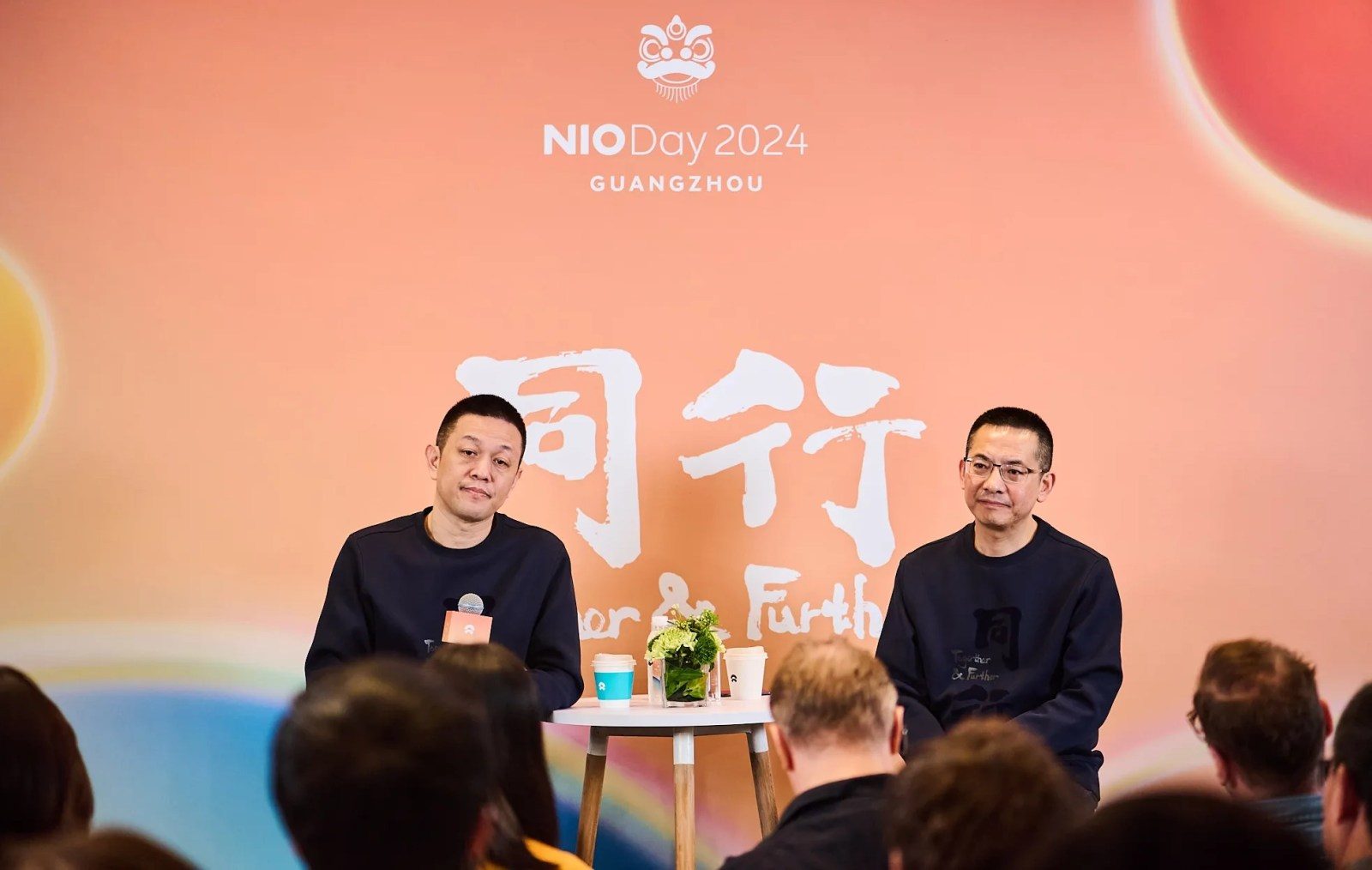
William Li, the founder and CEO of the Chinese carmaker Nio, said the company is prioritizing its business in China before further global expansion, pushing back its international growth timeline.
In an interview with Razão Automóvel, Li said that scaling globally is “unlikely to happen before 2028” as it focuses on “succeeding in the Chinese market.”
The statement contrasts with comments made last November by Nio’s co-founder and President, Lihong Qin, who said the company “hoped” to be present in up to 25 countries or regions by the end of this year.
Nio has expanded outside China in recent years but at a slower pace than initially indicated. After entering Norway in 2021, the company launched in Germany, the Netherlands, Sweden, and Denmark in late 2022.
Last year, it officially began selling in the Middle East and Israel, while Azerbaijan was announced last November as a new market for 2025.
William Li said in mid-2024 that Nio would “probably” expand to the UK in 2025, but in a second-quarter earnings call held in September, he said the company would focus on its existing European markets instead.
The European Union’s decision to impose additional tariffs on Chinese electric vehicles, which took effect late last year, has led some automakers to reconsider their expansion plans. Some have slowed their EV rollouts in Europe, while others have accelerated plans to introduce hybrid models that are not subject to the tariffs.
Li’s latest comments indicate that Nio is reassessing its global expansion strategy, shifting its focus to strengthening its position in China before expanding to new markets globally.
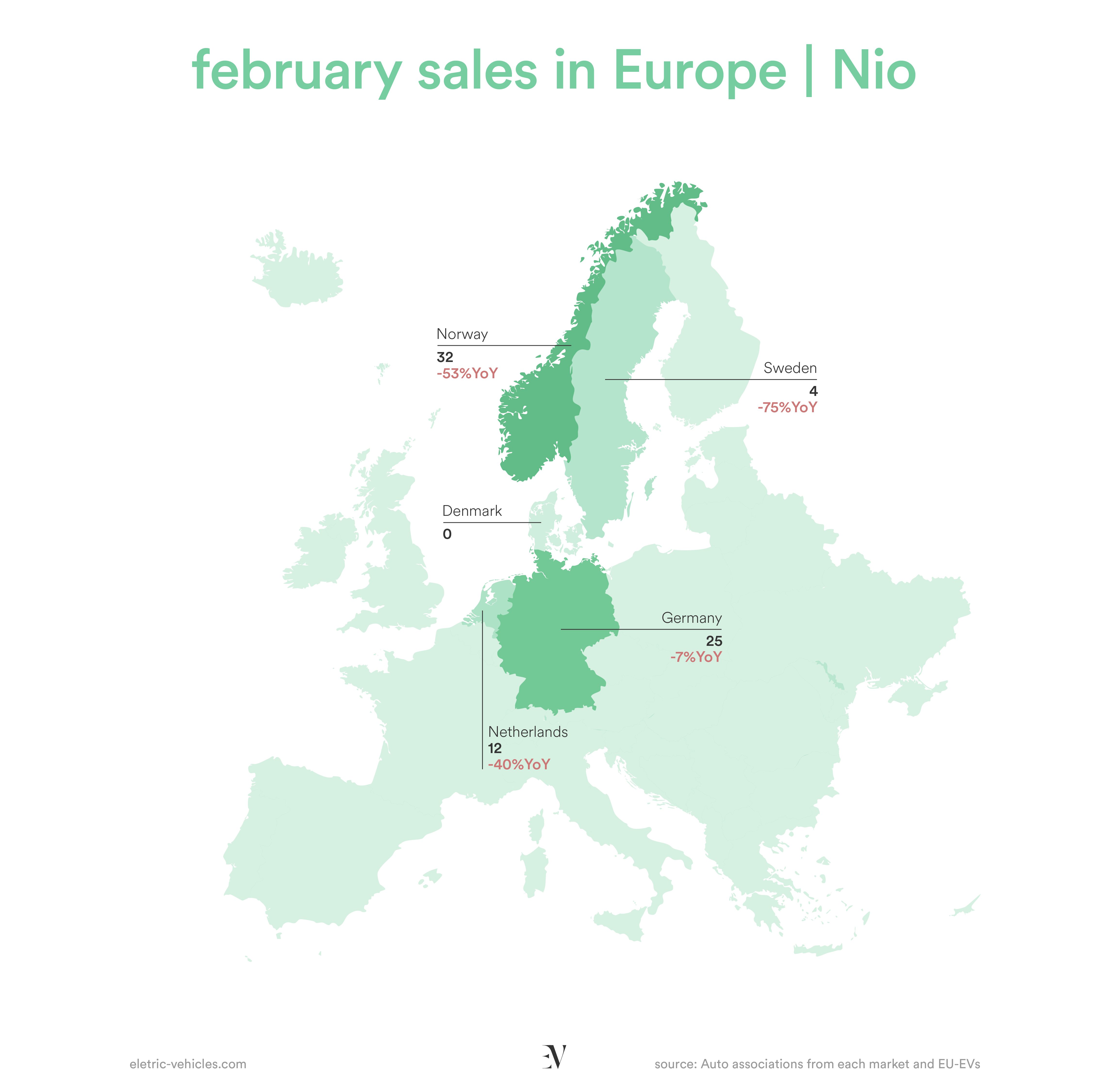
Across its five European markets, Nio registered 73 vehicles in February: 32 units in Norway, 25 in Germany, 12 in the Netherlands, 4 in Sweden and none in Denmark.
Asked about the U.S. market, the chief executive highlighted the R&D office established there in the early days claiming it currently employs “almost 200 people.”
“From the beginning, we have had an R&D department in San Jose, California, where almost 200 people currently work,” Li stated.
The EV maker’s chief said although “the U.S. market is very profitable and will always be on our horizon,” there are “many political and legal implications,” without mentioning the recently announced Auto tariffs by U.S. President Donald Trump.
A move to a global scale is “unlikely” to happen in the next three years.
“At the moment, our focus is on succeeding in the Chinese market, and only if we do that can we move to a global scale—something that is unlikely to happen before 2028.”
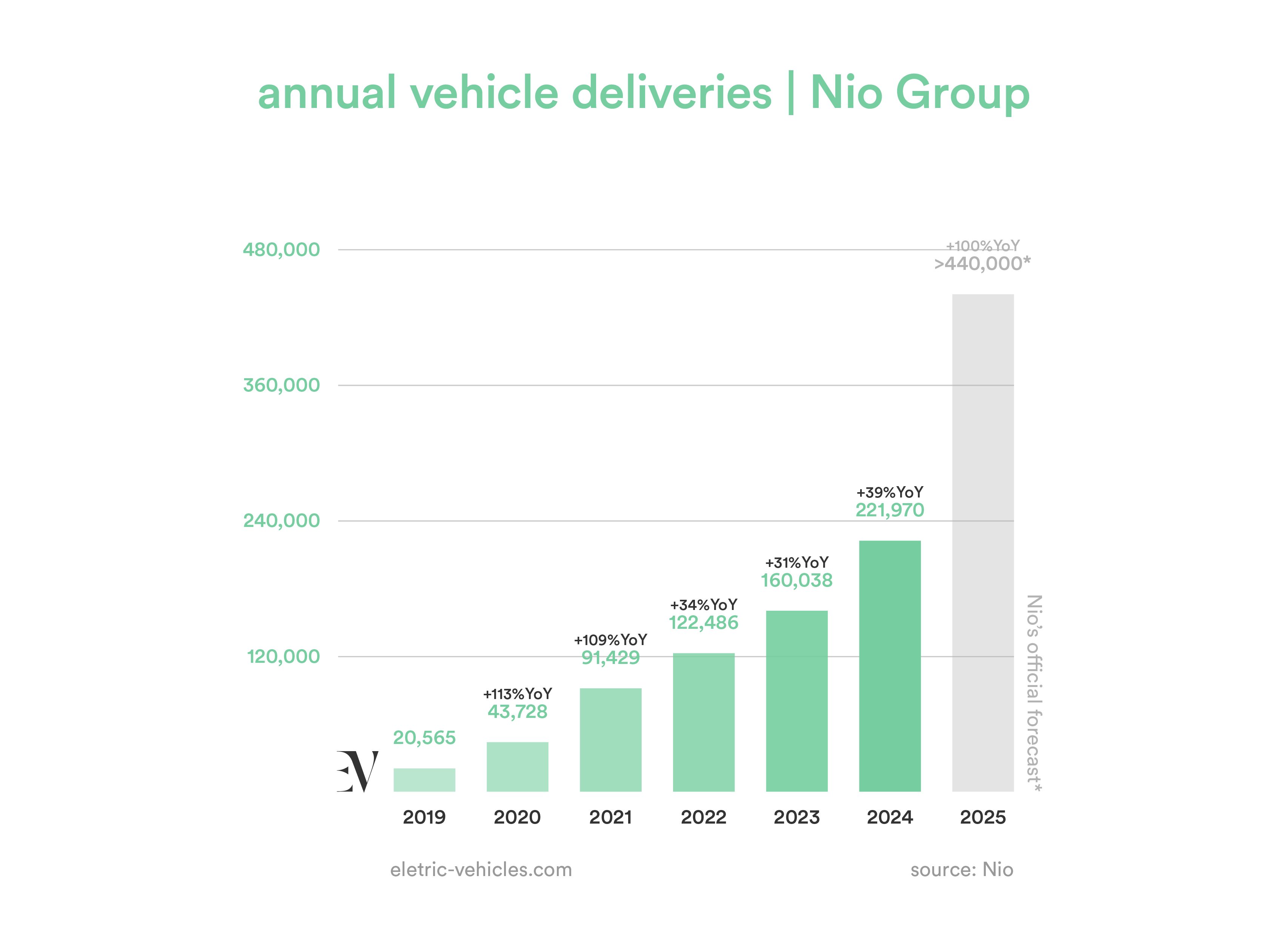
Li reiterated Nio’s target of doubling sales this year which would bring the company’s figures to over 440,000 units.
“We are confident that we will be able to double our sales in 2025 and become a profitable company in 2026,” he stated.
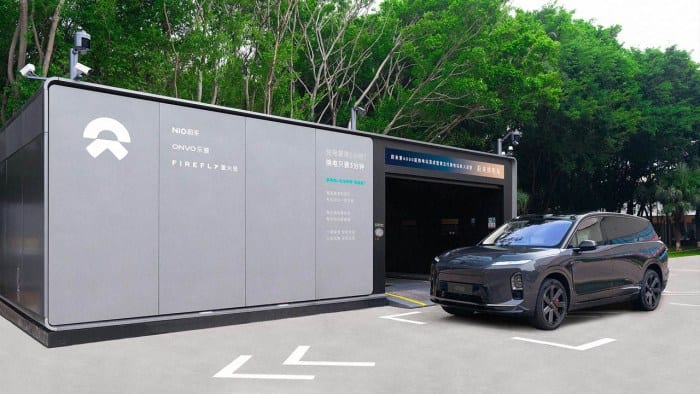
EV learned earlier this week that Nio has integrated the delivery channels of its main brand and sub-brand Onvo in a bid to reduce operational costs.
Nio delivered 9,143 electric vehicles under its main brand last month. While figures of the main brand increased 12.4% from the 8,132 units registered a year ago, its sub-brand Onvo saw its deliveries falling 31.5% to 4,049 units.
To double last year’s sales, Nio needs to deliver nearly 413,000 vehicles over the next ten months — an average of 41,300 units. In December, the company reached a new monthly record with over 31,000 EVs delivered.
Nio Group deliveries increased 62% year over year to 13,192 vehicles.
Within the Nio brand, refreshed models with improved technology and interiors will soon be launched while the flagship executive sedan ET9 will start deliveries this month.