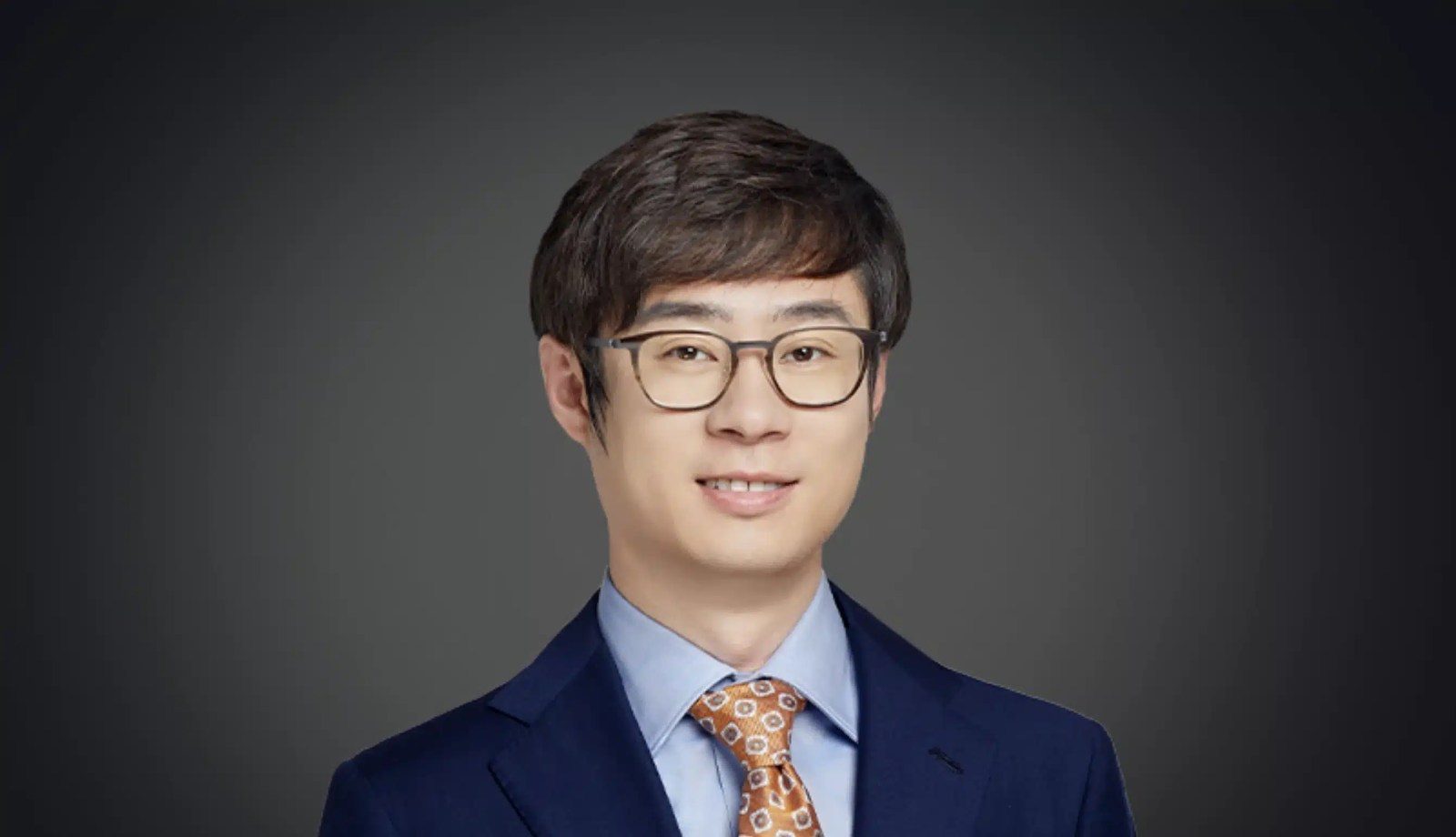

Nio‘s Senior Vice President Ren Shaoqing, who oversees the Chinese EV maker’s autonomous driving research and development, has founded an embodied robotics company, Chinese local media outlet Red Probe reported on Friday.
The new venture may have already secured funding, according to the report.
However, Red Probe did not disclose the company’s name, the size of the potential funding round, or whether Ren’s role at Nio would change.
According to his personal website, Ren was also one of the co-founders of autonomous driving software company Momenta ten years ago — which has since licensed its software to several automakers including Toyota, General Motors and Mercedes-Benz, among others.
Mercedes uses Momenta’s technology in China to power its MB.DRIVE ASSIST PRO advanced driver-assistance system, launched with the battery-electric CLA sedan in late 2025.
Momenta went public on the Hong Kong Stock Exchange on July 8 under the ticker 6880, raising roughly $750 million in its initial public offering at a valuation of approximately $9 billion, according to Bloomberg.
World Model Development
Ren first joined Nio in 2020 as Chief Expert and Assistant VP, was promoted to VP in 2023, and became Senior VP earlier this year.
During his six years at Nio, Ren has overseen the development and production deployment of the company’s world-model technology for intelligent driving.
Nio unveiled its Nio World Model (NWM) in 2024 and has continued expanding the system’s capabilities through successive software iterations.
In September 2025, Ren also joined an AI laboratory at USTC as a chair professor and Head of the Institute of Artificial Intelligence, while retaining his position at Nio.
He said at the time that the appointment would not affect his work at the company.
Nio and Embodied Intelligence
Nio‘s founder and CEO William Li has previously said the company would not directly manufacture embodied intelligence and AI products.
In January, he stated Nio would adopt a “late-comer strategy” on robots, waiting until the company achieved sustained profitability before entering the field.
“We shouldn’t rush to do everything at the forefront. In some areas, we should adopt a late-comer strategy and let others take the lead first,” Li said at a media briefing at the time.
According to the founder, the company would begin preparations one to two years before any market entry.
“Our world model can be applied to embodied robots, and our manufacturing and supply chain system can also be used for robots,” Li stated, however noting that “it doesn’t mean that I will do it now. We’ll start when we start making money.”
The founder added that Nio first needed to grow its market share beyond its current level of roughly 1%.
Li also acknowledged that the overlap in technology stacks made the move inevitable for automakers.
“I believe that any automotive company today, if it has some ambition, will definitely become an AI company. There is no doubt about it,” he said. “Every car today is a robot.”
Broader Talent Shift
Ren’s reported move extends a pattern of senior autonomous driving talent in China shifting toward embodied AI and robotics.
Within Nio itself, the company’s head of intelligent driving product and experience, Harry Wong, resigned in October 2025 to join Momenta as vice president.
Wong had played a central role in developing NWM during his three years at the company, EV reported at the time.
Former XPeng autonomous driving chief Li Liyun joined robotics startup EngineAI Robotics earlier this year.
Li Auto‘s previous smart driving chief Lang Xianpeng left the company earlier this year and teamed up with former Huawei executive Ren Geng to establish Kunlunxing Robotics, according to the Red Probe report.
The current or former autonomous driving chiefs of all three of China’s major EV startups — Nio, XPeng, and Li Auto — have now become involved in embodied AI to varying degrees.