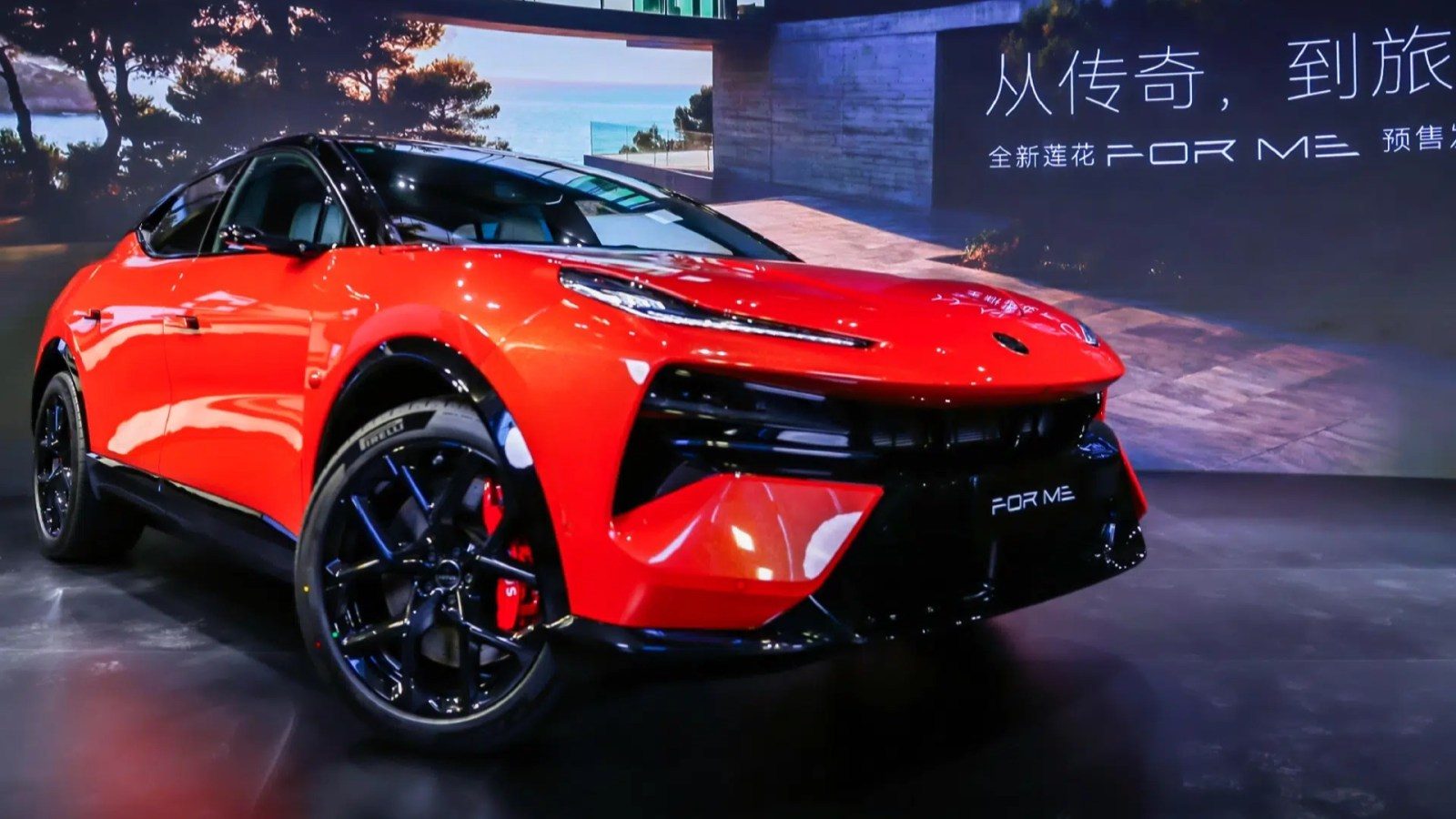

Lotus is abandoning its all-electric strategy and resetting around hybrids and internal combustion (ICE) engine sports cars, Chief Executive Officer Feng Qingfeng said in a letter sent to staff.
The Geely-owned British luxury marque will release the Emira 420, a new ICE sports model, in coming weeks.
Lotus also plans to launch the hybrid hypercar Type 135 in 2028.
According to Feng, the Wuhan-based company will only pivot to full electrification once market conditions are ripe.
The move effectively ends the decade-long electrification strategy that Lotus set out under Geely‘s ownership, which had targeted a full switch to electric and software-driven vehicles by 2028.
Focus 2030
The CEO’s letter landed just two days after Lotus unveiled its Focus 2030 plan, which outlined what the company described as a flexible approach across ICE, plug-in hybrid electric vehicles, and battery EVs.
That plan targeted a roughly 60:40 mix between PHEVs and BEVs across its electrified portfolio during the transition to full electrification.
Feng’s letter goes further, saying that Lotus is no longer treating full electrification as a near-term objective — it is an aspiration with no defined timeline.
The Focus 2030 filing with the US Securities and Exchange Commission described hybrid technology as playing “a central role, serving specific customer needs” in the interim period.
The company said its proprietary X-Hybrid technology was first launched on the Eletre — sold in China as the Eletre X.
Lotus said it received more than 1,000 orders for the SUV in the first month alone.
Sales Collapse Forced the Shift
The electric sports car market has fallen short of expectations for Lotus.
Global sales slumped 46% last year to 6,520 units, while revenue tumbled 44% to $519 million, according to the company’s annual earnings report released last month.
A better product mix and cost controls helped slash the net loss by 58% to $464 million, according to the company.
Consolidating Operations
As part of the restructuring, Lotus plans to combine its sports car research, development, and manufacturing operations in the United Kingdom with its China-based electrification and intelligent-technology platform.
The Focus 2030 SEC filing framed the move as a planned integration of Lotus UK and Lotus Tech into a single entity, which it said would “unify the brand, streamline governance, reduce costs, and accelerate engineering integration.”
Lotus‘ collaboration with Geely is central to the plan.
The two businesses are working together on technology development, supply-chain competitiveness, and manufacturing efficiencies.
Geely provides access to electrification capabilities and scale, while Lotus contributes performance engineering expertise and brand equity to Geely‘s broader portfolio.
In January, Geely Holding released its own five-year strategic plan, targeting over 6.5 million vehicle sales by 2030 and revenue exceeding 1 trillion yuan ($143.4 billion).
The Hangzhou-based conglomerate said it would leverage Lotus‘ European and American market presence alongside its Chinese brands.
A Broader Industry Pattern
Lotus is not the first automaker to scale back electrification commitments in recent months.
Stellantis CEO Antonio Filosa said this week that the company is pursuing a market-by-market approach, with small EVs for Europe and hybrids and range-extenders for the United States.
“It’s a transition to be managed,” Filosa said.
Volvo, also owned by Geely, abandoned its target of selling only fully electric vehicles by 2030 last year.
The Swedish automaker now aims for 90% to 100% of its global sales to consist of electrified vehicles — a mix of fully electric and plug-in hybrids — by the end of the decade.
The British luxury segment has been particularly affected.
Aston Martin, in which Geely also holds a stake, has struggled with its own electrification plans, posting losses for five consecutive quarters and relying on repeated capital injections from its investor consortium.
Canadian Expansion Continues
The strategy shift does not appear to immediately affect Lotus‘ international push.
The company shipped its first batch of Eletre SUVs to Canada last week, becoming the first manufacturer to physically deliver Chinese-made EVs under the trade framework that opened in March.
The Eletre launched in Canada on April 24 at a starting price of C$119,900 ($87,900) — down from the C$313,500 sticker on the only variant previously listed under the prior 100% tariff regime.
Lotus had been positioning to be first across the line since the tariff deal was signed in January.
However, Lotus‘ Canadian strategy was built entirely around the Eletre — a battery electric SUV manufactured at Geely‘s Wuhan plant.
How the broader shift toward hybrids and ICE models will affect the brand’s North American positioning remains unclear.
Background
Founded in 1948, Lotus was once one of the world’s top three sports cars manufacturers alongside Porsche and Ferrari.
After getting into financial difficulties, it was first acquired by General Motors in 1986 and then by Proton in 1996, before Geely took control in 2017.
Under Geely‘s ownership, Lotus set out its Vision 80 revival plan centred on a full switch to electrification and smarter, software-driven vehicles by 2028.
The brand then launched a string of BEV models, including the Evija hypercar, the Eletre SUV, and the Emeya GT.
The Type 135 hybrid hypercar due in 2028, however, will feature a V8 powertrain — a departure for a brand that had positioned itself as an exclusively electric luxury maker since the Evija’s unveiling.